CIMA Strategic Leaders Talk

Within the global finance profession, CIMA (Chartered Institute of Management Accountants) has the responsibility for setting management accounting competency standards oriented towards business strategy. In alliance with the AICPA, CIMA facilitates the CGMA (Chartered Global Management Accountant) professional designation, ensuring that practitioners possess a universal business language for managing organisational performance. The Country Manager for CIMA in Indonesia is Mr Dwi Putra, a Coventry University alumnus who first identified me as a member of the ‘Order of the Phoenix’ because my iPhone lock screen displayed the classic Coventry University logo.
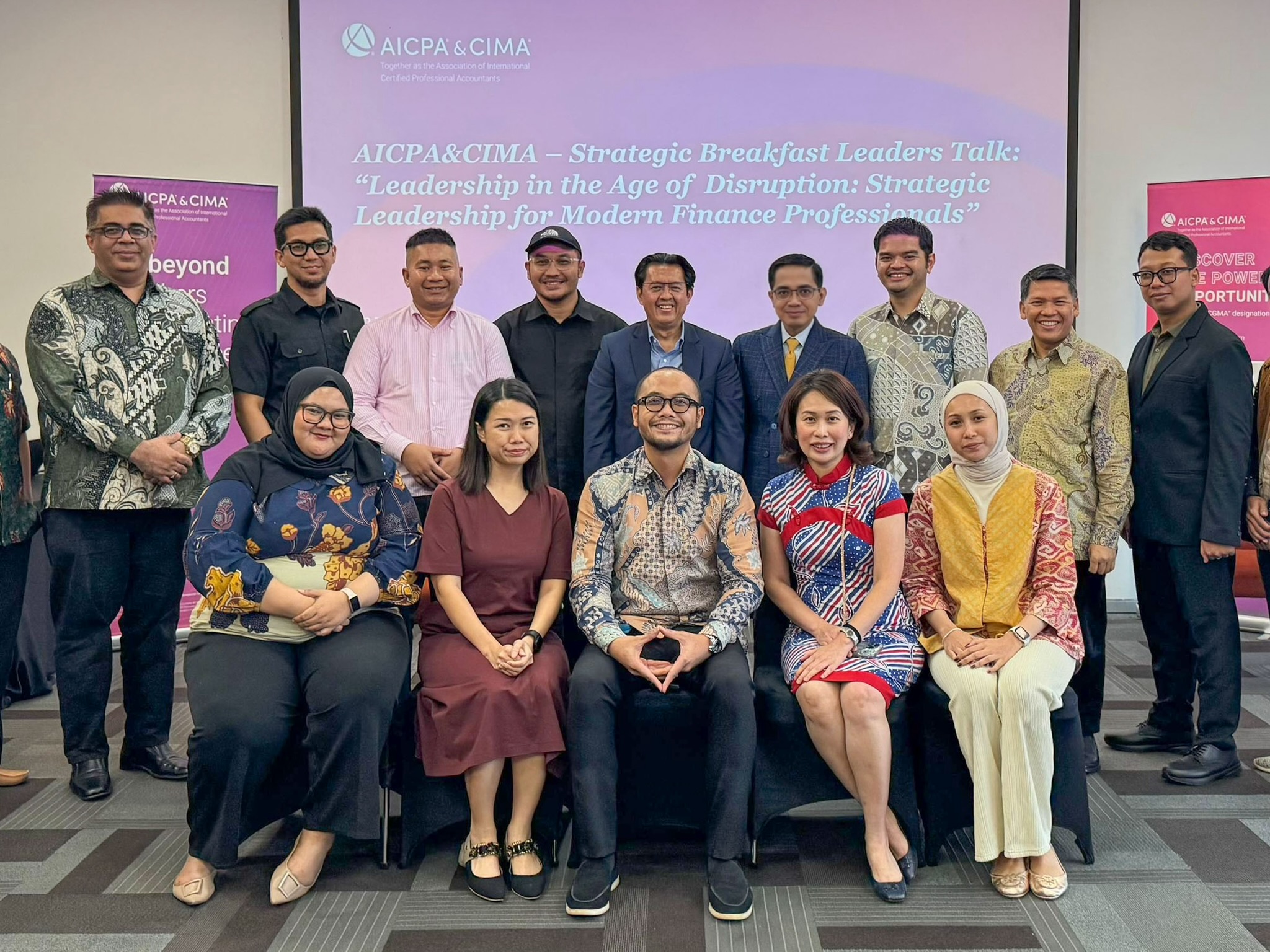
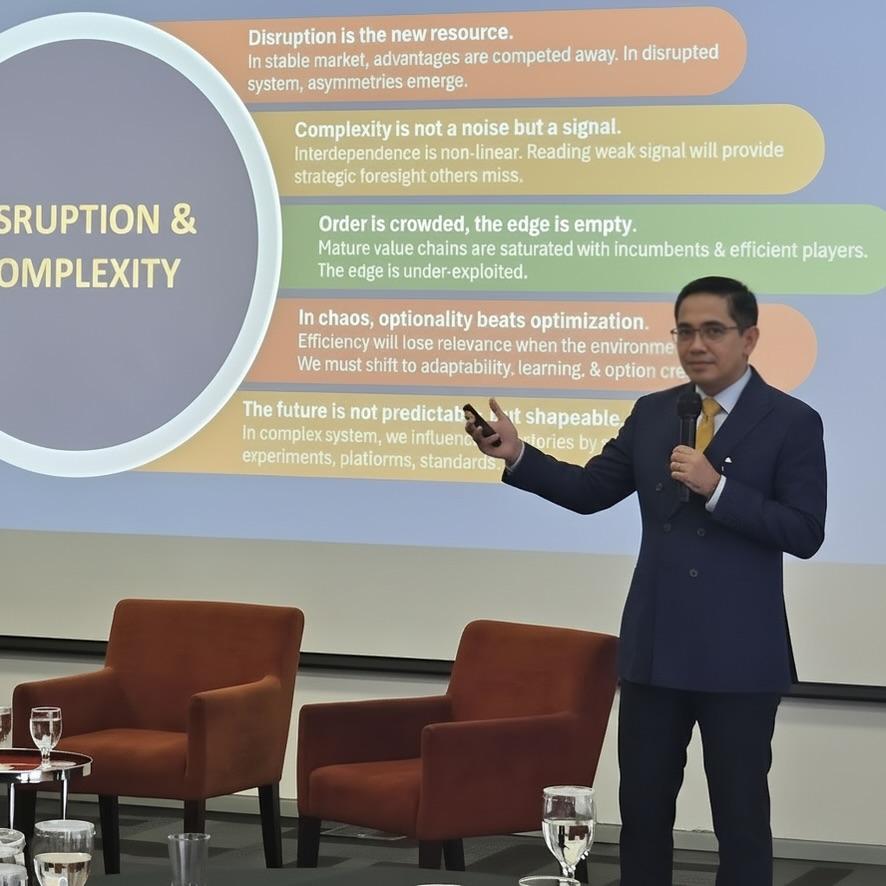
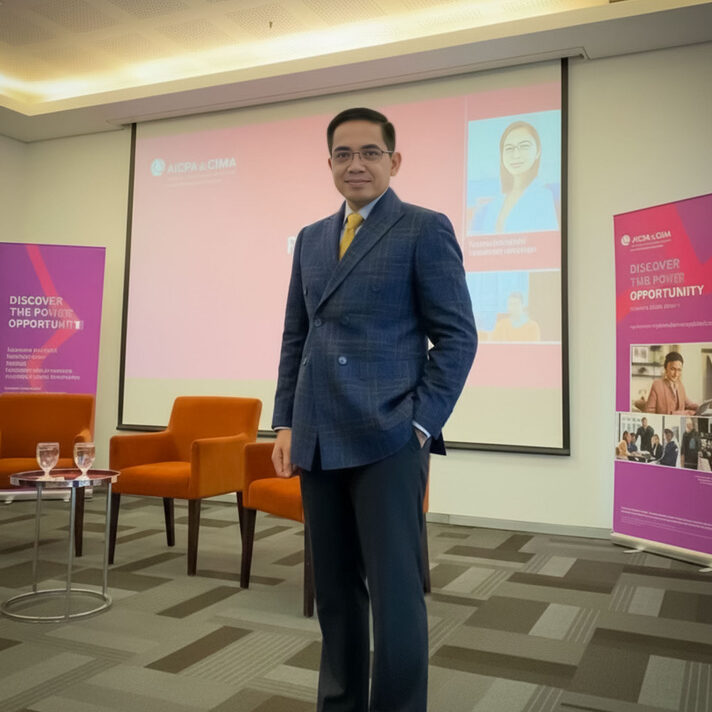
At CIMA’s invitation, on 12 February 2026, I delivered my presentation a CIMA Strategic Leaders Breakfast Talk at the Cyber 2 Building entitled “Leadership in the Age of Disruption — Strategic Leadership for Modern Finance Professionals”. The initial plan was for me to be the sole speaker; however, Mr M Fahmi El Mubarak, CEO of the BUMN School of Excellence, was later added to the programme. It was a real honour for me to share the stage with him.

As discussed at the briefing with CIMA, I explored disruption from the perspective of complexity. The discussion began with a deconstruction of neoclassical economic models, opening up insights into complexity economics. Business as a whole was reviewed as a Complex Adaptive System (CAS), i.e. a system comprising autonomous agents that interact and adapt without rigid, centralised control. The ecosystem is viewed as a dynamic interaction that generates new values non-linearly through the process of emergence.
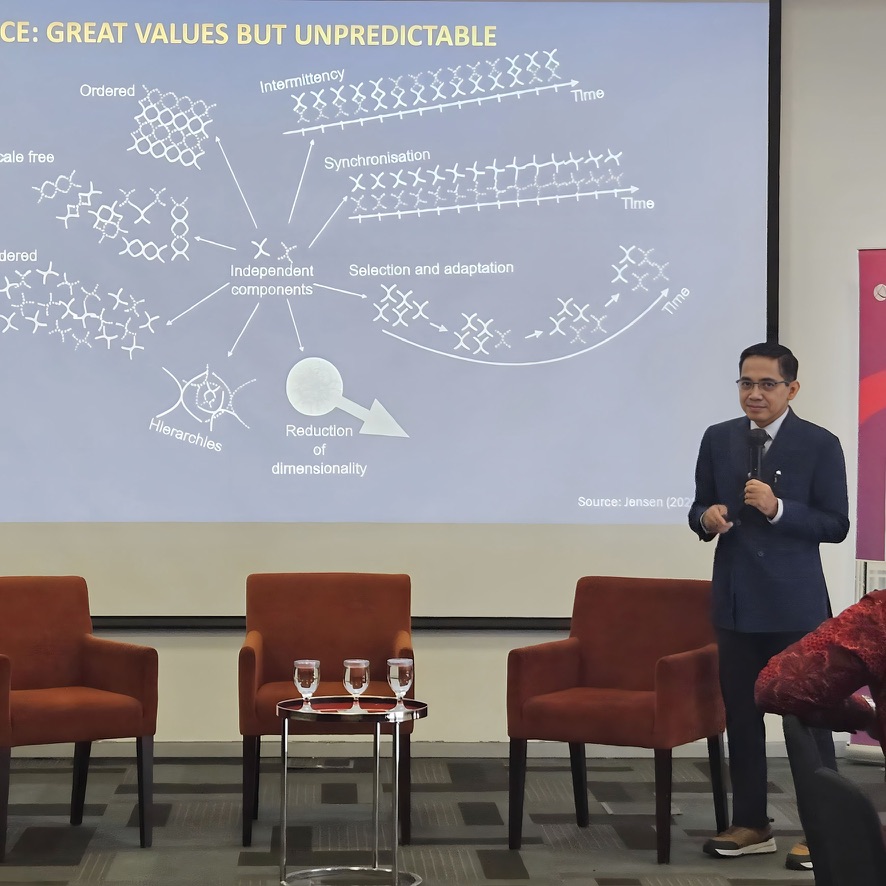
From the perspective of complexity economics, disruption is not a nuisance but rather an engine of evolution, marking a qualitative shift in economic regimes. Strategy has moved from mere optimisation of old models towards a redesign of business architecture that prioritises learning speed and co-evolution with the ecosystem. Competitive advantage is no longer determined by scale or static efficiency, but by architectural flexibility in responding to internal and external feedback constantly.
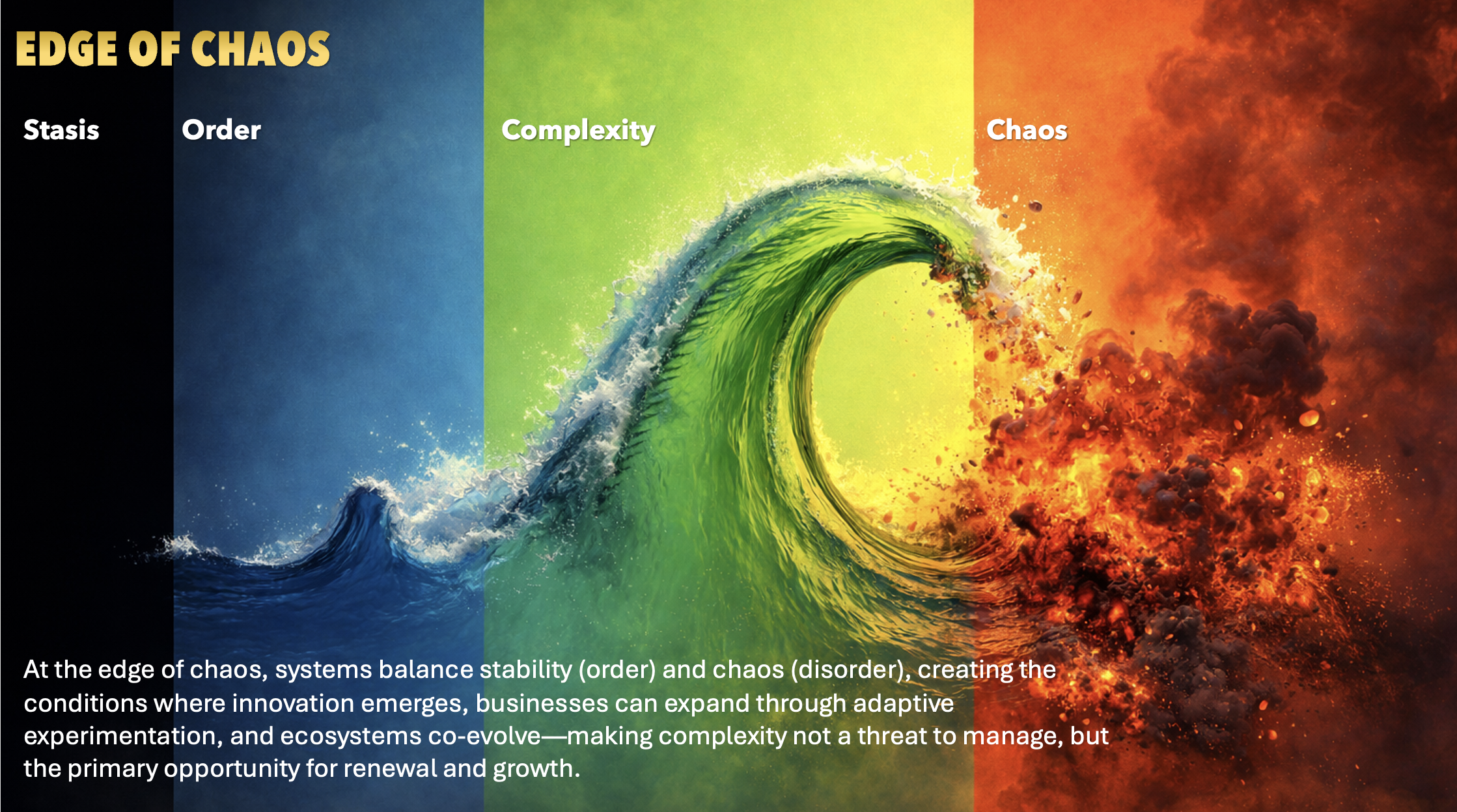
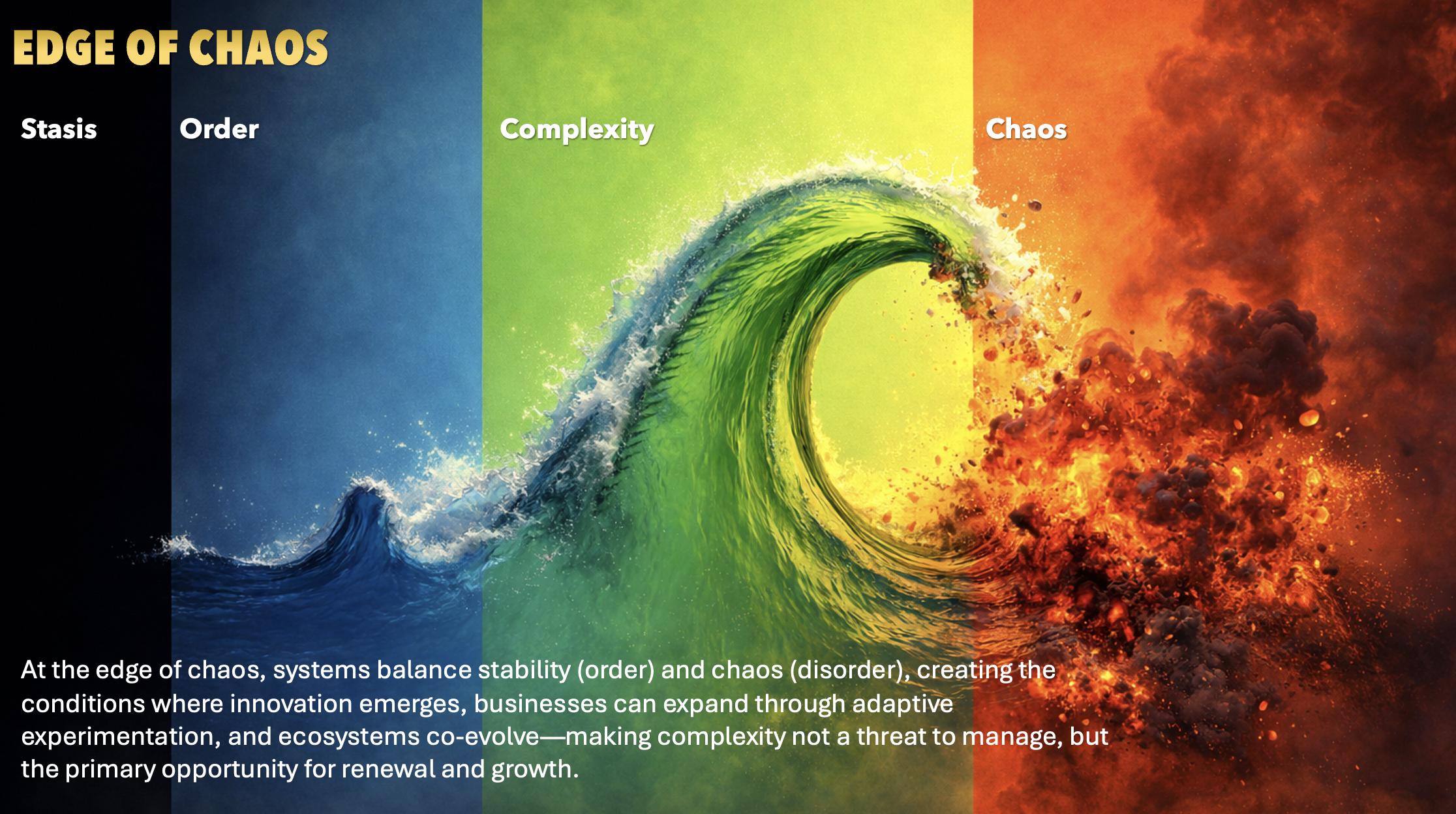
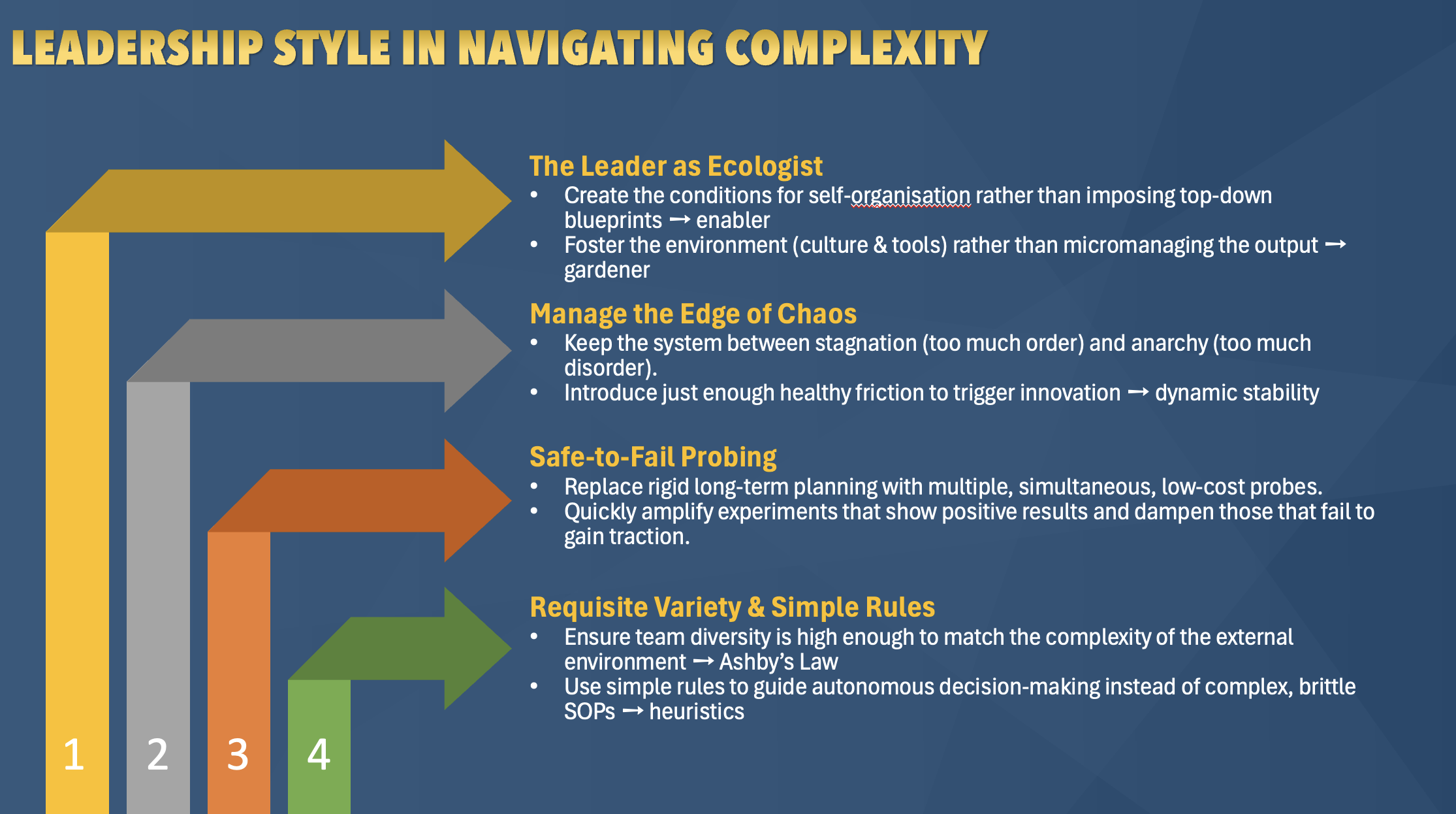
Disruption also represents the optimal point for innovation to occur. We refer to this as the Edge of Chaos, which is the transition zone between order (stagnation) and disorder (chaos). In this zone, the system possesses the precise balance required to trigger innovation without descending into anarchy. Excessive order leads only to organisational stagnation, while total chaos results in systemic failure. The duty of leadership is to keep the organisation at this threshold to ensure sustainability through adaptive experimentation.
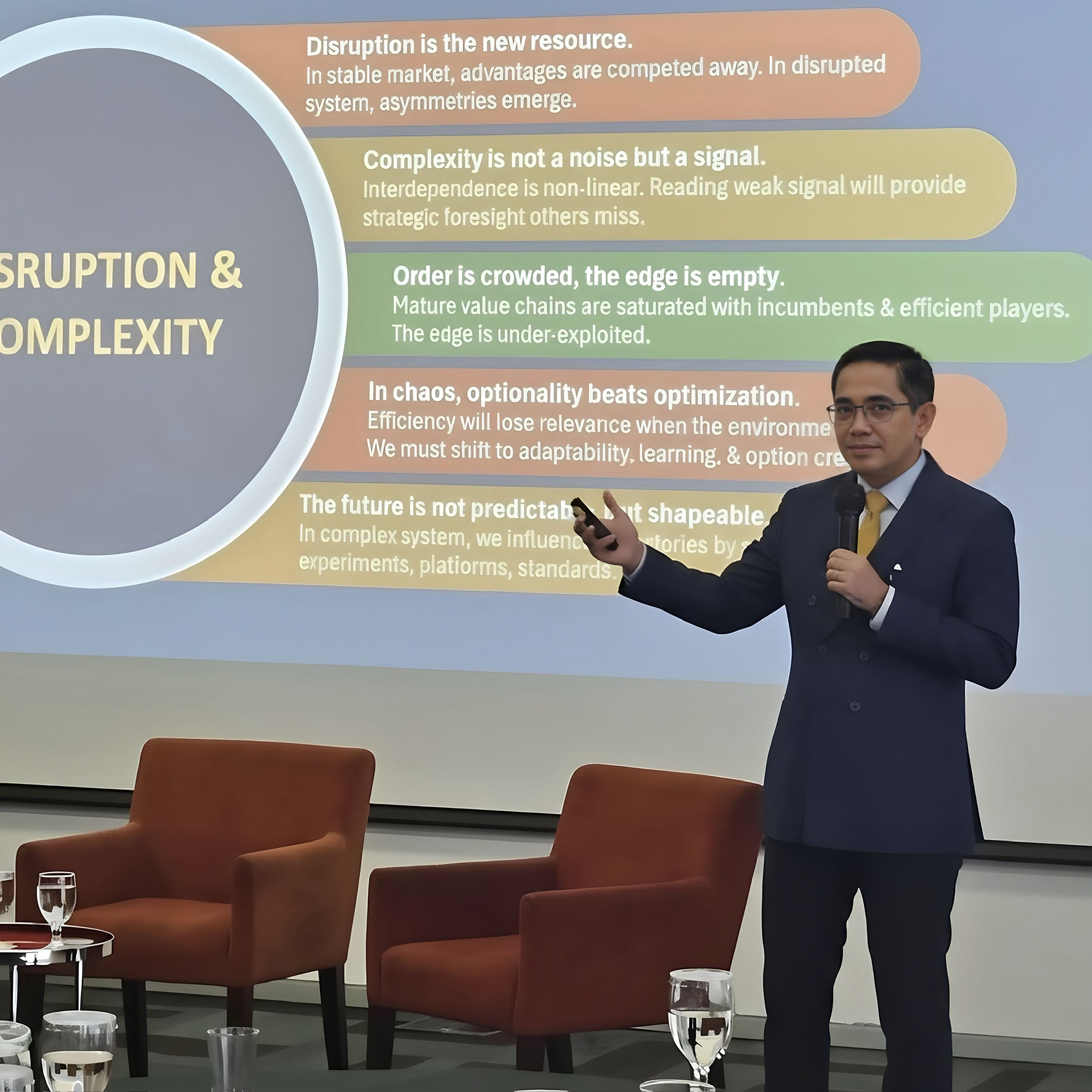
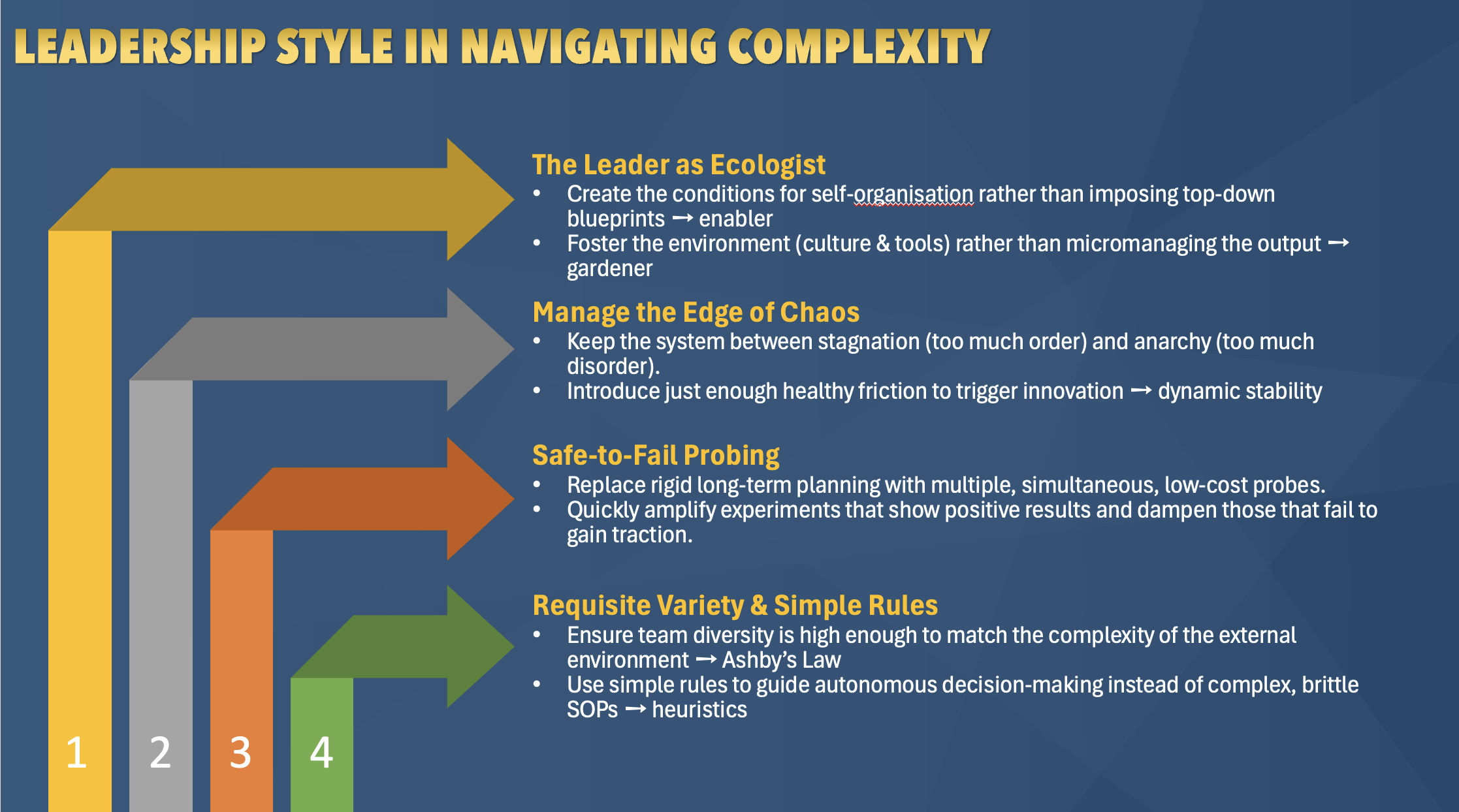
In an ecosystem model, the role of leadership is that of an ecologist. Leaders no longer micromanage outputs; instead, they are tasked with fostering a culture and environment that enables teams to self-organise. This approach utilises simple rules to guide autonomous decision-making, replacing rigid SOPs that are often too brittle to face ambiguity. Leaders must be courageous enough to engage in safe-to-fail probing: launching multiple small experiments simultaneously to detect strategic opportunities that traditional analytical models might overlook.
Returning to CIMA’s focus on Management Accounting (MA), MA plays a crucial role in governing strategic planning in this exponential era through the SPX framework from the IEEE. MA must be capable of performing Strategic Cost Management to monitor future horizons, utilising Real Options Analysis to value investments as strategic options, and implementing Agile Capital Budgeting. By moving away from rigid annual budgets towards Rolling Forecasts and Throughput Accounting, MA ensures that resource allocation is based on real-time feedback and the velocity of value conversion.
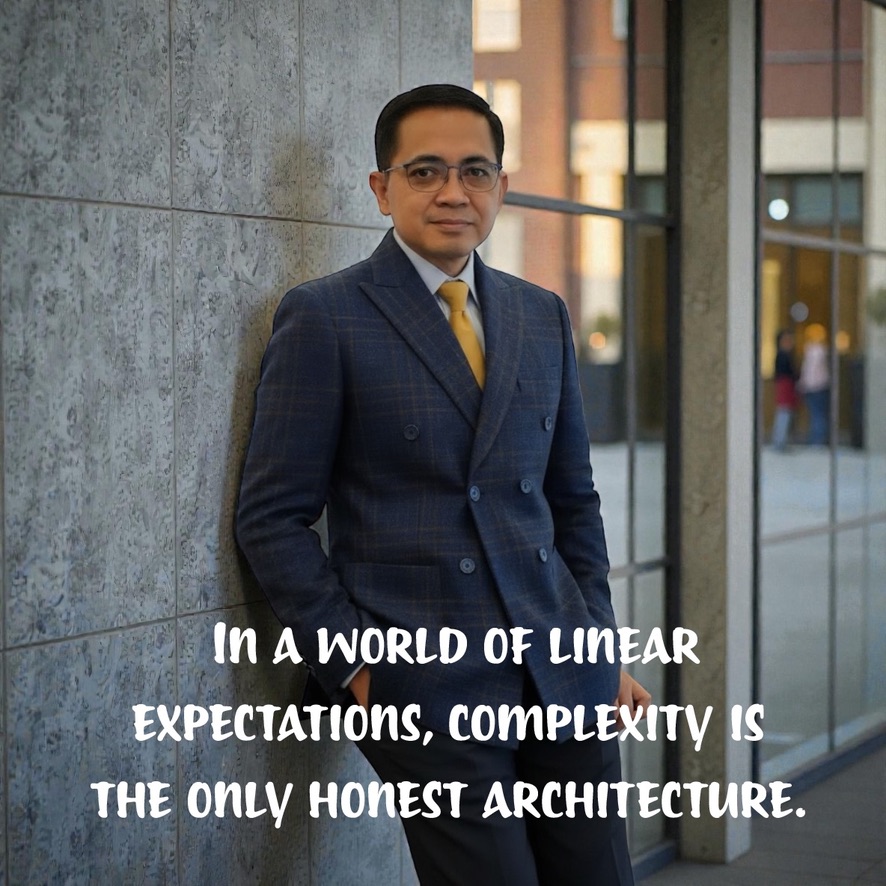
In closing, it was conveyed that disruption must be managed as a catalyst for achieving sustainability and a better quality of life. We must stop viewing business as a machine to be controlled mechanistically and start managing it as a living ecosystem with the capacity to renew itself continually. Furthermore, the finest innovations are those capable of creating new markets and providing a tangible impact on strengthening the economy of society.
Navigasi di Edge of Chaos

Dalam profesi keuangan global, CIMA (Chartered Institute of Management Accountants) berperan sebagai penyusun standar kompetensi akuntansi manajemen yang berorientasi pada strategi bisnis. Beraliansi dengan AICPA, CIMA memfasilitasi gelar profesional CGMA (Chartered Global Management Accountant) yang memastikan para praktisi memiliki bahasa bisnis universal dalam mengelola kinerja organisasi. Country manager CIMA di Indonesia adalah Mas Dwi Putra, alumnus Coventry University yang pertama kali mengenaliku sebagai anggota Order of the Phoenix gegara layar Aifon-ku menampilkan logo klasik Coventry University.

Atas undangan CIMA, tanggal 12 Februari 2026 ini di Gedung Cyber 2 aku mengisi sesi CIMA Strategic Leaders Breakfast Talk dengan judul “Leadership in the Age of Disruption — Strategic Leadership for Modern Finance Professionals”. Plan awal, aku jadi pembicara tunggal. Namun kemudian ditambahkan Bapak M Fahmi El Mubarak, CEO BUMN School of Excellent. Wow, a real honour for me untuk sepanggung beliau.

Sesuai briefing dengan CIMA, aku mendetailkan disrupsi dari perspektif kompleksitas. Bahasan diawali dengan dekonstruksi terhadap model ekonomi neoklasik, dan membuka wawasan atas ekonomi kompleksitas. Keseluruhan bisnis ditinjau sebagai Complex Adaptive System (CAS), yaitu sistem yang terdiri atas agen otonom yang saling berinteraksi dan beradaptasi tanpa kontrol terpusat yang kaku. Ekosistem dipandang sebagai interaksi dinamis yang menghasilkan nilai-nilai baru secara non-linier melalui proses emergence.

Dari perspektif ekonomi kompleksitas, disrupsi bukanlah gangguan, melainkan mesin evolusi yang menandai pergeseran rezim ekonomi secara kualitatif. Strategi kini berpindah dari sekadar optimisasi model lama menuju desain ulang arsitektur bisnis yang mengutamakan kecepatan belajar dan co-evolution dengan ekosistem. Keunggulan kompetitif tidak lagi ditentukan oleh skala atau efisiensi statis, melainkan oleh fleksibilitas arsitektural dalam merespons umpan balik internal dan eksternal secara konstan.

Disrupsi juga merupakan titik optimal terjadinya inovasi. Kita menyebutnya the Edge of Chaos, yaitu zona transisi antara keteraturan (order) dan ketidakteraturan (chaos). Pada zona ini, sistem memiliki keseimbangan yang tepat untuk memicu inovasi tanpa terjatuh ke dalam anarki. Keteraturan yang terlalu kaku hanya akan membawa organisasi pada stagnasi, sementara kekacauan total akan berujung pada kegagalan sistemik. Tugas leadership adalah menjaga organisasi tetap berada di ambang ini untuk memastikan keberlanjutan melalui eksperimentasi yang adaptif.

Dalam model ekosistem, peran leadership adalah sebagai ecologist. Pemimpin tidak lagi mendikte output secara mikro, melainkan bertugas memfasilitasi budaya dan ekosistem agar tim bisa mengorganisir diri secara mandiri. Pendekatan ini menggunakan aturan-aturan sederhana (simple rules) untuk memandu pengambilan keputusan otonom, menggantikan SOP yang seringkali terlalu rapuh menghadapi ambiguitas. Pemimpin harus berani melakukan safe-to-fail probing: meluncurkan berbagai eksperimen kecil secara simultan untuk mendeteksi peluang strategis yang mungkin terlewatkan oleh model analisis tradisional.

Kembali ke CIMA yang berfokus ke management accounting (MA). MA memiliki peran krusial dalam mengendalikan perencanaan strategis di era eksponensial ini melalui kerangka SPX dari IEEE. MA harus mampu melakukan Strategic Cost Management untuk memantau horizon masa depan, menggunakan Real Options Analysis untuk menilai investasi sebagai opsi strategis, serta menerapkan Agile Capital Budgeting. Dengan meninggalkan anggaran tahunan yang kaku dan beralih ke Rolling Forecasts serta Throughput Accounting, MA memastikan bahwa alokasi sumber daya didasarkan pada umpan balik real-time dan kecepatan konversi nilai.

Sebagai penutup, disampaikan bahwa disrupsi harus dikelola sebagai katalis untuk mencapai keberlanjutan dan kualitas hidup yang lebih baik. Kita harus berhenti memandang bisnis sebagai mesin yang harus dikontrol secara mekanistis, dan mulai mengelolanya sebagai ekosistem hidup yang memiliki kapasitas untuk terus memperbarui dirinya sendiri. Juga, inovasi terbaik adalah inovasi yang mampu menciptakan pasar baru dan memberikan dampak nyata bagi penguatan ekonomi masyarakat.