Minggu ini tengah dilaksanakan pertamuan final teknis C++26 yang berlangsung di London (23—28 Maret 2026), untuk mendiskusikan masukan terakhir, sebelum draft standar C++26 dikirimkan untuk disetujui ISO. Pertemuan sebelumnya dilakukan di Kona, Hawaii (November 2025), dan telah menyelesaikan 70% masukan, tanpa menambahkan fitur baru. Standar C++26 sudah dinyatakan lengkap sejak Juni 2025. Yang tersisa hanyalah proses administrasi ISO hingga publikasi resmi, yang diperkirakan terjadi akhir 2026.
Fitur Utama C++26
Static Reflection
Static reflection merupakan mekanisme introspeksi pada waktu kompilasi yang memungkinkan program untuk memeriksa dan memanipulasi entitas program seperti tipe data, anggota struct, enumerator, dan namespace, semuanya terjadi saat kompilasi berlangsung, bukan saat program dijalankan.
Untuk memahaminya, bayangkan kita memiliki sebuah enum warna dan ingin mengubahnya menjadi teks. Tanpa reflection, kita harus menulis kode konversi secara manual satu per satu. Dengan reflection di C++26, hal itu bisa dilakukan secara otomatis oleh kompiler:
// C++26: reflection dengan operator ^^
import std;

enum Color { red, green, blue };

// Fungsi ini bekerja untuk SEMUA enum, tanpa perlu ditulis ulang
template<typename E>
std::string enum_to_string(E value) {
    // ^^ adalah operator reflection baru di C++26
    // [:...:] adalah syntax untuk "membuka" hasil reflection
    template for (constexpr auto enumerator : std::meta::enumerators_of(^^E)) {
        if (value == [:enumerator:])
            return std::string(std::meta::name_of(enumerator));
    }
    return "<unknown>";
}

int main() {
    std::print("{}\n", enum_to_string(Color::green)); // Output: green
}
Di Python, hal seperti ini sudah biasa dengan __name__, dir(), atau modul inspect. Di C++ selama ini tidak ada padanannya yang bersih. C++26 mengisi kekosongan itu, dan karena semuanya terjadi saat kompilasi, tidak ada biaya performa saat runtime.
Contracts
Contracts bertujuan mendukung design by contract melalui anotasi [[pre:]], [[post:]], dan contract_assert. Fitur ini sebenarnya sudah direncanakan masuk ke C++20 tetapi akhirnya dikeluarkan dari draft final, dan kini akhirnya masuk ke standar lewat C++26. Contracts adalah cara untuk menuliskan “syarat” sebuah fungsi secara resmi, bukan sekadar komentar. Kompiler dan runtime bisa memeriksa syarat ini:
// C++26: contracts
import std;

// Fungsi pembagi yang "berjanji":
// - menerima: b tidak boleh nol (precondition)
// - mengembalikan: hasil tidak pernah negatif jika input positif (postcondition)
double safe_divide(double a, double b)
    [[pre: b != 0.0]]
    [[post result: a >= 0 && b > 0 ? result >= 0 : true]]
{
    return a / b;
}

int main() {
    std::print("{}\n", safe_divide(10.0, 2.0));  // 5.0, aman
    std::print("{}\n", safe_divide(10.0, 0.0));  // melanggar pre: program berhenti dengan pesan jelas
}
Ini jauh lebih baik daripada sekadar menulis komentar // b tidak boleh nol yang tidak diperiksa siapapun. Di dunia nyata, contracts sangat berguna untuk library dan sistem besar agar bug terdeteksi lebih awal dan lebih jelas.
Async std::execution: Yang Terstruktur
std::execution adalah framework untuk mengelola tugas-tugas asinkron di berbagai sumber daya. Framework ini memperkenalkan tiga konsep utama: scheduler sebagai pegangan ke sumber daya eksekusi, sender yang mendeskripsikan tugas, dan receiver yang mendapat notifikasi ketika tugas selesai. Cara paling mudah memahaminya adalah membandingkan dengan Python’s async/await:
// C++26: std::execution untuk async
import std;
#include <execution>

// Sebuah "sender" = deskripsi pekerjaan yang belum dijalankan
auto fetch_data() {
    return stdexec::then(
        stdexec::just(42),           // mulai dengan nilai 42
        [](int x) { return x * 2; } // transformasi
    );
}

int main() {
    // Baru dijalankan saat "connect" ke receiver
    auto result = stdexec::sync_wait(fetch_data());
    std::print("Hasil: {}\n", std::get<0>(*result)); // 84
}
Dibandingkan dengan thread manual yang ada di C++11, pendekatan sender/receiver ini jauh lebih aman karena alur eksekusinya bisa diikuti secara visual dari kode.
Fitur Lain C++26
Selain tiga fitur besar di atas, C++26 juga membawa library-library baru seperti <simd> untuk komputasi paralel berbasis data, <hive> sebagai kontainer baru, <linalg> untuk aljabar linear, <debugging>, <rcu>, dan <hazard_pointer>.
Untuk fitur bahasa yang lebih kecil tapi bermanfaat sehari-hari, C++26 menambahkan pack indexing yang memungkinkan akses elemen dalam parameter pack menggunakan operator subskrip, expansion statements untuk iterasi pada waktu kompilasi menggunakan sintaks template for, dan packs dalam structured bindings.
Satu fitur yang sempat diumumkan masuk kemudian dikeluarkan lagi: WG21 mengeluarkan Trivial Relocatability dari C++26 akibat ditemukannya “showstopper bug.” Fitur ini kemungkinan akan masuk ke C++29.
Perbandingan C++23 & C++26
Fitur
C++23
C++26
Output ke layar
std::print
sama
Error handling
std::expected
+ contracts
Tensor/matriks
std::mdspan
+ <linalg> resmi
SIMD/paralel
parallel STL
+ <simd> standar
Async
std::generator
+ std::execution
Metaprogramming
constexpr lebih luas
+ static reflection
Introspeksi tipe
tidak ada
reflection dengan ^^
Untuk siswa yang baru belajar pemrograman, tidak perlu terlalu didetailkan perbedaan C++23 dan C++26 ini. Yang penting dipahami adalah C++26 membuat C++ makin ekspresif dan makin aman secara bertahap, dan kompiler seperti GCC dan Clang sudah mulai mengimplementasikan sebagian besar fiturnya sekarang, jauh sebelum standar resmi terbit.
Menjelang triwulan 2/2026, layanan kecerdasan buatan melajut lebih cepat dari berbagai prediksi sebelumnya. Dua tahun lalu, ChatGPT adalah satu-satunya AI yang perlu dicoba. Hari ini, pilihan telah meledak: ada enam platform besar yang masing-masing punya kekuatan berbeda, harga berbeda, dan filosofi berbeda. Tidak ada satu pun yang sempurna untuk semua orang.
Dulu, persaingan AI bertumpu pada satu pertanyaan: “Siapa yang paling pintar?” Kini pertanyaannya jauh lebih bernuansa. Benchmark kecerdasan antara model-model teratas sudah sangat rapat. Perbedaan skor SWE-bench antara model terbaik untuk coding misalnya hanya beberapa persen. Yang benar-benar membedakan pengalaman adalah ekosistem, harga, ketersediaan data real-time, dan kesesuaian dengan workflow yang sudah ada. Kita juga memasuki era agen (agents), yaitu AI yang tidak hanya menjawab pertanyaan, tapi merencanakan, mengeksekusi tugas multi-langkah, dan mengorkestrasi alat-alat lain. Seluruh platform besar sudah bergerak ke arah itu.
ChatGPT (OpenAI)
ChatGPT adalah AI yang paling dikenal. Dengan lebih dari 900 juta pengguna aktif pada awal 2026, ia masih menjadi pintu masuk bagi mayoritas orang yang baru berkenalan dengan AI. Modelnya sekarang berjalan di GPT-5.2, dengan tiga mode inferensi: Instant (cepat), Thinking (penalaran bertahap), dan Pro (kedalaman maksimal).
Untuk umum dan pelajar, ChatGPT tetap menjadi pilihan paling versatil. Antarmukanya sudah sangat matang: Canvas untuk pengeditan kolaboratif, Custom GPTs untuk membuat asisten khusus, voice mode, dan plugin ecosystem terluas di antara semua platform. Untuk siswa SMA, ChatGPT adalah titik awal untuk belajar karena dokumentasi, tutorial, dan komunitas penggunanya paling besar. Harganya:
Free (terbatas)
Go: $8/bulan (tier baru antara Free dan Plus)
Plus: $20/bulan
Pro: $200/bulan
Versi Enterprise ChatGPT memberikan privasi data yang lebih kuat, integrasi API, dan kemampuan deployment internal. Ekosistem integrasi ChatGPT ke tools bisnis (CRM, project management, spreadsheet) paling luas di antara semua pemain.
Developer
API ChatGPT adalah yang paling banyak didukung oleh tools pihak ketiga. IDE, ekstensi browser, platform no-code, semua biasanya mendukung OpenAI dulu. Model GPT-5.2 dijual sekitar $1,75 per juta token input dan $14 per juta token output, dengan model lite yang lebih murah untuk tugas-tugas sederhana.
Python SDK-nya mature dan terdokumentasi sangat baik. Contoh cepat:
ChatGPT mengintegrasikan DALL-E 3 (dan pembaruan GPT Image 1.5) langsung ke dalam chat. Pengguna dapat membuat, mengedit, dan menyempurnakan gambar menggunakan bahasa percakapan biasa. Fitur inpainting (Select Tool) memungkinkan pengeditan bagian tertentu dari gambar tanpa harus membuat ulang dari awal.
Untuk video: Sora, model generasi video OpenAI, resmi ditutup pada 24 Maret 2026. Keputusan ini mengejutkan banyak pihak, termasuk Disney yang baru saja menandatangani perjanjian kolaborasi tiga tahun. OpenAI menyebut akan berbagi lebih lanjut tentang timeline dan pelestarian karya pengguna. Ada laporan bahwa kemampuan video mungkin akan diintegrasikan langsung ke ChatGPT di masa depan, mirip dengan apa yang terjadi pada DALL-E, tapi hal ini belum dikonfirmasi.
Rencana Pengembangan
Fokus OpenAI adalah reasoning mendalam dan kemampuan agentic sebagai fitur inti, bukan tambahan. Ada sinyal kuat ke arah “super app” yang mengkonsolidasikan chat, browser agent, Codex, dan pembuatan media dalam satu platform.
Claude (Anthropic)
Claude adalah model yang paling sering dipilih oleh pengguna yang ingin kedalaman analitis, penulisan panjang yang koheren, dan mengikuti instruksi nuansir secara konsisten. Model saat ini adalah Claude Opus 4.6 dan Claude Sonnet 4.6 — dengan Sonnet menawarkan sekitar 98% kualitas Opus pada sebagian kecil harganya.
Teks yang dihasilkan Claude terasa lebih “manusiawi” dan koheren untuk dokumen panjang. Kemampuan mengikuti instruksi yang kompleks dan bertingkat juga menonjol.
Untuk pelajar, Claude unggul dalam analisis teks, umpan balik esai, dan penjelasan konsep yang padat. Untuk menulis makalah atau pekerjaan yang membutuhkan feedback, Claude dapat memberikan respons yang lebih terstruktur dan “berisi” dibanding kompetitornya. Harganya:
Free (dengan batas penggunaan)
Pro: $20/bulan (atau sekitar Rp17/bulan jika berlangganan tahunan)
Max: $200/bulan untuk pengguna intensif
Untuk riset dan sains, context window hingga 1 juta token (dalam beta) berarti kita dapat memasukkan seluruh codebase, naskah buku, atau dataset besar ke dalam satu sesi analisis. Untuk peneliti yang bekerja dengan dokumen panjang atau membutuhkan analisis multi-dokumen, ini adalah keunggulan yang konkret dan praktis.
Untuk kalangan bisnis, versi enterprise Claude tersedia melalui AWS Bedrock dan Google Vertex AI, yang membuatnya menjadi pilihan aman untuk organisasi dengan persyaratan kepatuhan. Anthropic secara konsisten mengkomunikasikan komitmennya pada keselamatan AI, yang menjadi pertimbangan penting di sektor-sektor regulated.
Developer
Claude mendominasi ekosistem developer tooling — ia menjadi otak di balik Cursor, Windsurf, dan Claude Code (alat coding berbasis terminal). Untuk coding, Claude Sonnet 4.6 sering dipilih karena rasio kualitas-biaya yang sangat baik.
API pricing (Sonnet 4.6): $3 per juta token input, $15 per juta token output. Opus 4.6: $5/$25 per juta token.
SDK tersedia untuk Python, TypeScript, dan bahasa lain. Claude API juga tersedia melalui Amazon Bedrock dan Google Cloud Vertex AI untuk deployment enterprise.
Gambar dan Video
Claude dapat menganalisis gambar dan dokumen visual dengan sangat baik (vision multimodal), tapi tidak memiliki kemampuan generasi gambar secara native di antarmuka utama. Kemampuan Artifacts-nya memungkinkan pembuatan visualisasi berbasis kode (SVG, HTML interaktif, chart) secara langsung dalam chat.
Rencana Pengembangan
Fokus Anthropic adalah keandalan dan kemampuan berpikir multi-langkah yang berkelanjutan. Pembaruan terbaru memperkenalkan “agent teams” — kemampuan mengorkestrasi beberapa agen AI yang bekerja bersama pada tugas-tugas kompleks. Anthropic juga merilis Claude Code sebagai CLI agent untuk engineering workflows.
Gemini (Google)
Gemini adalah paduan antara layanan AI dan ekosistem. Jika kita sudah hidup di dalam Google Workspace (Gmail, Docs, Sheets, Meet), Gemini bukan sekadar alat tambahan, tapi bahan yang merajut semua itu. Model flagship saat ini adalah Gemini 3.1 Pro, yang memimpin benchmark penalaran dengan skor GPQA tertinggi (94,3%). Harganya:
Free (dengan batas)
Advanced: $19,99/bulan
Enterprise: $30/pengguna/bulan (integrasi penuh Workspace)
Untuk riset dan sains, Gemini menawarkan context window 1 juta token sebagai standar (bukan beta), yang berarti kita dapat memproses seluruh basis kode, laporan panjang, atau transkrip rapat dalam satu query. Kemampuan multimodal Gemini — video, audio, gambar, spatial reasoning — adalah yang terlengkap di antara semua platform.
Developer
Gemini memiliki keunggulan spesifik untuk developer yang bekerja di Google Cloud: integrasi native dengan BigQuery, Firebase, dan Android Studio. Jika infrastruktur kita berbasis GCP, Gemini adalah pilihan paling kohesif.
API pricing Gemini 3.1 Pro: $2 per juta token input, $12 per juta token output — yang menjadikannya model frontier dengan value terbaik saat ini. Gemini Flash-Lite yang lebih murah tersedia untuk tugas-tugas bervolume tinggi dan sederhana.
import google.generativeai as genai
genai.configure(api_key="...")
model = genai.GenerativeModel('gemini-3.1-pro')
response = model.generate_content("Analisis tren e-commerce Asia Tenggara 2026")
Gambar dan Video
Google Veo untuk generasi video terus berkembang sebagai kompetitor serius di ruang ini. Gemini juga mendukung pembuatan gambar dan memiliki kemampuan analisis visual yang kuat — termasuk memproses video langsung sebagai input.
Rencana Pengembangan
Google bertaruh bahwa breadth menang: menangani video, gambar, spatial reasoning, dan konteks masif dalam satu arsitektur terintegrasi. Fokus ke depan adalah menjadikan Gemini sebagai layer intelijen di seluruh produk Google, bukan hanya chatbot tersendiri.
Meta AI (Meta)
Meta memainkan kartu yang tidak dimiliki siapapun: distribusi. Meta AI tersedia gratis di WhatsApp, Instagram, Messenger, dan Facebook, yaitu platform yang sudah digunakan oleh miliaran orang setiap hari. Tidak perlu aplikasi baru, tidak perlu akun baru. Cukup buka WhatsApp dan mulai. Model yang mentenagai Meta AI adalah Llama 4, yang diluncurkan pada April 2025. Llama 4 Scout dan Maverick adalah model multimodal native pertama Meta dengan arsitektur Mixture-of-Experts (MoE) — yang secara teknis efisien karena hanya “mengaktifkan” sebagian parameter yang relevan untuk setiap query. Llama 4 Scout menawarkan context window 10 juta token, yang merupakan yang terluas di kelasnya.
Kemudahan akses adalah nilai utama Meta AI. Untuk pengguna yang tidak ingin memiliki akun atau berlangganan layanan baru, Meta AI yang tertanam di WhatsApp menjadi pilihan paling alami. Fitur generasi gambar sudah tersedia secara gratis di dalam antarmuka chat. Saat ini Meta AI sepenuhnya gratis. Meta sedang menyiapkan tier premium berbayar untuk fitur-fitur yang lebih intensif komputasi, tapi belum diluncurkan secara resmi.
Developer
Ini adalah dimensi Meta AI yang paling menarik bagi developer: Llama adalah model open-weight, artinya bobotnya dapat diunduh, dijalankan secara lokal, dan dikustomisasi sepenuhnya. Lebih dari 650 juta unduhan telah tercatat. Ini memiliki implikasi besar:
Privasi data total: tidak ada data yang meninggalkan server kita sendiri.
Biaya sangat rendah untuk volume besar: setelah infrastruktur disiapkan, biaya per token mendekati nol.
Kustomisasi penuh: fine-tuning untuk domain spesifik (hukum, medis, bahasa daerah) dapat dilakukan.
Deployment edge/mobile: model kecil Llama dapat berjalan langsung di perangkat.
# Melalui API Meta atau provider pihak ketiga seperti Together AI
from openai import OpenAI
client = OpenAI(api_key="...", base_url="https://api.together.xyz/v1")
response = client.chat.completions.create(
    model="meta-llama/Llama-4-Maverick",
    messages=[{"role": "user", "content": "Tulis kode Python untuk web scraping"}]
)
Llama tersedia melalui AWS, Google Cloud, Microsoft Azure, dan Hugging Face — sehingga deployment enterprise pun memiliki pilihan SLA yang jelas.
Gambar dan Video
Generasi gambar tersedia gratis melalui antarmuka Meta AI. Meta sedang mengembangkan “Mango” — model generasi gambar dan video generasi berikutnya, dengan target peluncuran di paruh pertama 2026. Sistem ini dirancang untuk mengatasi kelemahan model video saat ini dalam hal long-horizon reasoning dan world model yang lebih koheren.
Rencana Pengembangan
Meta bertaruh pada demokratisasi. Dengan membuat Llama 4 open-source dan agentic, mereka berharap developer akan memilihnya karena fleksibilitas dan biaya, bukan merek. Ke depan, fokus ada pada kemampuan agentic: model yang dapat merencanakan, mengeksekusi tugas, dan memahami konteks dalam jangka panjang.
Grok (xAI)
Grok adalah model yang dibangun oleh xAI, perusahaan AI Elon Musk, dan memiliki akses langsung ke arus data real-time dari X (Twitter). Ini menciptakan proposisi nilai yang unik dan tidak tertandingi: kemampuan menjawab pertanyaan tentang tren, berita, dan percakapan publik yang terjadi sekarang, bukan berdasarkan data training yang sudah berumur. Model saat ini adalah Grok 4, dengan skor SWE-bench tertinggi di antara semua model komersial (75%) — menjadikannya pilihan menarik untuk tugas-tugas coding teknis.
Jika pertanyaan AI tentang apa yang sedang terjadi di Twitter/X sekarang, sentimen publik terhadap suatu isu, atau konteks di balik tren yang sedang viral, Grok adalah satu-satunya model yang dapat menjawab dengan data langsung dan terkini. Untuk jurnalis, analis media sosial, dan siapapun yang kerjanya bersinggungan dengan public discourse digital, ini adalah keunggulan yang sangat konkret.
Grok juga dikenal memiliki guardrail konten yang lebih longgar dibanding kompetitornya, memungkinkan diskusi topik-topik yang lebih kontroversial atau bersentuhan dengan humor gelap. Grok tersedia melalui X Premium+ ($22/bulan). SuperGrok ($30/bulan individu, $300/bulan tim) membuka extended thinking dan prioritas akses.
Developer
xAI menawarkan API Grok dengan harga yang sangat kompetitif. Grok 4.1 dibanderol hanya $0,20 per juta token input dan $0,50 per juta token output — jauh lebih murah dari OpenAI atau Anthropic untuk kemampuan yang sebanding.
Arsitektur terbaru Grok 4.20 memperkenalkan pendekatan yang benar-benar baru: empat agen AI yang berjalan secara paralel (Grok sebagai koordinator, Harper untuk fact-checking dan data X real-time, Benjamin untuk logika dan coding, Lucas untuk penalaran kreatif), yang berdebat satu sama lain sebelum menghasilkan satu jawaban. Ini bukan sekadar model yang lebih besar — ini adalah arsitektur inferensi yang berbeda secara mendasar.
from openai import OpenAI  # Grok API kompatibel dengan OpenAI format
client = OpenAI(api_key="...", base_url="https://api.x.ai/v1")
response = client.chat.completions.create(
    model="grok-4",
    messages=[{"role": "user", "content": "Analisis sentimen Twitter tentang ekonomi Indonesia"}]
)
Grok juga tersedia di Cursor dan GitHub Copilot, menawarkan akses gratis bagi pengguna tools tersebut.
Gambar dan Video
Grok memiliki kemampuan generasi gambar melalui model Aurora, yang dikenal memiliki guardrail lebih longgar dibanding DALL-E. Untuk video, xAI belum memiliki produk tersendiri.
Rencana Pengembangan
xAI sedang mengembangkan versi penuh Grok 4.20 dengan API yang belum sepenuhnya terbuka. Jika arsitektur multi-agen ini terbukti superior dalam benchmark kuartal kedua 2026, ini dapat menggeser peringkat secara signifikan. Platform ini juga sedang memperdalam integrasi dengan ekosistem X yang lebih luas.
DeepSeek
DeepSeek adalah kejutan terbesar industri AI sejak ChatGPT diluncurkan. Lab AI asal China ini merilis model-model yang bersaing dengan frontier model terbaik dunia, dengan biaya pengembangan dan harga API yang sepersekian dari kompetitornya. DeepSeek V4 (diluncurkan awal Maret 2026) menawarkan performa GPT-5 class pada harga sekitar sepersepuluh.
Chatbot DeepSeek di web dan mobile sepenuhnya gratis dengan batas yang sangat longgar, termasuk mode “thinking” (penalaran mendalam) yang di platform lain biasanya berbayar. Untuk pengguna yang ingin mencoba AI dengan kemampuan tinggi tanpa mengeluarkan biaya, DeepSeek adalah pilihan yang sulit diabaikan. Sepenuhnya gratis untuk penggunaan chat biasa, tanpa tier premium individual.
Untuk riset dan sains, DeepSeek R1 dan varian thinking-nya menunjukkan kemampuan penalaran matematis dan logis yang sangat kuat — dalam beberapa benchmark matematika dan coding, ia menyaingi atau melampaui model-model terbaik dari OpenAI dan Anthropic. Untuk peneliti yang membutuhkan AI untuk membantu pembuktian, analisis data, atau pemrograman teknis, DeepSeek menjadi pilihan cost-effective yang sangat menarik.
Developer
Ini adalah proposisi nilai paling dramatis di seluruh ekosistem AI:
DeepSeek V4: $0,30 per juta token input, $0,50 per juta token output
Dengan cache hit (prompt berulang): hanya $0,03 per juta token input — diskon 90%
Dibanding GPT-5 ($1,75/$14) atau Claude Opus 4.6 ($5/$25): penghematan bisa mencapai 95%
DeepSeek API sepenuhnya kompatibel dengan format OpenAI — cukup ganti base URL dan API key, tanpa perlu mengubah kode:
Akun baru mendapatkan 5 juta token gratis (tanpa perlu kartu kredit) untuk uji coba. Modelnya juga open-weight — artinya dapat di-self-host untuk privasi data penuh.
Industri dengan Sensitivitas Data
Di sinilah pertimbangannya menjadi lebih kompleks. DeepSeek adalah perusahaan China, dan infrastruktur API-nya tunduk pada hukum China. Banyak perusahaan di AS, EU, dan beberapa di Asia Tenggara telah membatasi penggunaan API DeepSeek untuk data sensitif. Solusinya adalah self-hosting model weights, yang membutuhkan infrastruktur sendiri tapi menghilangkan risiko kedaulatan data sepenuhnya.
Untuk aplikasi non-sensitif, project pribadi, atau pengembangan internal yang tidak melibatkan data klien atau IP sensitif, DeepSeek menawarkan value yang hampir tidak tertandingi.
Rencana Pengembangan
DeepSeek terus bergerak ke atas dengan rilis yang sangat cepat — V3, V3.1, V3.2, dan kini V4 dalam rentang kurang dari setahun. Fokusnya adalah mempertahankan keunggulan performa-biaya dan memperluas kemampuan reasoning.
Perbandingan Ringkas
Platform
Model Flagship
Coding (SWE-bench)
Penalaran (GPQA)
Context Window
Kekuatan Utama
ChatGPT
GPT-5.2
74,9%
92,8%
128K
All-rounder, ekosistem terluas
Claude
Opus 4.6
74%+
91,3%
1 juta (beta)
Penulisan, instruksi kompleks
Gemini
3.1 Pro
63,8%
94,3%
1 juta
Multimodal, integrasi Google
Grok
4
75%
Kompetitif
2 juta
Real-time X, harga API murah
Meta AI
Llama 4 Maverick
Kompetitif
Kompetitif
10 juta (Scout)
Open-source, distribusi masif
DeepSeek
V4
81%
Tinggi
1 juta
Harga ekstrem murah, reasoning
Harga Langganan Konsumen
Platform
Free
Tier Dasar
Tier Premium
ChatGPT
Ya
$8/bln (Go)
$20/bln (Plus), $200/bln (Pro)
Claude
Ya
$20/bln (Pro)
$200/bln (Max)
Gemini
Ya
$19,99/bln (Advanced)
$30/pengguna/bln (Enterprise)
Grok
Terbatas (via X)
$22/bln (X Premium+)
$30/bln (SuperGrok)
Meta AI
Gratis penuh
–
Premium sedang disiapkan
DeepSeek
Gratis penuh
–
Tidak ada tier individual
Harga API (per 1 juta token, input/output)
Model
Input
Output
Catatan
GPT-5.2
$1,75
$14
Standar industri
Claude Sonnet 4.6
$3
$15
Nilai terbaik di tier ini
Claude Opus 4.6
$5
$25
Premium
Gemini 3.1 Pro
$2
$12
Terbaik untuk frontier model
Grok 4.1
$0,20
$0,50
Sangat murah
DeepSeek V4
$0,30
$0,50
Cache hit: $0,03 input
Fitur Gambar dan Video
Platform
Generasi Gambar
Generasi Video
Analisis Visual
ChatGPT
DALL-E 3 / GPT Image 1.5
Sora ditutup
Ya
Claude
Tidak (native)
Tidak
Ya (kuat)
Gemini
Ya
Google Veo
Ya (kuat)
Grok
Aurora model
Tidak
Ya
Meta AI
Ya (gratis)
“Mango” sedang disiapkan
Ya
DeepSeek
Tidak
Tidak
Terbatas
Panduan Memilih
Tidak ada jawaban universal untuk layanan AI yang terbaik atau yang paling tepat. Namun terdapat beberapa pola yang patut disimak:
Pelajar SMA dan mahasiswa yang baru mulai: ChatGPT untuk kemudahan dan ekosistem, Claude untuk feedback esai dan analisis mendalam. Keduanya tersedia gratis dengan batas yang cukup untuk penggunaan akademik moderat.
Peneliti ilmiah dan teknis: DeepSeek untuk reasoning matematis dengan biaya minimal. Claude untuk analisis dokumen panjang dan multi-tahap. Gemini untuk pekerjaan yang melibatkan video atau data multimodal kompleks.
Developer dengan budget terbatas atau volume tinggi: DeepSeek API untuk pekerjaan yang tidak melibatkan data sensitif. Llama 4 di-self-host untuk privasi penuh.
Developer yang butuh ekosistem terluas dan dukungan komunitas: ChatGPT/OpenAI masih menjadi standar de facto untuk integrasi tools pihak ketiga.
Bisnis dengan kebutuhan keamanan data ketat: Claude via AWS Bedrock atau Google Vertex AI, ChatGPT Enterprise, atau Gemini Enterprise. Ketiganya menawarkan SLA, sertifikasi kepatuhan, dan data residency yang jelas.
Kreator konten yang ingin generasi gambar gratis: Meta AI (gratis di WhatsApp/Instagram) atau tier gratis ChatGPT dengan DALL-E.
Pendekatan yang paling produktif di 2026 bukan memilih satu platform, tapi memahami kekuatan masing-masing dan menggunakannya sesuai konteks. Para pengguna power user hari ini menggunakan Claude untuk menulis dan analisis mendalam, ChatGPT untuk versatilitas umum dan akses plugin, dan DeepSeek API untuk pekerjaan volume tinggi yang membutuhkan reasoning kuat dengan biaya minimal. Era spesialisasi sudah dimulai.
Kita kadang membayangkan bahwa menguasai pemrograman, jaringan, atau kecerdasan buatan sudah cukup untuk menjadi ahli informatika. Padahal, ada satu lapisan pemahaman yang sering terlewat: cara semua itu bekerja bersama sebagai sebuah sistem.
Bayangkan kita punya prosesor tercepat di dunia, RAM berkapasitas raksasa, dan kode program paling efisien yang pernah ditulis. Kalau semuanya hanya ditumpuk di meja tanpa saling terhubung, itu bukan komputer. Itu hanya tumpukan logam dan plastik. Inilah inti dari kesisteman (systems thinking): kemampuan melihat hubungan, alur, dan dampak antar bagian dalam satu kesatuan yang hidup.
Dimensi Kesisteman
Ketika kita memandang sebuah sistem, ada tiga dimensi yang perlu kita perhatikan sekaligus.
Dimensi struktur bicara tentang bagaimana elemen-elemen tersusun dan terhubung. Tanpa arsitektur yang jelas, elemen-elemen hanya membentuk kekacauan.
Dimensi fungsi menegaskan bahwa sistem harus punya tujuan. Sistem pendingin CPU bukan hanya memutar kipas. Ia bertujuan menjaga suhu di bawah batas aman.
Dimensi perilaku dan dinamika mengingatkan kita bahwa sistem bukan benda mati. Sistem menerima masukan, memproses, menghasilkan keluaran, dan belajar dari umpan balik.
Gabungkan ketiganya, dan kita mendapat definisi yang solid: sistem adalah sekumpulan elemen yang saling terhubung secara terstruktur, bekerja sama melalui proses transformasi input-output, untuk mencapai tujuan tertentu dalam suatu lingkungan.
Sistem di Dalam Sistem
Sistem yang kompleks tersusun atas subsistem, yaitu kelompok fungsional yang mandiri tetapi tetap bekerja sama untuk tujuan yang lebih besar. Mobil, misalnya, bukan hanya kumpulan baut dan piston. Di dalamnya ada subsistem penggerak, subsistem kemudi, subsistem kelistrikan, dan lain-lain, yang masing-masing punya fungsi sendiri namun saling mendukung.
Konsep kunci di sini adalah interdependensi: setiap subsistem harus cukup mandiri agar bisa dikembangkan atau diperbaiki tanpa meruntuhkan keseluruhan sistem, namun tetap terkoneksi untuk dapat bekerja sama.
Ketika sistem-sistem yang sepenuhnya mandiri dan dimiliki oleh entitas berbeda mulai berinteraksi membentuk satu kesatuan yang lebih besar, kita masuk ke ranah yang disebut System-of-Systems (SoS). Layanan transportasi online adalah contoh nyata: ia menggabungkan GPS milik militer AS, sistem pembayaran milik bank, jaringan seluler milik operator telekomunikasi, dan smartphone milik pengguna. Setiap sistem tetap dapat beroperasi sendiri, namun bersama-sama mereka membentuk layanan yang jauh lebih bernilai.
Interaksi dalam SoS tidak diperintahkan secara hierarkis, melainkan dinegosiasikan dan diorkestrasikan melalui antarmuka seperti API (Application Programming Interface) dan dijamin melalui SLA (Service Level Agreement).
Dinamika: Sistem Non-Linear
Sistem tidak statis. Perilakunya bisa mengejutkan, terutama karena mekanisme umpan balik (feedback loop) yang bekerja di dalamnya.
Umpan balik positif memperkuat perubahan. Satu klik pada konten tertentu memicu algoritma menyodorkan lebih banyak konten serupa, yang memicu klik lagi, yang memperkuat rekomendasi lagi. Inilah cara filter bubble terbentuk. Satu perangkat yang terinfeksi worm komputer bisa melumpuhkan jaringan global dengan cara yang sama.
Umpan balik negatif menjaga kestabilan. Saat jaringan mulai macet, protokol TCP secara otomatis menurunkan kecepatan pengiriman data. Saat lonjakan pengguna mengancam server, sistem cloud menyalakan kapasitas tambahan secara instan. Keduanya adalah contoh sistem yang “tahu diri” dan menyeimbangkan dirinya sendiri.
Yang perlu diwaspadai adalah berbagai paradoks non-linear yang sering menjebak kita:
Paradoks
Asumsi yang salah
Realitasnya
Data overload
Lebih banyak data = keputusan lebih baik
Terlalu banyak data dapat melumpuhkan analisis
Efek Kobra
Insentif selalu meningkatkan perilaku yang diinginkan
Sistem bisa dimanipulasi untuk mengejar angka, bukan tujuan
Hukum Brooks
Lebih banyak programmer = proyek lebih cepat selesai
Menambah orang ke proyek yang terlambat justru makin memperparah keterlambatan
Paradoks kompetisi
Pesaing adalah ancaman murni
Kompetisi sering memperbesar pasar dan mendorong inovasi bersama
Sistem Adaptif Kompleks
Sistem Adaptif Kompleks (Complex Adaptive System, CAS) adalah sistem di mana banyak agen berinteraksi berdasarkan aturan sederhana, tanpa komando pusat, namun mampu menghasilkan keteraturan yang luar biasa.
Internet adalah CAS terbesar yang pernah ada. Ribuan router bekerja berdasarkan protokol TCP/IP yang sederhana. Tidak ada satu otoritas yang mengatur setiap paket data. Namun ketika kabel bawah laut putus, jaringan secara otomatis mencari jalur lain tanpa perlu intervensi manual di setiap titik.
CAS memiliki beberapa sifat yang khas:
Self-organization: Ketertiban muncul dari interaksi lokal, bukan dari komando pusat. Wikipedia ditulis oleh jutaan kontributor tanpa redaktur pusat.
Non-linearitas: Perubahan kecil bisa berdampak besar. Satu celah keamanan kecil pada sebuah library kode bisa meruntuhkan sistem perbankan dan penerbangan secara bersamaan di seluruh dunia.
Adaptasi dan evolusi: Agen-agen berubah sebagai respons terhadap lingkungan. Ketika TikTok meledak dengan format video pendek, Instagram dan YouTube segera beradaptasi dengan meluncurkan Reels dan Shorts.
Puncak dari semua ini adalah fenomena yang disebut emergence: munculnya sifat atau kemampuan baru yang sama sekali tidak dimiliki oleh komponen-komponen secara individual. Satu transistor tidak bisa berhitung. Miliaran transistor yang disusun dalam arsitektur prosesor bisa menjalankan sistem operasi. Kemampuan itu bukan ada di dalam silikon. Ia muncul dari susunannya.
Dari Sistem ke Masyarakat Digital
Pemahaman kesisteman ini bukan hanya teori. Ia adalah fondasi dari bagaimana teknologi mengubah cara kita hidup, melalui tiga tahapan yang perlu dibedakan.
Digitisasi adalah pengalihan informasi ke format digital. Buku perpustakaan dipindai menjadi PDF, lalu diolah dengan OCR agar bisa dicari teks di dalamnya.
Digitalisasi adalah integrasi proses kerja menggunakan teknologi digital. Sekolah menggunakan LMS, rumah sakit menggunakan rekam medis elektronik yang terhubung langsung ke apotek dan kasir.
Transformasi digital adalah perubahan model bisnis dan cara kerja organisasi secara menyeluruh. Gojek bukan hanya “aplikasi ojek”. Ia mengubah industri transportasi, model pembayaran, dan perilaku konsumen sekaligus.
Namun semua transformasi ini menghadirkan tantangan etis yang tidak dapat diabaikan. Kota cerdas yang dipenuhi sensor dan kamera pengenal wajah bisa meningkatkan keamanan, tapi juga bisa menciptakan negara pengintai. Algoritma rekrutmen yang belajar dari data historis bisa memperkuat bias yang ada alih-alih menghilangkannya. Pusat data yang menjalankan AI mengonsumsi energi dalam jumlah yang sangat besar, sebagian besar masih dari bahan bakar fosil.
Pola pikir kesisteman mengajarkan kita bahwa setiap solusi teknologi membawa trade-off. Tugas kita sebagai arsitek sistem masa depan adalah melihat seluruh gambar, bukan hanya bagian yang paling mengkilap.
Materi ini dibahas secara mendalam dalam buku Informatika SMA/MA Kelas XII yang dapat diakses di informatika.ai/informatika-sma-ma-xii. Buku tersebut mencakup seluruh perjalanan informatika dari perangkat keras, pemrograman, kecerdasan buatan, jaringan, hingga kesisteman dan etika digital, dirancang sebagai bekal untuk memahami dan membentuk dunia digital yang kita tinggali.
When I first designed what later became Padi UMKM, I did not do it in a boardroom. I did it at home, during long months of WFH in the middle of the Covid-19 pandemic. I drew the system on papers spread on the floor. At that time, my head was full of ideas about ecosystems, complexity theory, and complexity economics. I was not thinking about building another digital platform. I was thinking about how economic coordination itself breaks down under systemic shock, and how new coordination patterns might emerge when old ones collapse. In that sense, Padi UMKM was born less from a product mindset than from an ecosystem mindset, with complexity theory consciously in the background.
When the pandemic hit, what collapsed was not only the economy. What collapsed was the coordination logic of the economy. Supply chains broke, demand evaporated, SMEs lost access to markets, and institutions discovered that their standard operating procedures were designed for stability, not for systemic disruption. Many organisations reacted by accelerating digital projects, launching platforms, and optimising internal processes. That helped, but it did not address the deeper problem. The economic ecosystem itself had lost its organising structure. Actors that were rational in isolation could no longer produce coherent outcomes collectively. This is how complex systems behave under stress: when established coordination patterns fail, local rationality no longer aggregates into systemic order.
Padi UMKM did not start as a brilliant digital product idea. It started as a response to a coordination failure across a fragmented system of SOEs, SMEs, banks, regulators, ministries, and development agencies. All were acting with good intentions, yet through incompatible logics, timelines, and mandates. The system was not short of initiatives; it was short of coherence. In complexity terms, the economy had been pushed far from equilibrium, and the challenge was not optimisation but reorganisation. What was needed was not another tool, but a new pattern of interaction among heterogeneous agents.
The real innovation of Padi UMKM was therefore not the platform. The platform was the easy part. The digital workforce of Telkom Group can design platforms; that is an operational capability. The platform was necessary, and it became the core infrastructure of the ecosystem, but it was not the breakthrough. The breakthrough was the deliberate redefinition of roles within the economic system. SOEs must reposition their procurement operation into a capability of creating new market, i.e. an SME-based market structure. SMEs were not framed as beneficiaries of aid, but as economic agents that could be structurally integrated into formal procurement and value creation. Banks and financial institutions were not treated merely as lenders, but as part of an enabling architecture that combined financing with capability development and pathways to export. What changed was not a feature set. What changed was the pattern of interaction between economic actors.
The formal launching of Padi UMKM itself was not initiated by Telkom or by the Ministry of SOEs. It was planned within the nationwide BBI (Bangga Buatan Indonesia) program, because the central government needed a real, executable instrument to accelerate domestic economic circulation under crisis. Telkom showed a commitment to develop the platform, even though it was still imperfect at that time. The urgency was national, not corporate. This matters, because it positioned Padi UMKM from the beginning not as a corporate product launch, but as a systemic intervention embedded in a national recovery narrative. The early external promotion of Padi UMKM, beyond the internal SOE environment, was also driven by the BBI program. Over time, almost by systemic selection rather than by design, Padi UMKM became the de facto e-commerce infrastructure for BBI, as other platforms could not fit the specific institutional and ecosystemic roles required by the program.
From the beginning, we made a counterintuitive choice in the way the system was governed. Telkom deliberately limited its role to being the product and platform owner. The ecosystem itself was not branded as Telkom’s program. The community was symbolically owned by the Ministry of SOEs and by SOEs collectively. Even the name Padi UMKM did not originate from Telkom. This was not a political compromise; it was a strategic design choice grounded in complexity thinking. In complex systems, ecosystems tend to collapse when one actor over-claims ownership. When the platform owner also claims to own the ecosystem, other actors reduce their commitment, hedge their participation, or quietly resist. By stepping back from symbolic ownership, Telkom created space for other institutions to step forward. The platform provided the infrastructure, but the legitimacy of the ecosystem was deliberately distributed across actors.
At some point, something structurally interesting happened. The initiative crossed a threshold where no single actor could kill it anymore. The CEO of Telkom could not simply shut it down because the ecosystem had become institutionally embedded beyond Telkom. The Minister of SOEs could not dismantle it easily because it had become part of the official narrative of national economic recovery. The President could not disown it because it had been publicly positioned as a success story through BBI, PEN, and related programs. This was not political theatre. This was the moment when the system acquired path dependence. Once an initiative becomes embedded across multiple layers of institutional narrative and governance, it ceases to be a project and becomes part of the system itself. At that point, you are no longer managing a prograe. You are dealing with a living economic structure.
Value in Padi UMKM did not come from transactions alone. It emerged from the coupling of multiple layers of interaction. Transactions between SOEs and SMEs were reinforced by access to credit, by certification mechanisms that enabled formal participation, by development programmes that upgraded SME capabilities, and by pathways to export markets. None of these elements, on their own, would have been transformative. The transformation emerged from their interaction. This is how complex economies create value: not through linear pipelines, but through ecosystems in which different forms of capital, i.e. financial, institutional, social, and operational, reinforce one another over time.
Internally in Telkom, there was a structural separation of roles that proved critical. The Digital Business Directorate (DDB) operated at the product and business level. Its logic was operational: build, run, scale, monetise, and maintain the platform. Even as the platform owner and economic keystone, it remained only one agent within the broader ecosystem. In parallel, the Synergy Subdirectorate under the Strategic Portfolio Directorate worked at the ecosystem level. This role was not about features, roadmaps, or KPIs. It was about sensing emergent patterns of collaboration, mediating conflicts between institutions, and navigating collisions between policy signals and organisational incentives. In the early phase, the Synergy team also played a foundational role in organising cross-SOE agreements, preparing the multi-actor launch, embedding Padi UMKM within the BBI program, and connecting it with multiple SME build-up initiatives involving the Ministry of SMEs, the Ministry of Trade, and other institutions. This work was not linear project management; it was ecosystem orchestration under uncertainty.
In Indonesia’s context, the interaction between SOEs, SMEs, banks, and regulators is not merely complex; it is quasi-chaotic. Mandates overlap, incentives conflict, and policies evolve at different speeds and under different political pressures. In such an environment, precise prediction is an illusion. What becomes possible instead is navigation: sensing where constructive patterns of emergence are forming, dampening destructive feedback loops before they escalate, and shaping the boundaries within which the ecosystem evolves. This is not classical management. This is leadership under complexity.
As a result of its early success, there was a moment when the government, again through the BBI programme, asked to expand Padi UMKM to cover all government agencies (K/L/PD). On paper, this looked like success, with an enormous projected GMV. In reality, it carried a systemic risk. Full integration into the broader government procurement apparatus would have imposed rigid compliance structures and administrative constraints that could have frozen the adaptive dynamics that made the ecosystem work. The decision to return that expansion to LKPP, while positioning Telkom only as a platform provider for LKPP, was a deliberate choice to preserve modularity and flexibility over symbolic scale. In complex systems, scale without adaptability is not growth; it is fragility disguised as success.
What this experience ultimately taught us is uncomfortable for traditional management thinking. In complex economic ecosystems, you cannot engineer outcomes. You can only design conditions: boundaries, incentives, roles, and narratives that make constructive emergence more likely than destructive collapse. The platform mattered. The technology mattered. But what mattered more was the humility to accept that once an ecosystem becomes alive, you are no longer the architect standing outside the system. You are one of the agents operating within it.
The strategic lesson for C-level leadership is this. In times of systemic disruption, competitive advantage no longer lies primarily in having the most sophisticated product or the fastest execution. It lies in the capability to shape interaction spaces across institutions, sectors, and policy domains. Leadership shifts from control to stewardship. Strategy shifts from optimisation to navigation. And success is no longer measured only by ownership, but by whether the system you helped catalyse can survive, adapt, and continue to create value even when you step back.
That, ultimately, is what Padi UMKM represents. Not a digital product success story, but a case of how leadership, strategy, and technology can be recomposed to operate effectively in a complex, adaptive economy under crisis. It is an ecosystem in motion. It is Synergy in action.
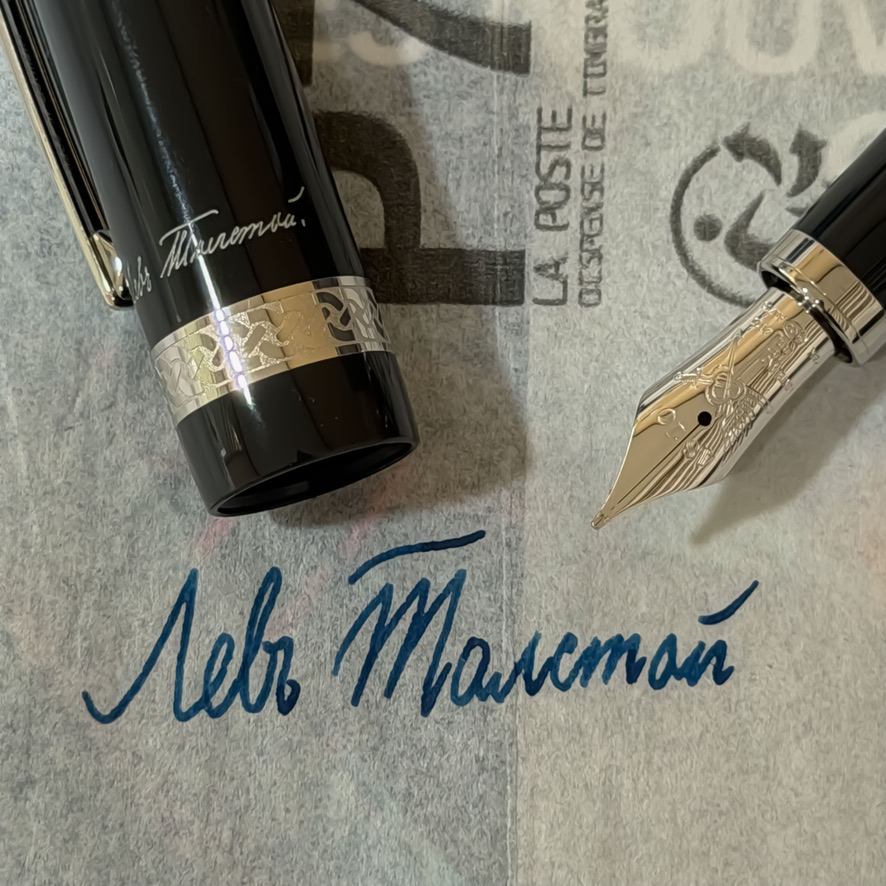
The Montblanc Writers Edition Leo Tolstoy Limited Edition is a profound tribute to the Russian master of realism, whose literary architecture was as vast as the steppe itself. In the lineage of the Writers Edition series, i.e. a collection that seeks to bridge the gap between the tactile act of writing and the philosophical weight of the author, the Tolstoy occupies a position of unique moral gravity. It completes my other Writer Edition collection that includes the architectural complexity of Goethe, the existential transformation of Kafka, and the poetic soaring of Saint-Exupéry. Tolstoy arrives as a grounding force, representing the struggle between aristocratic heritage and a radical, ascetic simplicity.
Lev Nikolayevich Tolstoy (Лев Николаевич Толстой) is most celebrated for the Napoleonic scale of War and Peace and the devastating psychological precision of Anna Karenina. However, this particular instrument draws its deepest inspiration from his later, more introspective works, such as The Death of Ivan Ilyich and Resurrection, reflecting his eventual rejection of worldly wealth. As Tolstoy famously wrote in Anna Karenina, Anything is better than lies and deceit, and this pen embodies that pursuit of truth through a design that prioritises raw texture over polished vanity.
The technical execution of the pen is a sophisticated study in symbolic storytelling. The barrel is crafted from silver-plated metal, uniquely hammered to provide a rugged, tactile surface that honours the manual labour Tolstoy championed at his estate, Yasnaya Polyana. This sits in deliberate contrast to the dark blue precious resin of the cap and the marble-grey resin of the cone: colours that evoke the stoic Russian winters and the modest bindings of his personal library. The cap is further distinguished by the refined engraving of Tolstoy’s own signature, a hallmark of the Writers Edition series that serves as a personal seal of authenticity.
Every aesthetic choice on this fountain pen serves a narrative purpose. The cap ring features a traditional Russian woven pattern, a nod to the folk art of the peasantry whom Tolstoy considered the true heartbeat of the nation. The rhodium-coated Au 750 solid gold nib is perhaps the most significant technical detail; it is intricately engraved with a telega, the humble horse-drawn carriage used by Russian farmers. This detail serves as a functional metaphor for Tolstoy’s life: a journey from the heights of nobility back to the most basic elements of human existence.
In the hand, the Tolstoy offers a substantial heft, feeling more robust than the metamorphic, silver-trimmed Kafka. It shares the “Grand Old Man of Letters” aura with the Goethe, yet it replaces the latter’s neoclassical elegance with a more rustic, textured dignity. To write with this pen is to be reminded of Tolstoy’s own reflection: “The two most powerful warriors are patience and time.”
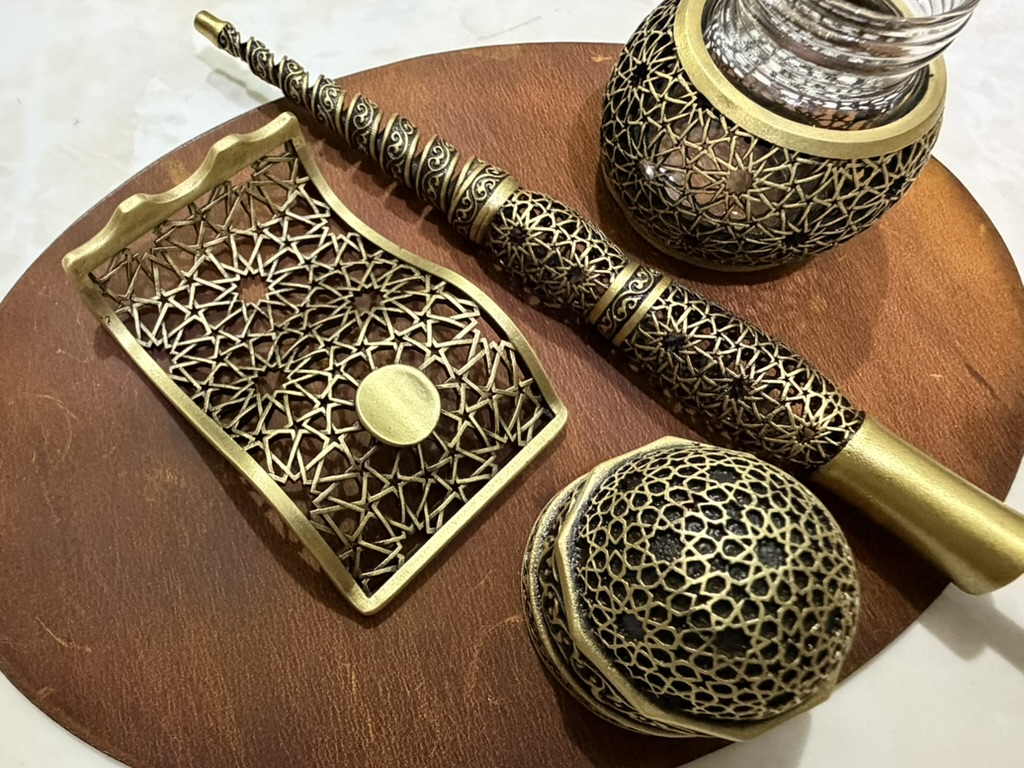
I bought this pen at the Hagia Sophia Museum. It is a carefully conceived calligraphic instrument shaped by history, geometry, and cultural continuity, where writing becomes an act of remembrance rather than mere inscription.
Crafted in solid brass and finished with a restrained antique patina, the pen draws its visual language from Seljuk and classical Islamic geometric traditions, the same intellectual grammar that once governed architecture, manuscript illumination, and ornamental theology. Its surface is wrapped in interlacing star patterns that suggest infinity without repetition, a visual metaphor for order beyond measure. These are not decorative gestures for their own sake; they echo a worldview in which geometry served as both mathematics and metaphysics.
As a dip pen, the instrument deliberately resists modern convenience. It demands pause, intention, and rhythm. Each line must be earned through motion and pressure, recalling a time when writing was inseparable from discipline and contemplation. The steel nib, simple and honest, allows expressive variation rather than mechanical consistency, placing responsibility back into the hand of the writer. This pen does not hurry; it invites patience.
The accompanying ink bottle and pen rest complete the set as a unified object of the desk. Their open latticework mirrors the pen’s geometry, while their weight and presence anchor the act of writing in physical space. Functionally sound, they are equally objects of quiet authority—tools that belong in a study, a library, or beside a manuscript, not hidden away in a drawer.
That this piece was purchased at Hagia Sophia is especially fitting. Few places embody continuity of civilisation as fully: Roman structure, Byzantine theology, Islamic scholarship, and modern memory coexist within its walls. This pen reflects that layered inheritance. It does not imitate any single era, but rather channels the enduring intellectual tradition that valued knowledge, beauty, and restraint in equal measure. The pen reminds me that writing was once a sacred craft, where ink carried weight, words carried responsibility, and form mattered as much as content. It is an object that does not merely write history, but quietly belongs to it.
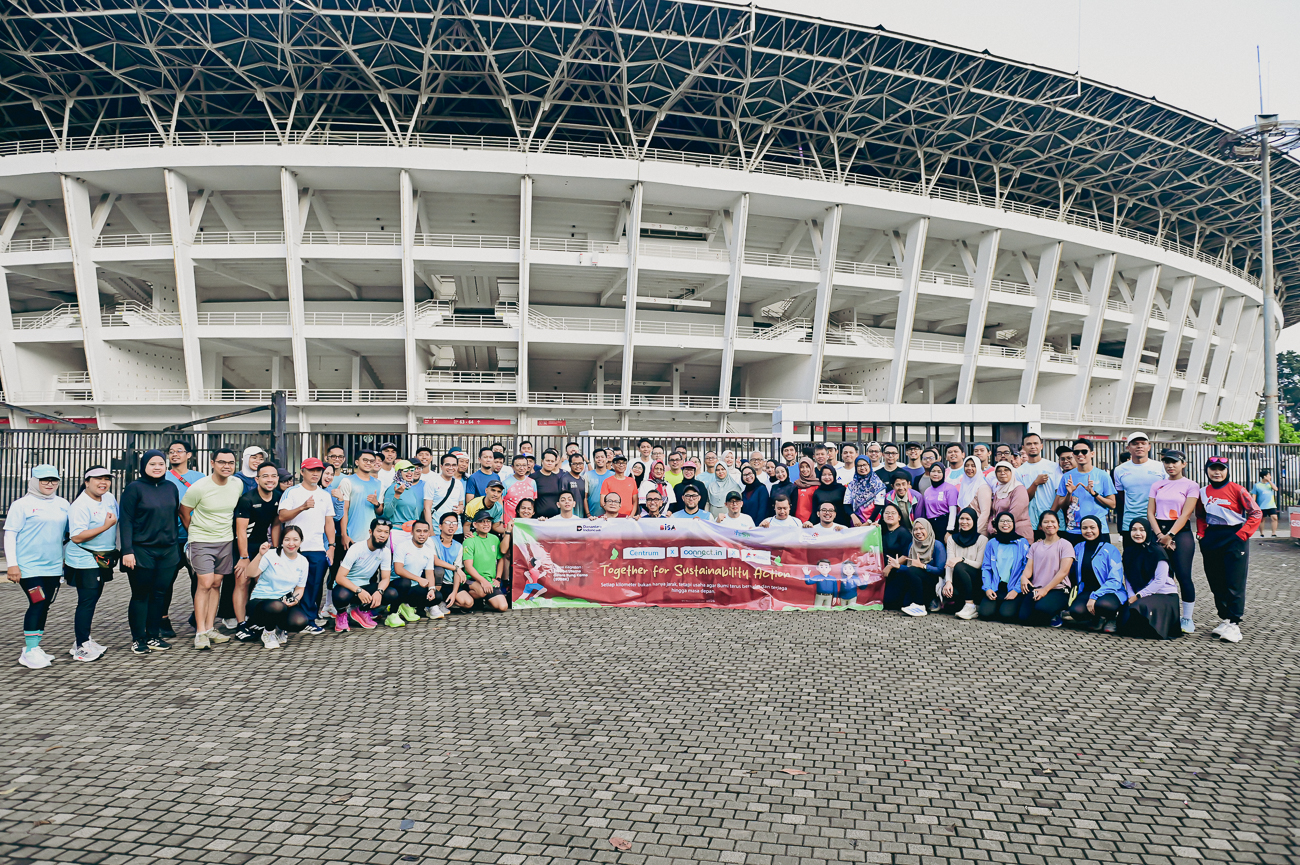
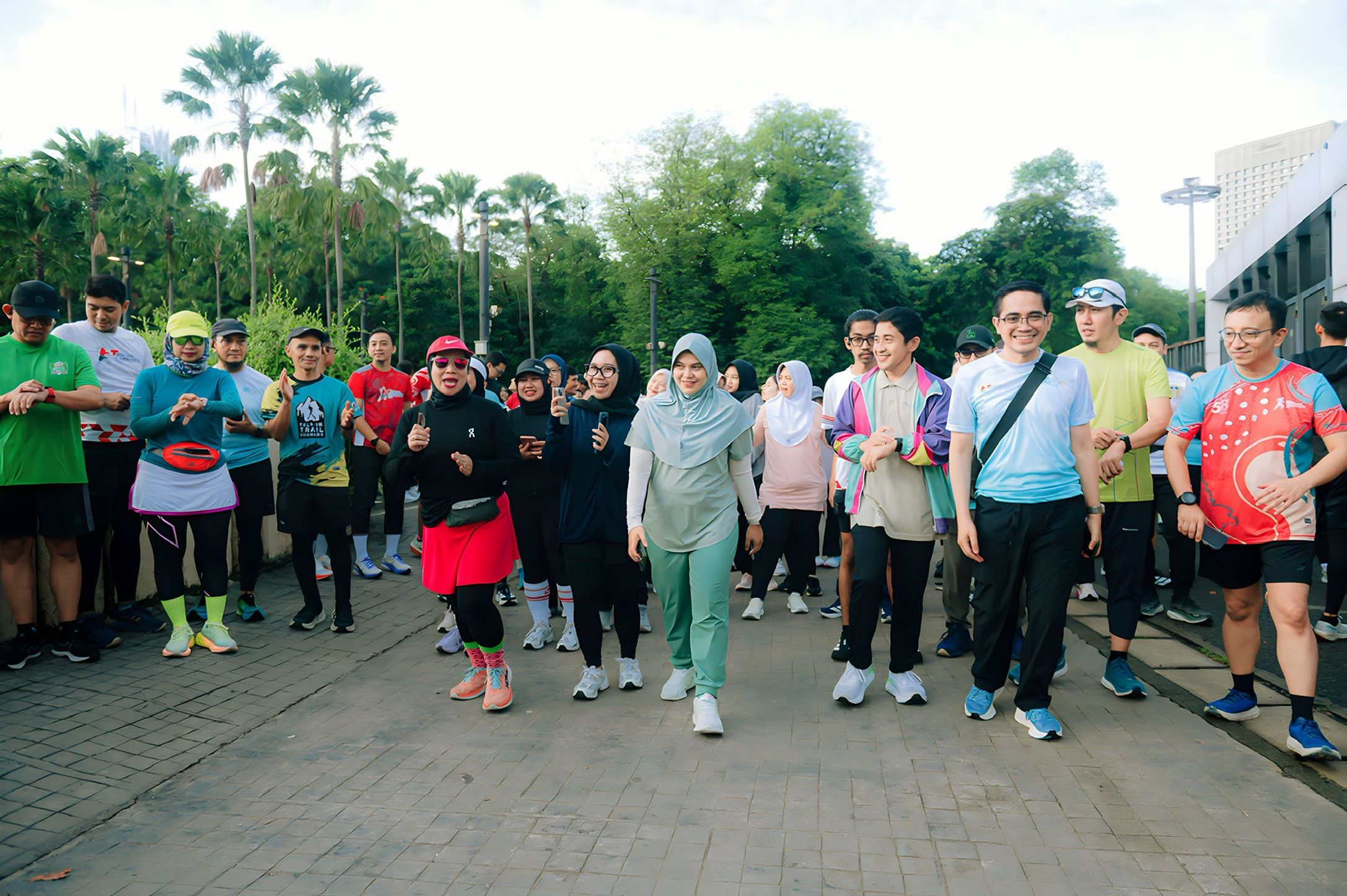
This morning, “Ayo Berlari” at GBK Senayan gathered Telkom Connect, Telkom Runner, Witel Jakarta Centrum, and an inspiring turnout that included the CEO, the Director of Digital IT, and the Director of Legal & Compliance of Telkom Group.
I opened the event in my role as Advisor to Telkom Connect, our volunteer alliance that strengthens collaborative engagement across the Group and with other SOEs. In my remarks, I underlined that in the midst of major and urgent challenges, we must continue to cultivate readiness, commitment, enthusiasm, and collaboration as we carry the nation’s transformation agenda and the company’s responsibilities forward.
As part of Earth Mission 2025: Mangrove Chapter, every kilometre run will translate into one mangrove seedling—up to 300 seedlings to be planted on 29 November 2025.
This activity extends Telkom Connect’s ongoing employee voluntrip initiatives throughout 2025, including Daging Qurban untuk Negeri, seagrass planting, turtle release, and coastal pandan planting—clear proof of our resolve to contribute meaningfully to society and the environment.
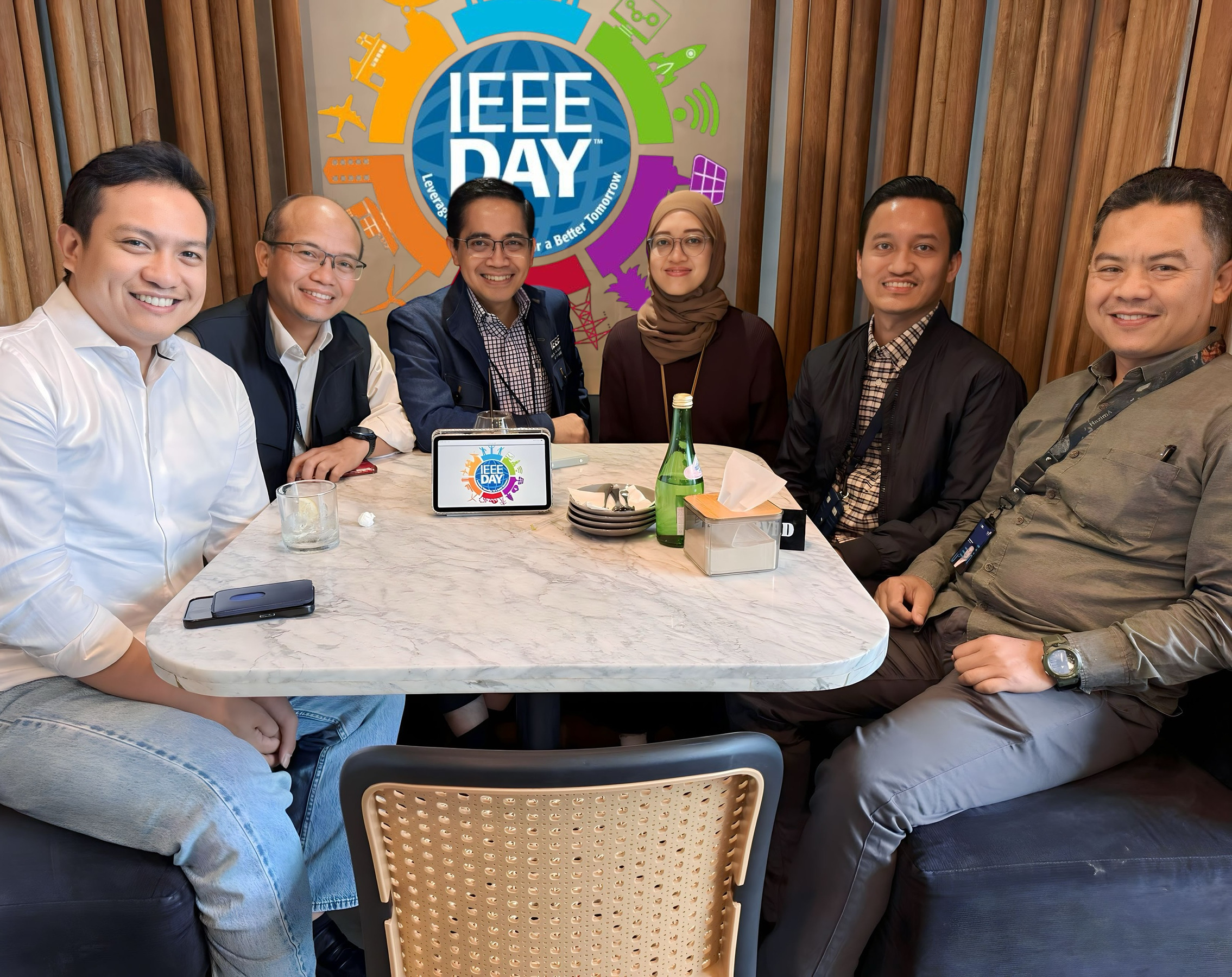
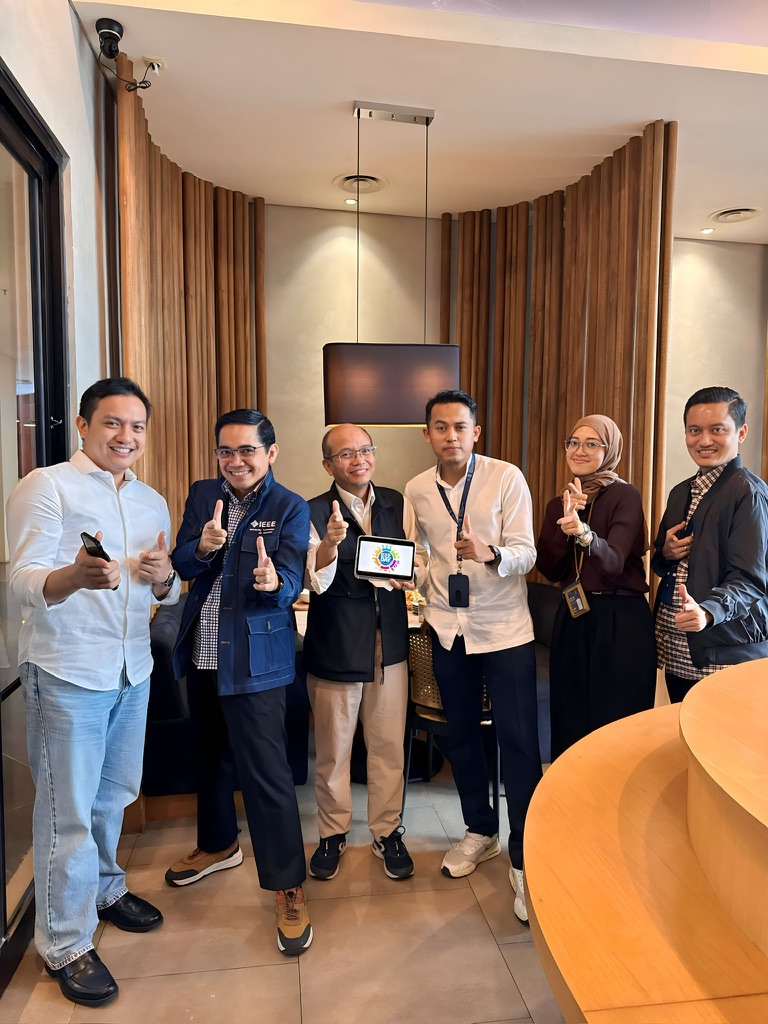
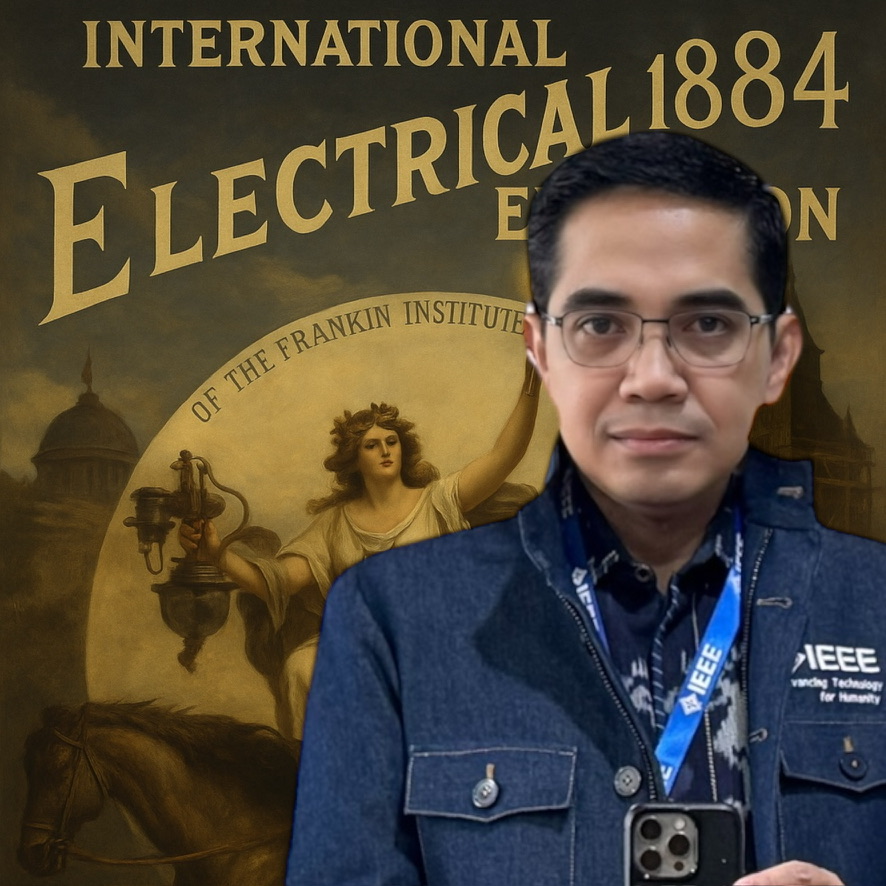
Happy IEEE Day! Started as professional collaborations in 1884, the IEEE expands to research & dissemination, to strategic global plan and standardization, to cutting-edge technology design & deployment, to the engagement of industry, universities, schools, students, and startups, and to humanitarian technology activities. IEEE: advancing technology for humanity.
In April 1884, a group of pioneers, including Thomas Edison, Alexander Graham Bell, George A. Hamilton, met in New York to form a professional body for the nascent field of electrical engineering, establishing the AIEE under Norvin Green. That same year, on 7–8 October, the AIEE held its first technical meeting at the International Electrical Exhibition in Philadelphia, an event widely regarded as the birth of organised electrical engineering in America. Among its early contributors were Nikola Tesla, Elihu Thomson, Edwin Houston, and Edward Weston, whose collective work later shaped the Institute of Electrical and Electronics Engineers (IEEE).
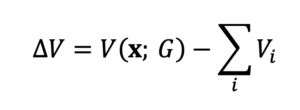
When considering mergers, acquisitions, alliances, or even intra-group synergies, it is useful to shift our perspective away from additive arithmetic and towards the philosophy of emergence. In complex systems, including business ecosystems as complex adaptive systems, value does not reside solely within the parts; rather, it arises through the patterned interactions between them. This emergent phenomenon is precisely what in corporate finance is labelled synergy value. In formal terms, we may describe the total incremental value of a collaboration as
where V(x; G) denotes the value of the whole system, generated by the vector of resources and activities x under a specific governance structure G, and ∑V represents the value of each entity in isolation. The very fact that ΔV may be greater than zero testifies to emergence: complementarities in action, dependencies properly orchestrated, and adaptive patterns unfolding across the system.
The Levers of Emergent Synergy
Four principal levers determine whether emergent value materialises or evaporates. The first is complementarity, or what economists term supermodularity. This describes the situation in which activities reinforce each other such that the marginal return of undertaking one activity is enhanced by the undertaking of another; formally, the cross-partial derivatives are positive (𝛿²V/𝛿xi 𝛿xj > 0). It is here that the popular slogan “one plus one equals more than two” has rigorous grounding.
The second lever is the interdependence structure. Every collaboration has a topology of dependencies, where some assets act as complements, others as substitutes, and some nodes become bottlenecks through which the value of the entire system is channelled. In business ecosystems, mapping this structure is indispensable, for it often dictates whether modularity and flexible linkages suffice, or whether full absorption is required.
The third lever is defined by the adaptive rules of the system. A collaboration is not static; it is a complex adaptive system in which local decisions, feedback loops, and routines create new global patterns. Where local experimentation is permitted, and where feedback loops are properly designed, valuable behaviours diffuse through the organisation or alliance. Where rigidity prevails, the system is condemned to stasis, and synergy remains a theoretical promise rather than an emergent reality.
Finally, there is the matter of orchestration capacity. This refers to the dynamic capabilities of leadership—sensing opportunities, seizing them through resource allocation, and reconfiguring the system as environments change. Ashby’s principle of requisite variety reminds us that the variety of governance and decision-making tools must match the variety and volatility of the environment. Without adequate orchestration, even strong complementarities and favourable topologies may collapse under the weight of integration costs.
Applications Across Collaboration Types
In mergers and acquisitions, the choice of integration model should mirror the degree of interdependence. The celebrated Haspeslagh–Jemison framework reminds us that absorption is not always optimal; linkage or preservation may unlock more emergent value when autonomy is vital. The risk of the so-called synergy mirage lies precisely in misjudging complementarities and ignoring the time it takes for emergent patterns to stabilise. Thus, every acquisition is less a completed transaction than a hypothesis about the future, whose proof lies in the integration process.
In alliances and joint ventures, synergy takes the form of options on emergence. Here, limited commitments allow parties to test complementarities without over-committing capital. The collaborative form is well-suited to contexts of uncertainty, where exploration of emergent patterns is required. Ecosystem logic also applies: co-opetition and the management of network externalities often define the extent of emergent value.
For intra-group business synergy, emergence must be cultivated across corporate units. Here, Herbert Simon’s notion of near-decomposability becomes instructive: groups should design modular interfaces so that subsidiaries adapt locally yet align globally. To maintain cooperation, emergent rents must be shared fairly; cooperative game theory suggests the Shapley value as one method of allocating incremental value in proportion to each unit’s marginal contribution. Without such fairness, group members are tempted to defect, undermining the collaborative potential of the system.
Measuring and Governing Emergence
Because synergy is emergent, it resists simple enumeration. Yet it is not beyond the reach of disciplined measurement. One may begin with a complementarity map, estimating where cross-partials are most positive, and therefore where joint action may yield the greatest return. Alongside, an ecosystem dependency graph may be drawn, in the spirit of Ron Adner’s ecosystem mapping, to reveal missing complements and bottlenecks whose removal could unlock value.
Where uncertainty is high, the logic of real options should prevail. Pilot projects, staged investments, or minority stakes serve as options to explore emergent potential without risking catastrophic downside. Parallel to this, a system of synergy accounting may be implemented, in which incremental value is decomposed using Shapley allocations, thereby aligning incentives with marginal contributions to the whole.
The Philosophical Bottom Line
Synergy lives not in assets but in interactions. Corporate actions—whether a merger, an alliance, or an intra-group initiative—are best understood as interventions in a complex system. When complementarities are strong, interdependencies are designed with care, adaptive rules permit experimentation, and orchestration capacity is sufficient, emergent synergy is more than a hopeful metaphor; it becomes an observable reality. Conversely, where these levers are mismanaged, the promised “1 + 1 > 2” dissolves into disappointment, integration costs, and value destruction.
Thus, the philosophy of emergence, long a staple of complexity science, is not an academic curiosity but a practical guide to business collaboration. It teaches us that the true measure of a deal or alliance lies not in the parts themselves, but in the patterns of interaction that the collaboration enables.
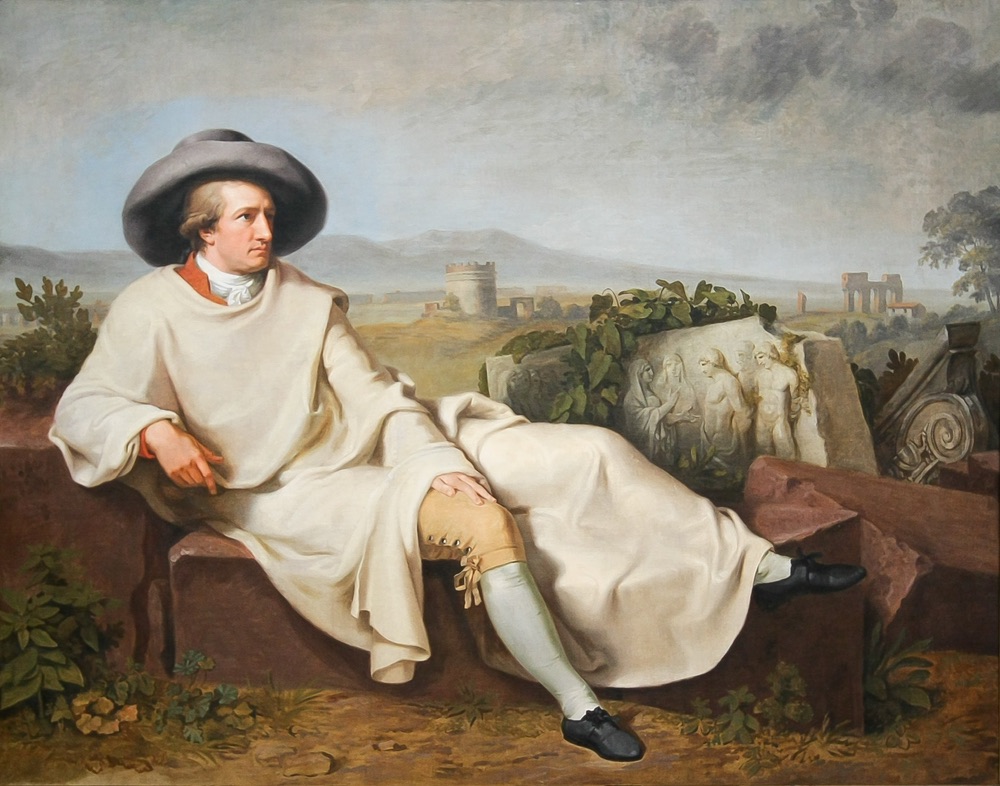
Goethe, born in Frankfurt, 28 August 1749, stands as one of the most commanding figures in European literature. He contributed and innovated in the era of Enlightenment, the Sturm und Drang movement, Romanticism, and the dawn of modernity. His influence in literature is matched by his engagement in botany, colour theory, anatomy, and the natural sciences, making him the archetype of the polymath. His vision of Weltliteratur, or world literature, envisaged a global dialogue of ideas and creativity that transcended borders. In philosophy, he placed the restless striving of the individual at the centre of his moral and artistic universe. His insights into human nature, society, and the interplay between reason and passion have inspired writers, thinkers, and leaders across cultures for more than two centuries. His Faust remains among the most translated and performed plays in the world, not simply as a theatrical work, but as a philosophical journey through the meaning of desire, action, and redemption.
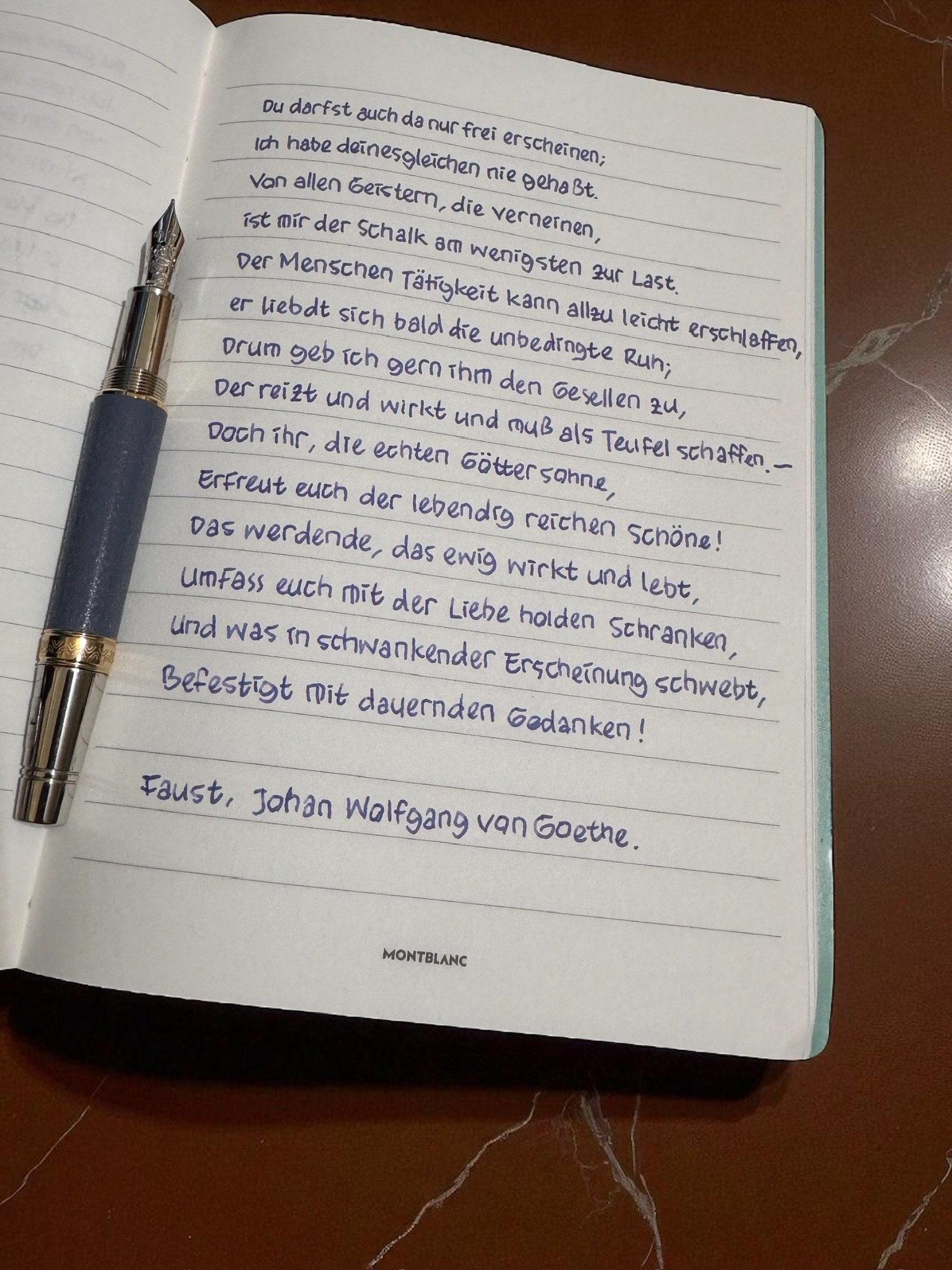
In tribute to his life, Montblanc has created the Writers Edition Homage to Johann Wolfgang von Goethe, a fountain pen whose design is infused with symbolic references to Goethe’s works and thought. The one in my collection has an F-size Au750 nib, engraved with an image inspired by Delacroix’s lithograph of Mephistopheles flying over a nocturnal city: a visual echo of Faust. The pen’s soft blue lacquer recalls the Juno Room in Goethe’s Weimar residence, a space of refined reflection, while the marble-like texture alludes to The Sorrows of Young Werther. Gold-coated fittings and the distinctive leaf-shaped clip reference his botanical studies, particularly The Metamorphosis of Plants. Even the gently curved cap, reminiscent of a chemist’s jar, honours Goethe’s scientific endeavours.
In Faust Part I, Goethe gives us the portrait of a man dissatisfied with the limits of human knowledge, who turns to Mephistopheles in pursuit of ultimate understanding and sensual experience. The story is personal and tragic, centred on Faust’s relationship with Gretchen, whose innocence is destroyed by his actions. It is a meditation on the perils of unrestrained ambition when it is inwardly focused, heedless of the human cost. Goethe gave a warning on the destructive potential in the human yearning for more when it serves only the self.
Faust Part II shifts the scale dramatically to an allegory of civilisation, art, politics, and creation. Faust moves beyond the pursuit of pleasure toward grand projects that seek to shape the world, culminating in a vision of land reclaimed for the benefit of future generations. Mephistopheles becomes less a corrupter and more an agent through whom creation is paradoxically advanced. In the end, Faust dies still bound by the pact, yet is saved, not through moral perfection, but through unending striving toward the better. Goethe’s mature philosophy emerges here: redemption lies in the act of perpetual becoming, drawn upward by beauty, love, and the creative will.
This philosophical journey is reflected in the Montblanc Goethe pen not merely through ornament, but through deliberate symbolic layering. Besides the engraving of Faust on the nib, the leaf clip speaks to transformation, echoing the moral metamorphosis of Faust himself, from self-absorption toward the service of higher ideals. The chemist’s jar-like cap is a nod to Goethe’s fusion of poetic imagination and scientific method, an acknowledgment that the quest for truth may be pursued along many parallel paths.
The choice of the soft, almost powdery blue for the cap and barrel is not merely decorative. It anchors the pen in the physical memory of Goethe’s personal surroundings, creating an emotional connection between the writer’s hand and the space in which Goethe himself contemplated his ideas. The marble-textured finish recalls not only the aesthetic of Werther’s world but also the enduring quality of Goethe’s influence, as if carved into the intellectual architecture of modern thought.