Strategi Pengembangan Ekosistem

Tulisan di Complexity Center tentang Padi UMKM sebagai case sebuah strategi bisnis berbasis complexity mengundang beberapa rekan mengajukan pertanyaan menarik, khususnya dalam bridging dari perspektif tentang complexity yang dianggap sangat teoretis dan rumit ke implementasi real di dunia bisnis dan teknis. Kebetulan aku sedang tulis paper berkait hal itu, yang fokusnya bukan ke produknya, tetapi ke strategi perusahan dalam mengembangkan ekosistem: bagaimana ekosistem ini dikawal, oleh siapa, dan dengan modal apa.

Saat pengembangan awal Padi UMKM di tahun 2020 (masa awal pandemi Covid-19), pengembangan ekosistem bisnis di Telkom Group dipimpin oleh Subdit Sinergi, bagian dari Dit Strategic Portfolio (DitSP). Platform dan bisnis Padi UMKM sendiri dipegang oleh Divisi Digital Business & Technology (DBT), bagian dari Dit Digital Business (DitDB). Ini bukan redundancy atau kesalahan rencana koordinasi, melainkan desain yang dibuat saat DitDSP dipecah jadi DitSP dan DitDB. Dalam case Padi UMKM, Div DBT berfokus pada platform, produk, dan bisnis; termasuk pembangunan, pemeliharaan, pengembangan, dan ekspansi. Kualitas, kapasitas, experience, inovasi, dll dll. Subdit Sinergi bekerja di lapisan lain: membentuk dan menumbuhkan ekosistem.
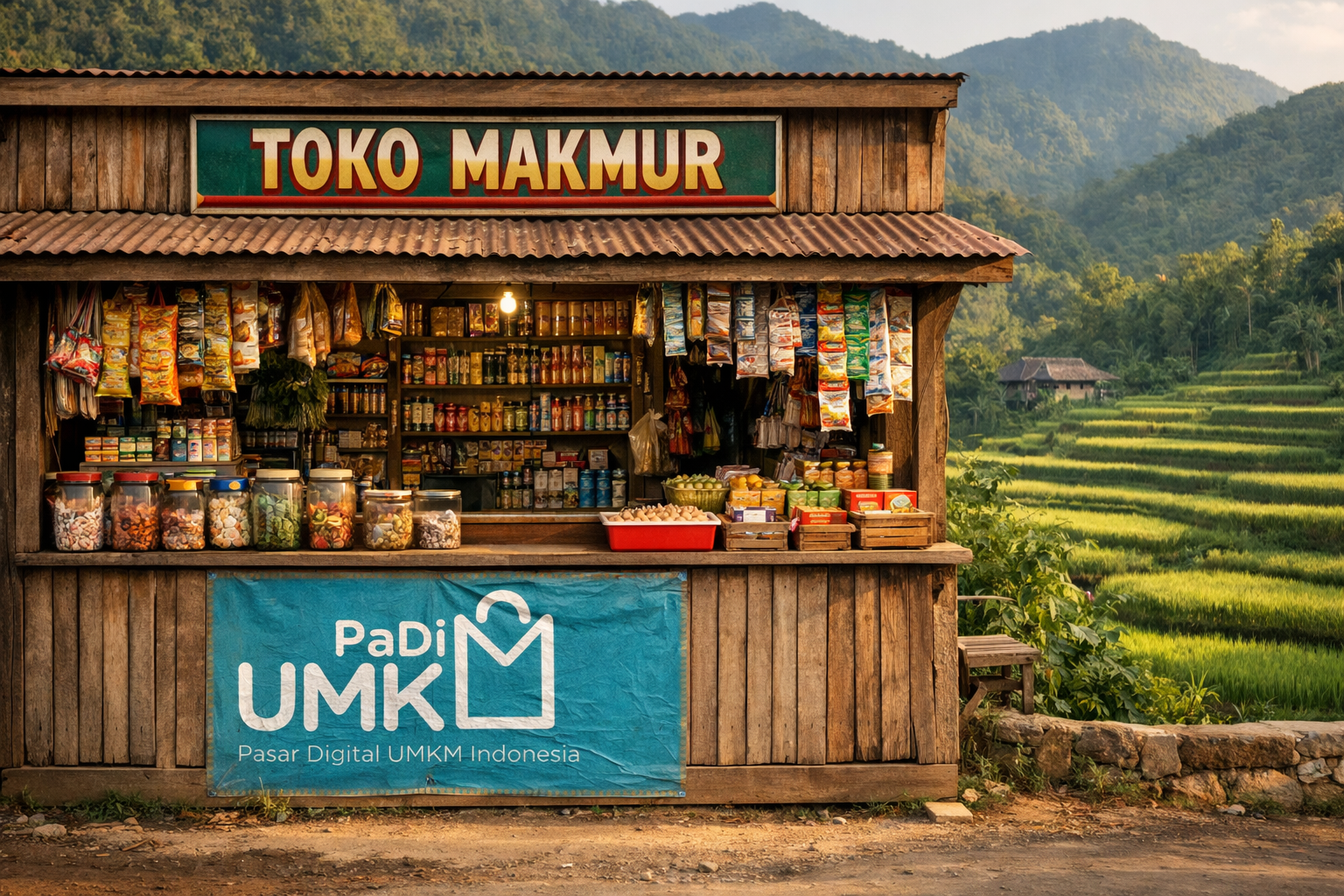
Sepenting apa strategi ekosistem? Padi UMKM bukan marketplace. Telkom baru membunuh marketplace Blanja.com saat Padi UMKM dirancang. Platform baru ini dirancang sebagai arsitektur koordinasi, tempat BUMN yang memiliki operasi pengadaan, UMKM di berbagai tingkatan dan sektor, lembaga keuangan, komunitas pembina UMKM, kementerian, dan lembaga regulasi dapat berinteraksi di level policy, strategi, bisnis, dan teknis. Setiap agent yang berbeda ini tentu memiliki concern yang sangat berbeda. Perspektif Complexity Economics dari WB Arthur menunjukkan bahwa dalam sistem seperti ini para agen beroperasi dalam ketidakpastian fundamental: mereka tidak memiliki rasionalitas seperti yang dibayangkan dalam perspektif ekonomi klasik; melainkan bersifat adaptif dan tunduk pada irasionalitas kolektif, volatilitas, dan disrupsi yang tidak dapat diprediksi dari perilaku setiap agent. Nilai keseluruhan sistem (synergy value) merupakan emergence yang muncul dari interaksi dinamis antar agent, bukan dari value setiap agent, termasuk agent kunci seperti pemilik platform. Para BUMN yang dikoordinasikan oleh Kementerian BUMN secara kolektif diposisikan sebagai pemilik simbolik ekosistem ini. Platform dimiliki Telkom, tetapi ekosistemnya dimiliki bersama. Apa inovasi yang diciptakan dari kebersamaan ini? Saat pandemi Covid-19 baru melanda, aku baca buku Christensen tentang Prosperity Paradox: pertumbuhan bisnis yang sesungguhnya, yaitu market-creating innovation, bukanlah soal mendatangi dan mengembangkan pasar yang ada, melainkan justru dari menciptakan pasar baru dari nonconsumption, dalam hal ini dari jutaan UMKM yang sebelumnya aksesnya sangat lemah ke industri nasional termasuk BUMN. Dalam bahasa HBR: strategi follow the money itu kuno dan bodoh, dan harus digantikan oleh follow where the money goes, atau create the environment where the money will have to go. Kembali ke Christensen, ini yang disebutnya paradoks kemakmuran: keberpihakan pada ekonomi rakyat adalah strategi bisnis yang paling efektif.

Di Telkom, Subdit Sinergi menjalankan tugas ini nyaris tanpa otoritas pada unit produksi dan unit bisnis, tanpa team dan anggaran yang besar, dan tanpa kendali internal atau eksternal. Modalnya adalah tuntutan visi dan strategi perusahaan, kepemimpinan yang suportif, keterlibatan yang dalam dan detail dalam lanskap kelembagaan, dan kemampuan membangun jejaring lintas unit dan institusi, melalui pengembangan konteks, komunikasi dan negosiasi, hingga approach pada regulasi. Dalam praktiknya, kami mengkoordinasikan para BUMN, termasuk via PMO Padi dan via kepemimpinan KBUMN, untuk mengkonversi operasi procurement menjadi demand engine; bernegosiasi dan berkolaborasi di level policy, strategy, hingga event dalam kerangka BBI (Bangga Buatan Indonesia), PBJP (Pengadaan Barang/Jasa Pemerintah), dan P3DN (Peningkatan Penggunaan Produk Dalam Negeri) yang saat itu dipimpin Kemkomarves bersama K/L/PD terkait; mengawal koordinasi program ekspor bersama berbagai kementerian untuk mendorong UMKM menembus pasar internasional; membangun dan merawat hubungan dengan komunitas pengembang UMKM, termasuk Pemprov, Pemkab, ormas, dan marketplace, agar suplai UMKM berkualitas terus mengalir; serta menstrukturkan kesepakatan dengan bank dan lembaga keuangan seperti BRI Group (termasuk Pegadaian, PNM, Bank Raya) untuk memastikan UMKM punya akses pembiayaan yang akan memperbesar volume pasar. Ini tidak bisa menggunakan akses komando, melainkan melalui yang dalam istilah CAS disebut interaction architecture: membangun konteks di mana para agent terdorong untuk berkoordinasi secara sukarela demi kepentingan masing-masing.

Karena hal-hal ini merupakan implementasi dari complexity, banyak hal yang tampak kontraintuitif saat dilihat dari perspektif manajemen konvensional. Walau memiliki produk, platform, dan brand Padi UMKM, Telkom tidak mengklaim kepemilikan ekosistem. Padi UMKM diposisikan dalam narasi kepentingan nasional, bukan narasi korporat. Saat pemerintah pusat, dalam forum BBI/P3DN/PBJP meminta Padi UMKM diekspansi ke seluruh K/L/PD, Telkom mengusulkan agar pengadaan K/L/PD tetap dipegang entitas pemerintah, yaitu LKPP, dengan Telkom berlaku sebagai pengembang platform yang merupakan ekspansi dari Padi UMKM. Ini adalah ecological thinking: menjaga keberagaman dan modularitas agar sistem tetap adaptif, tidak terjebak dalam rigidity trap, di mana konektivitas yang terlalu tinggi tanpa keberagaman yang cukup membuat sistem justru menjadi rapuh. Telkom juga membangun path dependence: titik di mana ekosistem dapat tertanam dalam di berbagai lapisan institusional sehingga tak mudah dihentikan, kecuali oleh perubahan struktur yang massive oleh seluruh stakeholder. Ini adalah desain yang matang untuk keberlanjutan sistemik: memanfaatkan mekanisme increasing returns yang Arthur gambarkan, di mana setiap BUMN baru yang bergabung meningkatkan nilai platform bagi UMKM, dan setiap UMKM yang sukses bertransaksi memperkuat legitimasi politik ekosistem secara keseluruhan. Hasilnya terlihat nyata: per akhir 2024, ratusan ribu UMKM B2B terdaftar, 74.000 pembeli B2B, hampir 300.000 transaksi dalam setahun, dan GMV kumulatif melampaui IDR 28 triliun sejak peluncuran.

Dari sisi manajemen strategis, aku coba formulasikan narasi ini dalam paper Ecosystem Stewardship as Organisational Capability (masih ditulis). Hal yang dilaksanakan oleh Subdit Sinergi dalam kerangka Padi UMKM adalah sebuah kapabilitas organisasional yang nyata dan unik. Strategi di level ekosistem belum secara serius masuk ke dokumen strategi para BUMN. Ecosystem stewardship ini bukan platform management, bukan stakeholder management, dan bukan sekedar synergy program; melainkan sebuah kapabilitas untuk mengkatalisasi, mendukung, dan mengadaptasi sistem multi-aktor lintas batas kelembagaan, dimana para agent memiliki interdependensi dalam bentuk otoritas penuh untuk mengarahkan sistem secara sepihak. Tentunya cukup banyak narasi akademis yang mengimplementasikan CAS pada transformasi organisasi, supply chain, kesehatan, dan lain-lain. Namun bahkan belum banyak ditemukan narasi berisi formulasi eksplisit dan kohesif yang menyatukan complexity economics (Arthur), teori CAS (Holland), market ecology, dan kerangka ekosistem digital, lalu menerjemahkannya ke dalam desain dan implementasi kapabilitas organisasional lintas-institusi dalam skala nasional; dan kemudian bukan saja dijadikan kerangka teoretis, melainkan benar diimplementasikan dan menghasilkan dampak ekonomi yang terukur. Dalam pengertian itulah Padi UMKM, dan ecosystem stewardship sebagai kapabilitas yang menopangnya, menjadi inovasi yang layak mendapat perhatian lebih dari sekadar kisah sukses digital.

Ekosistem dalam konteks ini juga tidak selalu merujuk pada hubungan dengan pihak eksternal. Untuk perusahaan dengan grup yang besar, seperti holding, afiliasi, dan anak perusahaan, termasuk seperti Telkom Group, kita meyakini bahwa koordinasi dan kolaborasi yang paling efektif justru lahir ketika kita mengadopsi perspektif kompleksitas dan memperlakukan hubungan dalam grup sebagai ekosistem itu sendiri. Entitas-entitas dalam grup yang berbeda bukan sekadar unit yang perlu disinergikan secara administratif, tetapi dipandang sebagai agen-agen heterogen dengan visi misi, kapabilitas, dan dinamika adaptasi yang beragam. Mengelola mereka dengan prinsip ecosystem stewardship, bukan dengan pendekatan top-down yang mekanistik, adalah cara yang jauh lebih tepat untuk menciptakan nilai bersama. Dalam dunia yang semakin kompleks dan volatile, kemampuan semacam ini bukan kekenesan intelektual, melainkan telah menjadi prasyarat untuk bertahan dan tumbuh.

Padi UMKM

When I first designed what later became Padi UMKM, I did not do it in a boardroom. I did it at home, during long months of WFH in the middle of the Covid-19 pandemic. I drew the system on papers spread on the floor. At that time, my head was full of ideas about ecosystems, complexity theory, and complexity economics. I was not thinking about building another digital platform. I was thinking about how economic coordination itself breaks down under systemic shock, and how new coordination patterns might emerge when old ones collapse. In that sense, Padi UMKM was born less from a product mindset than from an ecosystem mindset, with complexity theory consciously in the background.

When the pandemic hit, what collapsed was not only the economy. What collapsed was the coordination logic of the economy. Supply chains broke, demand evaporated, SMEs lost access to markets, and institutions discovered that their standard operating procedures were designed for stability, not for systemic disruption. Many organisations reacted by accelerating digital projects, launching platforms, and optimising internal processes. That helped, but it did not address the deeper problem. The economic ecosystem itself had lost its organising structure. Actors that were rational in isolation could no longer produce coherent outcomes collectively. This is how complex systems behave under stress: when established coordination patterns fail, local rationality no longer aggregates into systemic order.

Padi UMKM did not start as a brilliant digital product idea. It started as a response to a coordination failure across a fragmented system of SOEs, SMEs, banks, regulators, ministries, and development agencies. All were acting with good intentions, yet through incompatible logics, timelines, and mandates. The system was not short of initiatives; it was short of coherence. In complexity terms, the economy had been pushed far from equilibrium, and the challenge was not optimisation but reorganisation. What was needed was not another tool, but a new pattern of interaction among heterogeneous agents.

The real innovation of Padi UMKM was therefore not the platform. The platform was the easy part. The digital workforce of Telkom Group can design platforms; that is an operational capability. The platform was necessary, and it became the core infrastructure of the ecosystem, but it was not the breakthrough. The breakthrough was the deliberate redefinition of roles within the economic system. SOEs must reposition their procurement operation into a capability of creating new market, i.e. an SME-based market structure. SMEs were not framed as beneficiaries of aid, but as economic agents that could be structurally integrated into formal procurement and value creation. Banks and financial institutions were not treated merely as lenders, but as part of an enabling architecture that combined financing with capability development and pathways to export. What changed was not a feature set. What changed was the pattern of interaction between economic actors.

The formal launching of Padi UMKM itself was not initiated by Telkom or by the Ministry of SOEs. It was planned within the nationwide BBI (Bangga Buatan Indonesia) program, because the central government needed a real, executable instrument to accelerate domestic economic circulation under crisis. Telkom showed a commitment to develop the platform, even though it was still imperfect at that time. The urgency was national, not corporate. This matters, because it positioned Padi UMKM from the beginning not as a corporate product launch, but as a systemic intervention embedded in a national recovery narrative. The early external promotion of Padi UMKM, beyond the internal SOE environment, was also driven by the BBI program. Over time, almost by systemic selection rather than by design, Padi UMKM became the de facto e-commerce infrastructure for BBI, as other platforms could not fit the specific institutional and ecosystemic roles required by the program.

From the beginning, we made a counterintuitive choice in the way the system was governed. Telkom deliberately limited its role to being the product and platform owner. The ecosystem itself was not branded as Telkom’s program. The community was symbolically owned by the Ministry of SOEs and by SOEs collectively. Even the name Padi UMKM did not originate from Telkom. This was not a political compromise; it was a strategic design choice grounded in complexity thinking. In complex systems, ecosystems tend to collapse when one actor over-claims ownership. When the platform owner also claims to own the ecosystem, other actors reduce their commitment, hedge their participation, or quietly resist. By stepping back from symbolic ownership, Telkom created space for other institutions to step forward. The platform provided the infrastructure, but the legitimacy of the ecosystem was deliberately distributed across actors.

At some point, something structurally interesting happened. The initiative crossed a threshold where no single actor could kill it anymore. The CEO of Telkom could not simply shut it down because the ecosystem had become institutionally embedded beyond Telkom. The Minister of SOEs could not dismantle it easily because it had become part of the official narrative of national economic recovery. The President could not disown it because it had been publicly positioned as a success story through BBI, PEN, and related programs. This was not political theatre. This was the moment when the system acquired path dependence. Once an initiative becomes embedded across multiple layers of institutional narrative and governance, it ceases to be a project and becomes part of the system itself. At that point, you are no longer managing a prograe. You are dealing with a living economic structure.

Value in Padi UMKM did not come from transactions alone. It emerged from the coupling of multiple layers of interaction. Transactions between SOEs and SMEs were reinforced by access to credit, by certification mechanisms that enabled formal participation, by development programmes that upgraded SME capabilities, and by pathways to export markets. None of these elements, on their own, would have been transformative. The transformation emerged from their interaction. This is how complex economies create value: not through linear pipelines, but through ecosystems in which different forms of capital, i.e. financial, institutional, social, and operational, reinforce one another over time.

Internally in Telkom, there was a structural separation of roles that proved critical. The Digital Business Directorate (DDB) operated at the product and business level. Its logic was operational: build, run, scale, monetise, and maintain the platform. Even as the platform owner and economic keystone, it remained only one agent within the broader ecosystem. In parallel, the Synergy Subdirectorate under the Strategic Portfolio Directorate worked at the ecosystem level. This role was not about features, roadmaps, or KPIs. It was about sensing emergent patterns of collaboration, mediating conflicts between institutions, and navigating collisions between policy signals and organisational incentives. In the early phase, the Synergy team also played a foundational role in organising cross-SOE agreements, preparing the multi-actor launch, embedding Padi UMKM within the BBI program, and connecting it with multiple SME build-up initiatives involving the Ministry of SMEs, the Ministry of Trade, and other institutions. This work was not linear project management; it was ecosystem orchestration under uncertainty.

In Indonesia’s context, the interaction between SOEs, SMEs, banks, and regulators is not merely complex; it is quasi-chaotic. Mandates overlap, incentives conflict, and policies evolve at different speeds and under different political pressures. In such an environment, precise prediction is an illusion. What becomes possible instead is navigation: sensing where constructive patterns of emergence are forming, dampening destructive feedback loops before they escalate, and shaping the boundaries within which the ecosystem evolves. This is not classical management. This is leadership under complexity.

As a result of its early success, there was a moment when the government, again through the BBI programme, asked to expand Padi UMKM to cover all government agencies (K/L/PD). On paper, this looked like success, with an enormous projected GMV. In reality, it carried a systemic risk. Full integration into the broader government procurement apparatus would have imposed rigid compliance structures and administrative constraints that could have frozen the adaptive dynamics that made the ecosystem work. The decision to return that expansion to LKPP, while positioning Telkom only as a platform provider for LKPP, was a deliberate choice to preserve modularity and flexibility over symbolic scale. In complex systems, scale without adaptability is not growth; it is fragility disguised as success.

What this experience ultimately taught us is uncomfortable for traditional management thinking. In complex economic ecosystems, you cannot engineer outcomes. You can only design conditions: boundaries, incentives, roles, and narratives that make constructive emergence more likely than destructive collapse. The platform mattered. The technology mattered. But what mattered more was the humility to accept that once an ecosystem becomes alive, you are no longer the architect standing outside the system. You are one of the agents operating within it.

The strategic lesson for C-level leadership is this. In times of systemic disruption, competitive advantage no longer lies primarily in having the most sophisticated product or the fastest execution. It lies in the capability to shape interaction spaces across institutions, sectors, and policy domains. Leadership shifts from control to stewardship. Strategy shifts from optimisation to navigation. And success is no longer measured only by ownership, but by whether the system you helped catalyse can survive, adapt, and continue to create value even when you step back.

That, ultimately, is what Padi UMKM represents. Not a digital product success story, but a case of how leadership, strategy, and technology can be recomposed to operate effectively in a complex, adaptive economy under crisis. It is an ecosystem in motion. It is Synergy in action.

Note: This is a copy of my post at Complexity Center [LINK] and an update of my initial story about Padi UMKM written 5 years ago [LINK].

Padi UMKM — A Complexity Case

When I first designed what later became Padi UMKM, I did not do it in a boardroom. I did it at home, during long months of WFH in the middle of the Covid-19 pandemic. I drew the system on papers spread on the floor. At that time, my head was full of ideas about ecosystems, complexity theory, and complexity economics. I was not thinking about building another digital platform. I was thinking about how economic coordination itself breaks down under systemic shock, and how new coordination patterns might emerge when old ones collapse. In that sense, Padi UMKM was born less from a product mindset than from an ecosystem mindset, with complexity theory consciously in the background.

When the pandemic hit, what collapsed was not only the economy. What collapsed was the coordination logic of the economy. Supply chains broke, demand evaporated, SMEs lost access to markets, and institutions discovered that their standard operating procedures were designed for stability, not for systemic disruption. Many organisations reacted by accelerating digital projects, launching platforms, and optimising internal processes. That helped, but it did not address the deeper problem. The economic ecosystem itself had lost its organising structure. Actors that were rational in isolation could no longer produce coherent outcomes collectively. This is how complex systems behave under stress: when established coordination patterns fail, local rationality no longer aggregates into systemic order.

Padi UMKM did not start as a brilliant digital product idea. It started as a response to a coordination failure across a fragmented system of SOEs, SMEs, banks, regulators, ministries, and development agencies. All were acting with good intentions, yet through incompatible logics, timelines, and mandates. The system was not short of initiatives; it was short of coherence. In complexity terms, the economy had been pushed far from equilibrium, and the challenge was not optimisation but reorganisation. What was needed was not another tool, but a new pattern of interaction among heterogeneous agents.

The real innovation of Padi UMKM was therefore not the platform. The platform was the easy part. The digital workforce of Telkom Group can design platforms; that is an operational capability. The platform was necessary, and it became the core infrastructure of the ecosystem, but it was not the breakthrough. The breakthrough was the deliberate redefinition of roles within the economic system. SOEs must reposition their procurement operation into a capability of creating new market, i.e. an SME-based market structure. SMEs were not framed as beneficiaries of aid, but as economic agents that could be structurally integrated into formal procurement and value creation. Banks and financial institutions were not treated merely as lenders, but as part of an enabling architecture that combined financing with capability development and pathways to export. What changed was not a feature set. What changed was the pattern of interaction between economic actors.

The formal launching of Padi UMKM itself was not initiated by Telkom or by the Ministry of SOEs. It was planned within the nationwide BBI (Bangga Buatan Indonesia) program, because the central government needed a real, executable instrument to accelerate domestic economic circulation under crisis. Telkom showed a commitment to develop the platform, even though it was still imperfect at that time. The urgency was national, not corporate. This matters, because it positioned Padi UMKM from the beginning not as a corporate product launch, but as a systemic intervention embedded in a national recovery narrative. The early external promotion of Padi UMKM, beyond the internal SOE environment, was also driven by the BBI program. Over time, almost by systemic selection rather than by design, Padi UMKM became the de facto e-commerce infrastructure for BBI, as other platforms could not fit the specific institutional and ecosystemic roles required by the program.

From the beginning, we made a counterintuitive choice in the way the system was governed. Telkom deliberately limited its role to being the product and platform owner. The ecosystem itself was not branded as Telkom’s program. The community was symbolically owned by the Ministry of SOEs and by SOEs collectively. Even the name Padi UMKM did not originate from Telkom. This was not a political compromise; it was a strategic design choice grounded in complexity thinking. In complex systems, ecosystems tend to collapse when one actor over-claims ownership. When the platform owner also claims to own the ecosystem, other actors reduce their commitment, hedge their participation, or quietly resist. By stepping back from symbolic ownership, Telkom created space for other institutions to step forward. The platform provided the infrastructure, but the legitimacy of the ecosystem was deliberately distributed across actors.

At some point, something structurally interesting happened. The initiative crossed a threshold where no single actor could kill it anymore. The CEO of Telkom could not simply shut it down because the ecosystem had become institutionally embedded beyond Telkom. The Minister of SOEs could not dismantle it easily because it had become part of the official narrative of national economic recovery. The President could not disown it because it had been publicly positioned as a success story through BBI, PEN, and related programs. This was not political theatre. This was the moment when the system acquired path dependence. Once an initiative becomes embedded across multiple layers of institutional narrative and governance, it ceases to be a project and becomes part of the system itself. At that point, you are no longer managing a prograe. You are dealing with a living economic structure.

Value in Padi UMKM did not come from transactions alone. It emerged from the coupling of multiple layers of interaction. Transactions between SOEs and SMEs were reinforced by access to credit, by certification mechanisms that enabled formal participation, by development programmes that upgraded SME capabilities, and by pathways to export markets. None of these elements, on their own, would have been transformative. The transformation emerged from their interaction. This is how complex economies create value: not through linear pipelines, but through ecosystems in which different forms of capital, i.e. financial, institutional, social, and operational, reinforce one another over time.

Internally in Telkom, there was a structural separation of roles that proved critical. The Digital Business Directorate (DDB) operated at the product and business level. Its logic was operational: build, run, scale, monetise, and maintain the platform. Even as the platform owner and economic keystone, it remained only one agent within the broader ecosystem. In parallel, the Synergy Subdirectorate under the Strategic Portfolio Directorate worked at the ecosystem level. This role was not about features, roadmaps, or KPIs. It was about sensing emergent patterns of collaboration, mediating conflicts between institutions, and navigating collisions between policy signals and organisational incentives. In the early phase, the Synergy team also played a foundational role in organising cross-SOE agreements, preparing the multi-actor launch, embedding Padi UMKM within the BBI program, and connecting it with multiple SME build-up initiatives involving the Ministry of SMEs, the Ministry of Trade, and other institutions. This work was not linear project management; it was ecosystem orchestration under uncertainty.

In Indonesia’s context, the interaction between SOEs, SMEs, banks, and regulators is not merely complex; it is quasi-chaotic. Mandates overlap, incentives conflict, and policies evolve at different speeds and under different political pressures. In such an environment, precise prediction is an illusion. What becomes possible instead is navigation: sensing where constructive patterns of emergence are forming, dampening destructive feedback loops before they escalate, and shaping the boundaries within which the ecosystem evolves. This is not classical management. This is leadership under complexity.

As a result of its early success, there was a moment when the government, again through the BBI programme, asked to expand Padi UMKM to cover all government agencies (K/L/PD). On paper, this looked like success, with an enormous projected GMV. In reality, it carried a systemic risk. Full integration into the broader government procurement apparatus would have imposed rigid compliance structures and administrative constraints that could have frozen the adaptive dynamics that made the ecosystem work. The decision to return that expansion to LKPP, while positioning Telkom only as a platform provider for LKPP, was a deliberate choice to preserve modularity and flexibility over symbolic scale. In complex systems, scale without adaptability is not growth; it is fragility disguised as success.

What this experience ultimately taught us is uncomfortable for traditional management thinking. In complex economic ecosystems, you cannot engineer outcomes. You can only design conditions: boundaries, incentives, roles, and narratives that make constructive emergence more likely than destructive collapse. The platform mattered. The technology mattered. But what mattered more was the humility to accept that once an ecosystem becomes alive, you are no longer the architect standing outside the system. You are one of the agents operating within it.

The strategic lesson for C-level leadership is this. In times of systemic disruption, competitive advantage no longer lies primarily in having the most sophisticated product or the fastest execution. It lies in the capability to shape interaction spaces across institutions, sectors, and policy domains. Leadership shifts from control to stewardship. Strategy shifts from optimisation to navigation. And success is no longer measured only by ownership, but by whether the system you helped catalyse can survive, adapt, and continue to create value even when you step back.

That, ultimately, is what Padi UMKM represents. Not a digital product success story, but a case of how leadership, strategy, and technology can be recomposed to operate effectively in a complex, adaptive economy under crisis. It is an ecosystem in motion. It is Synergy in action.

CIMA Strategic Leaders Talk

Within the global finance profession, CIMA (Chartered Institute of Management Accountants) has the responsibility for setting management accounting competency standards oriented towards business strategy. In alliance with the AICPA, CIMA facilitates the CGMA (Chartered Global Management Accountant) professional designation, ensuring that practitioners possess a universal business language for managing organisational performance. The Country Manager for CIMA in Indonesia is Mr Dwi Putra, a Coventry University alumnus who first identified me as a member of the ‘Order of the Phoenix’ because my iPhone lock screen displayed the classic Coventry University logo.

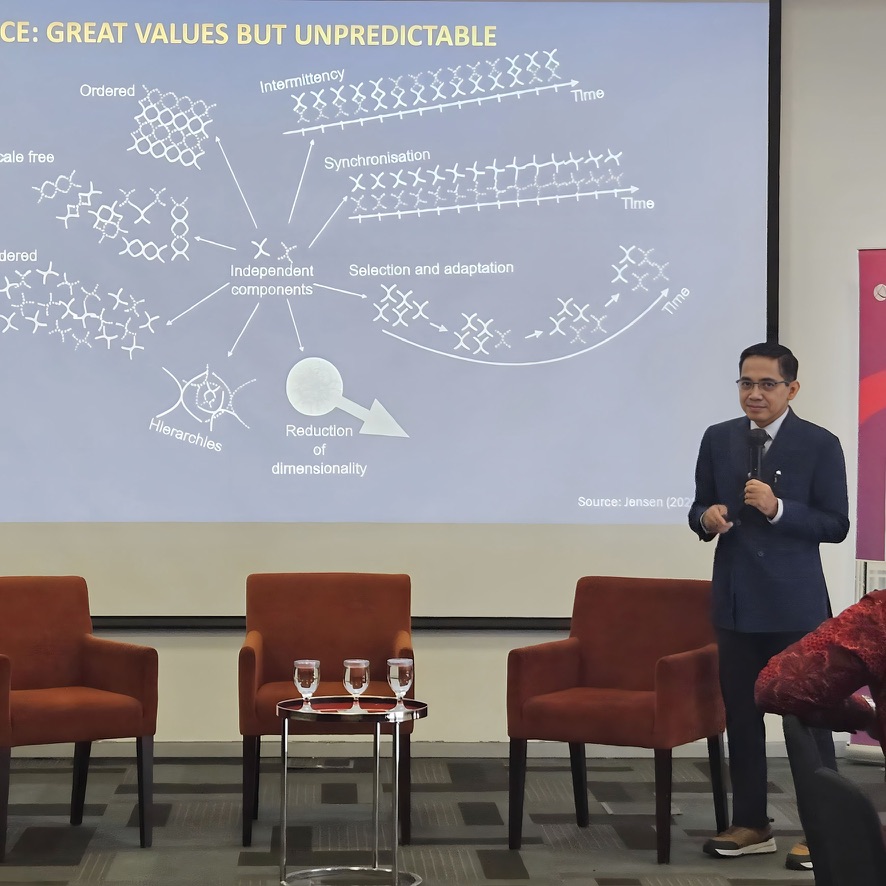
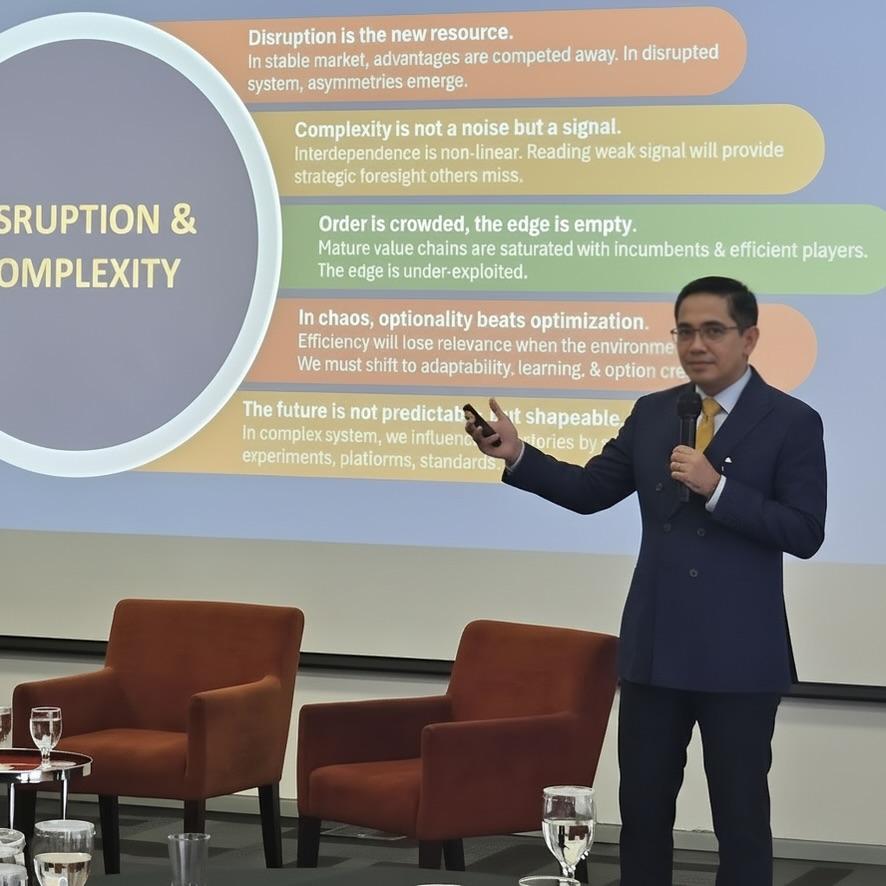
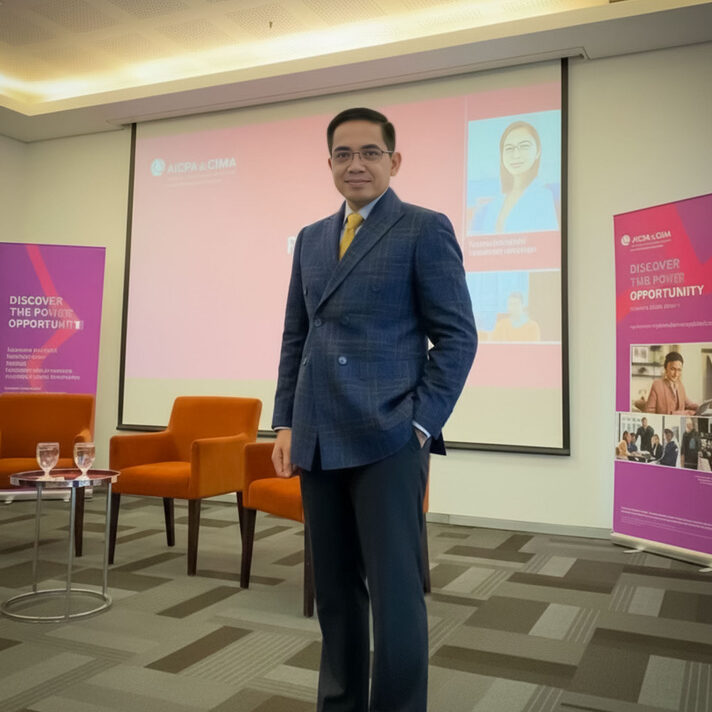
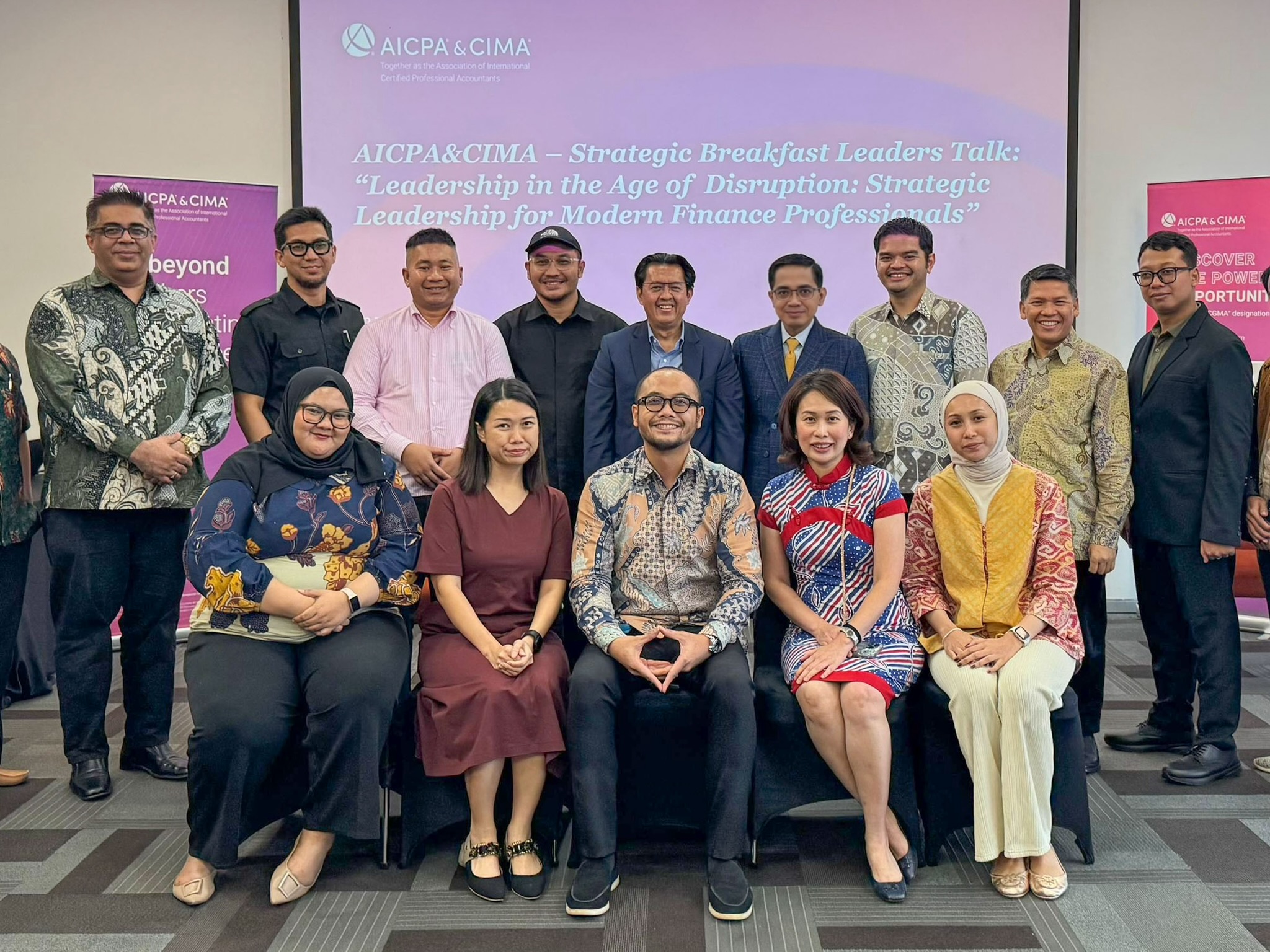
At CIMA’s invitation, on 12 February 2026, I delivered my presentation a CIMA Strategic Leaders Breakfast Talk at the Cyber 2 Building entitled “Leadership in the Age of Disruption — Strategic Leadership for Modern Finance Professionals”. The initial plan was for me to be the sole speaker; however, Mr M Fahmi El Mubarak, CEO of the BUMN School of Excellence, was later added to the programme. It was a real honour for me to share the stage with him.

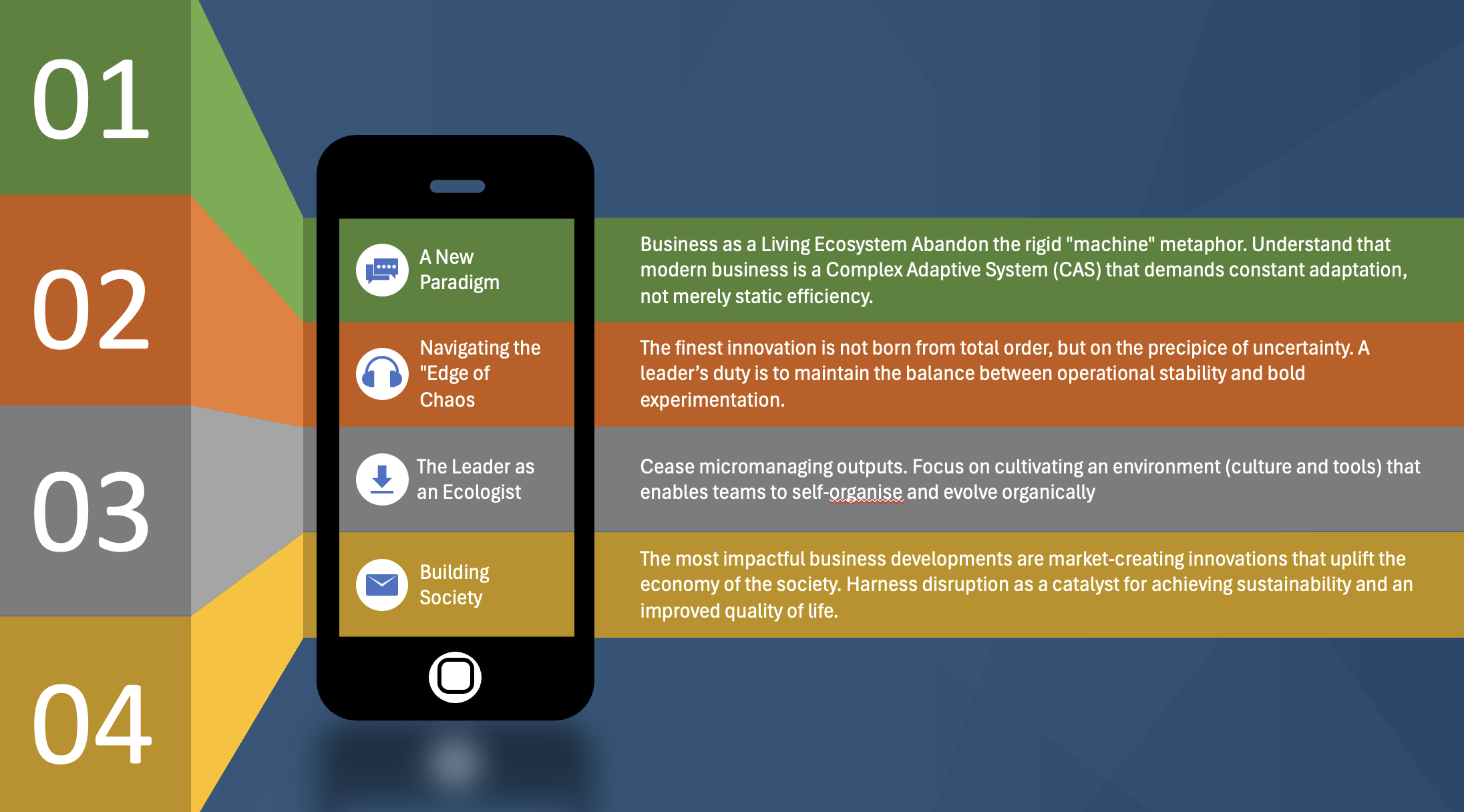
As discussed at the briefing with CIMA, I explored disruption from the perspective of complexity. The discussion began with a deconstruction of neoclassical economic models, opening up insights into complexity economics. Business as a whole was reviewed as a Complex Adaptive System (CAS), i.e. a system comprising autonomous agents that interact and adapt without rigid, centralised control. The ecosystem is viewed as a dynamic interaction that generates new values non-linearly through the process of emergence.

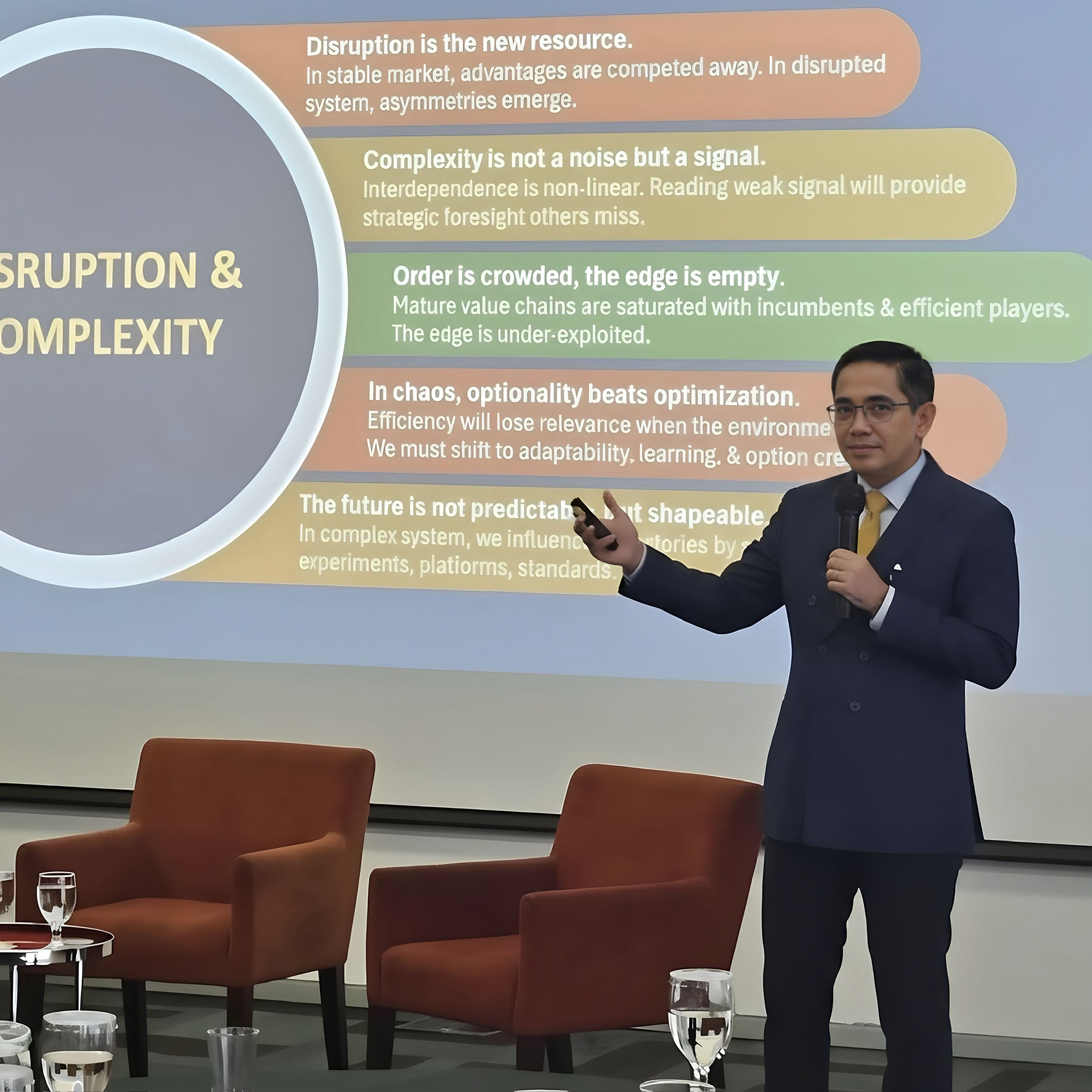
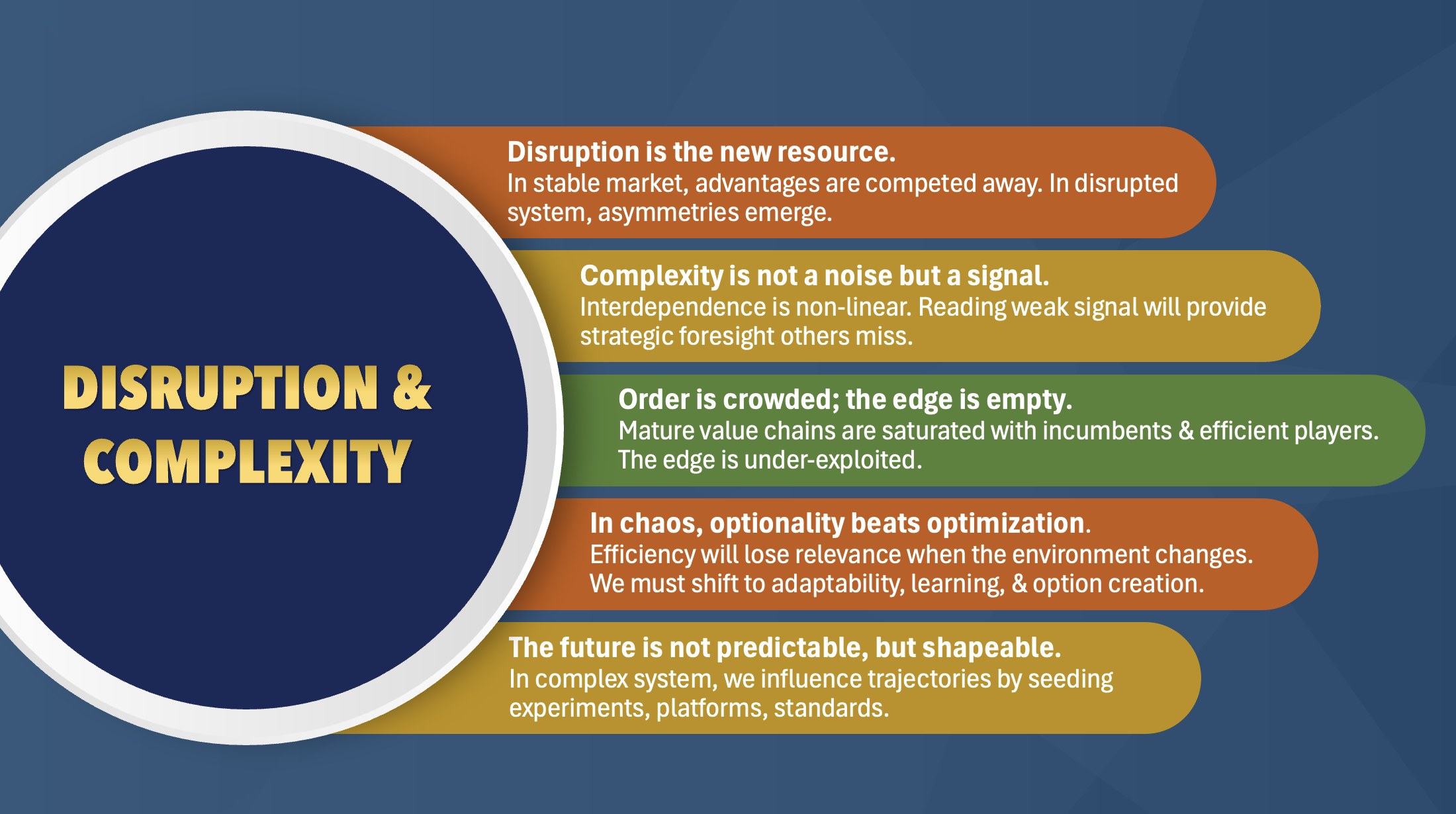
From the perspective of complexity economics, disruption is not a nuisance but rather an engine of evolution, marking a qualitative shift in economic regimes. Strategy has moved from mere optimisation of old models towards a redesign of business architecture that prioritises learning speed and co-evolution with the ecosystem. Competitive advantage is no longer determined by scale or static efficiency, but by architectural flexibility in responding to internal and external feedback constantly.

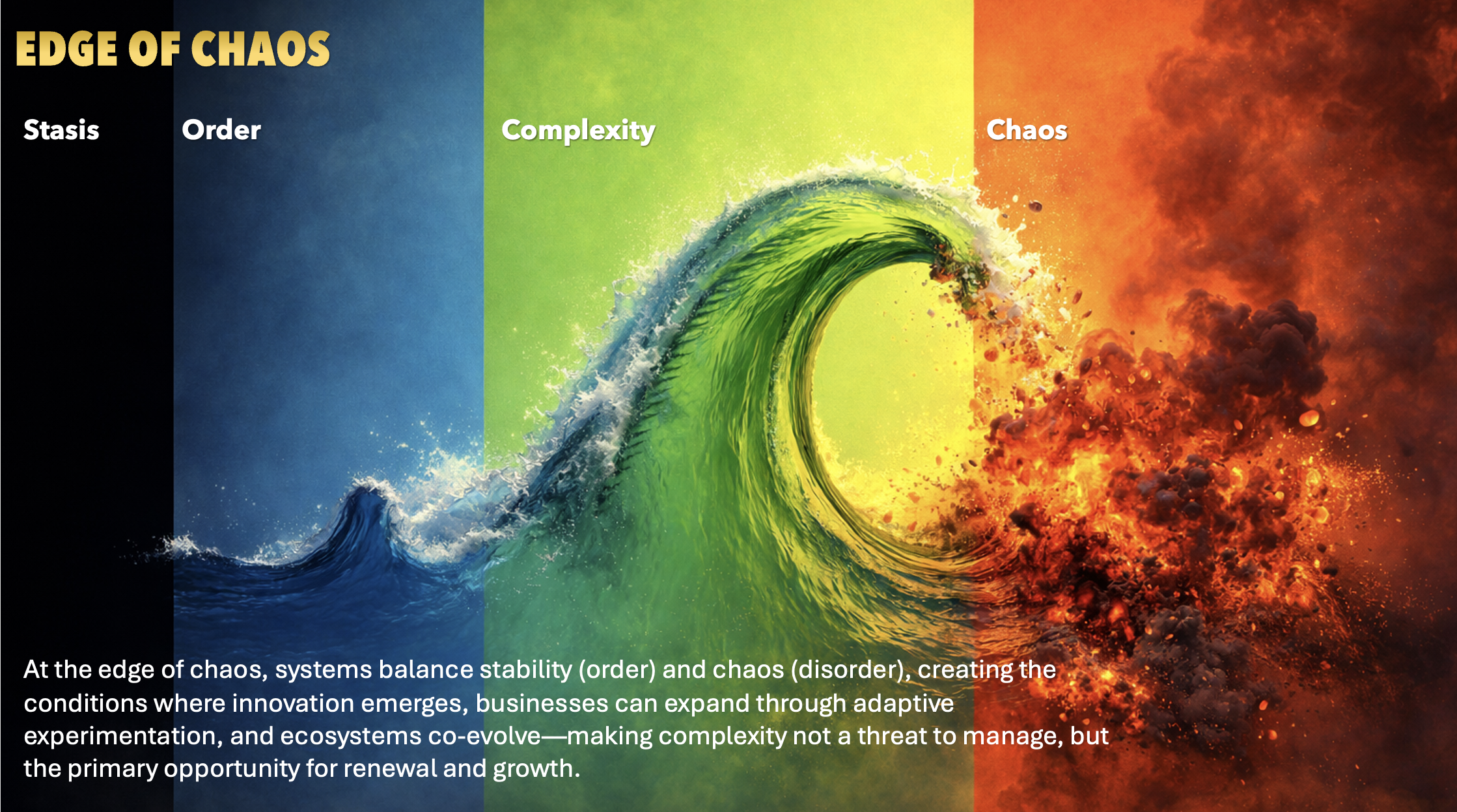
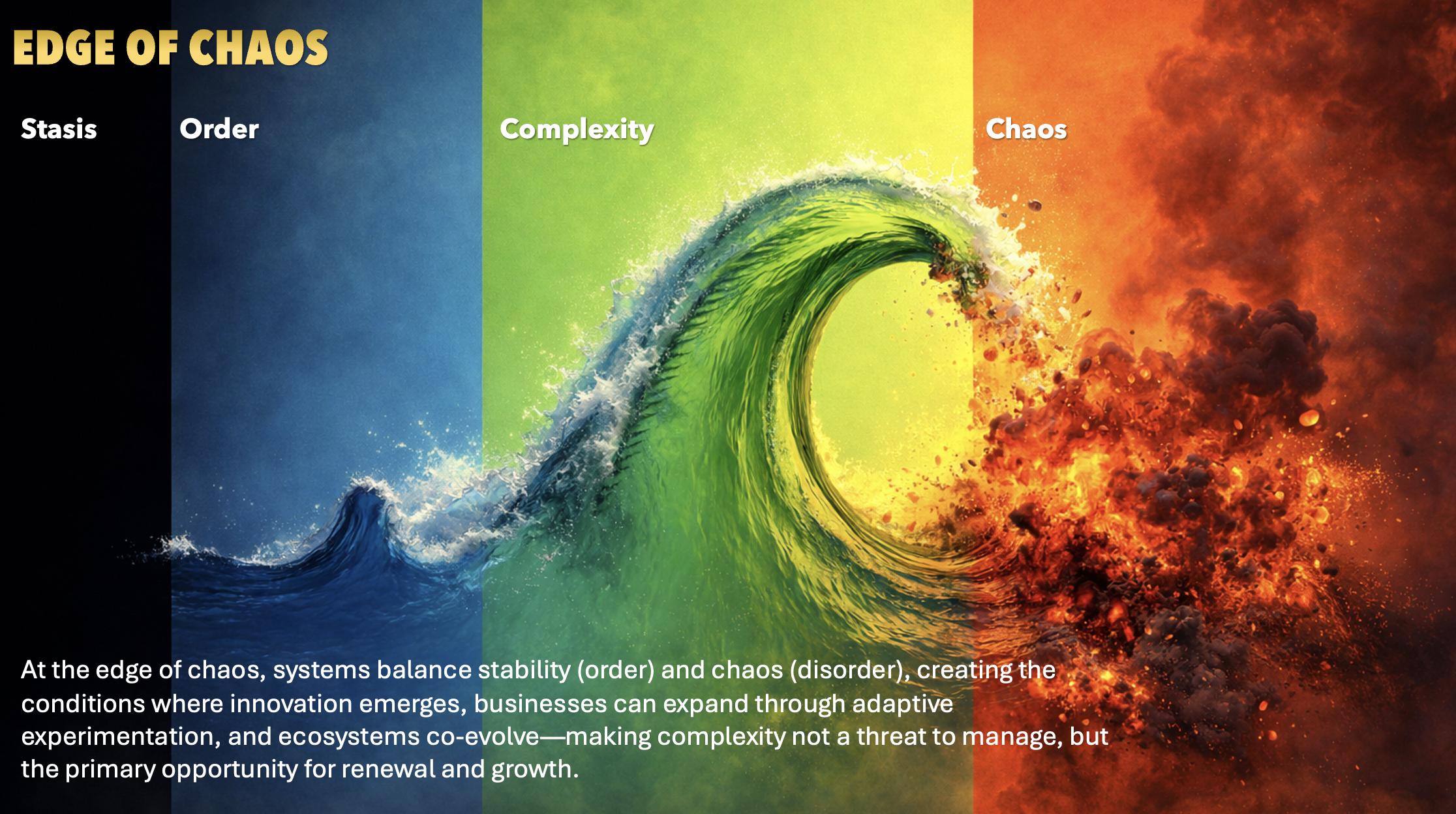
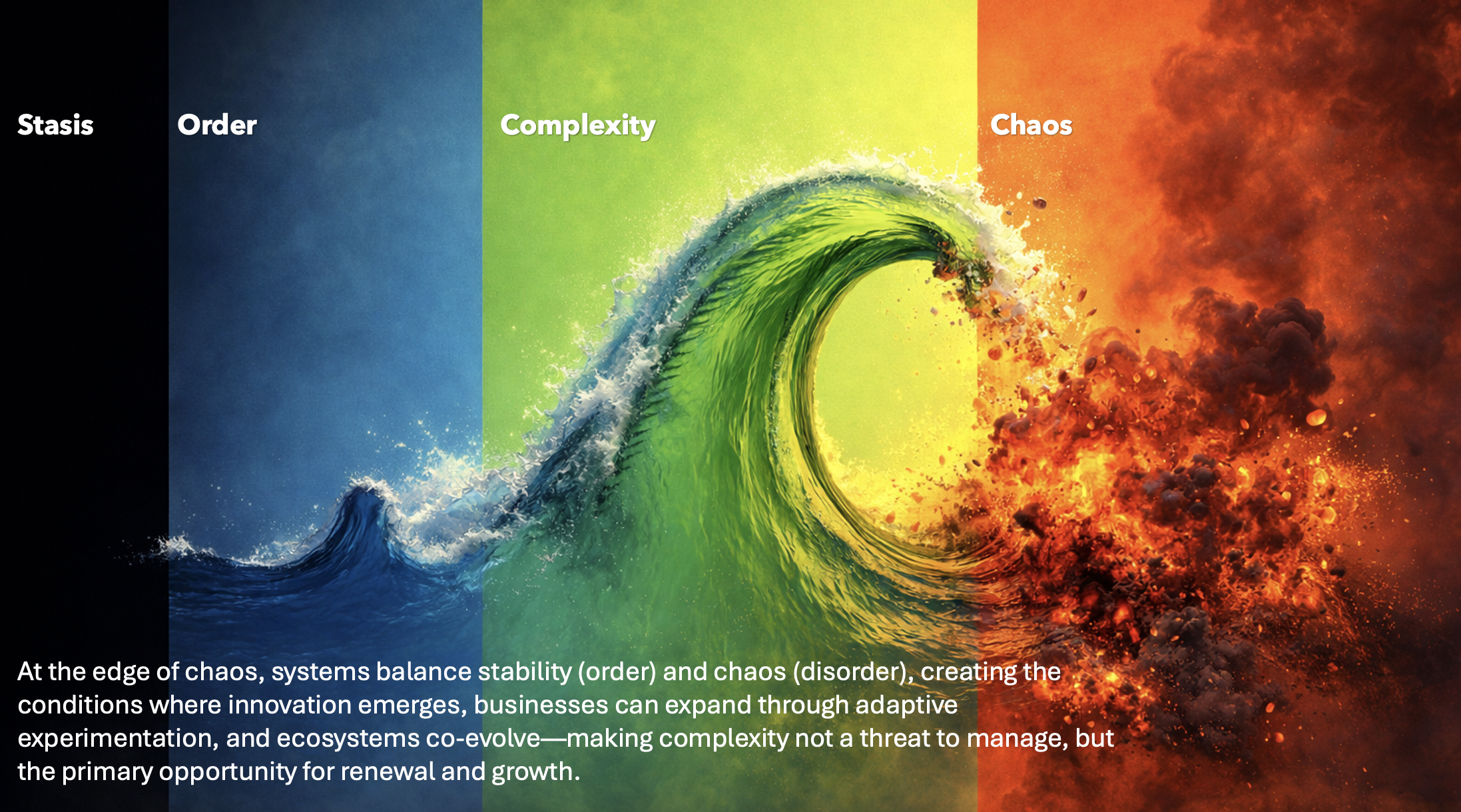
Disruption also represents the optimal point for innovation to occur. We refer to this as the Edge of Chaos, which is the transition zone between order (stagnation) and disorder (chaos). In this zone, the system possesses the precise balance required to trigger innovation without descending into anarchy. Excessive order leads only to organisational stagnation, while total chaos results in systemic failure. The duty of leadership is to keep the organisation at this threshold to ensure sustainability through adaptive experimentation.

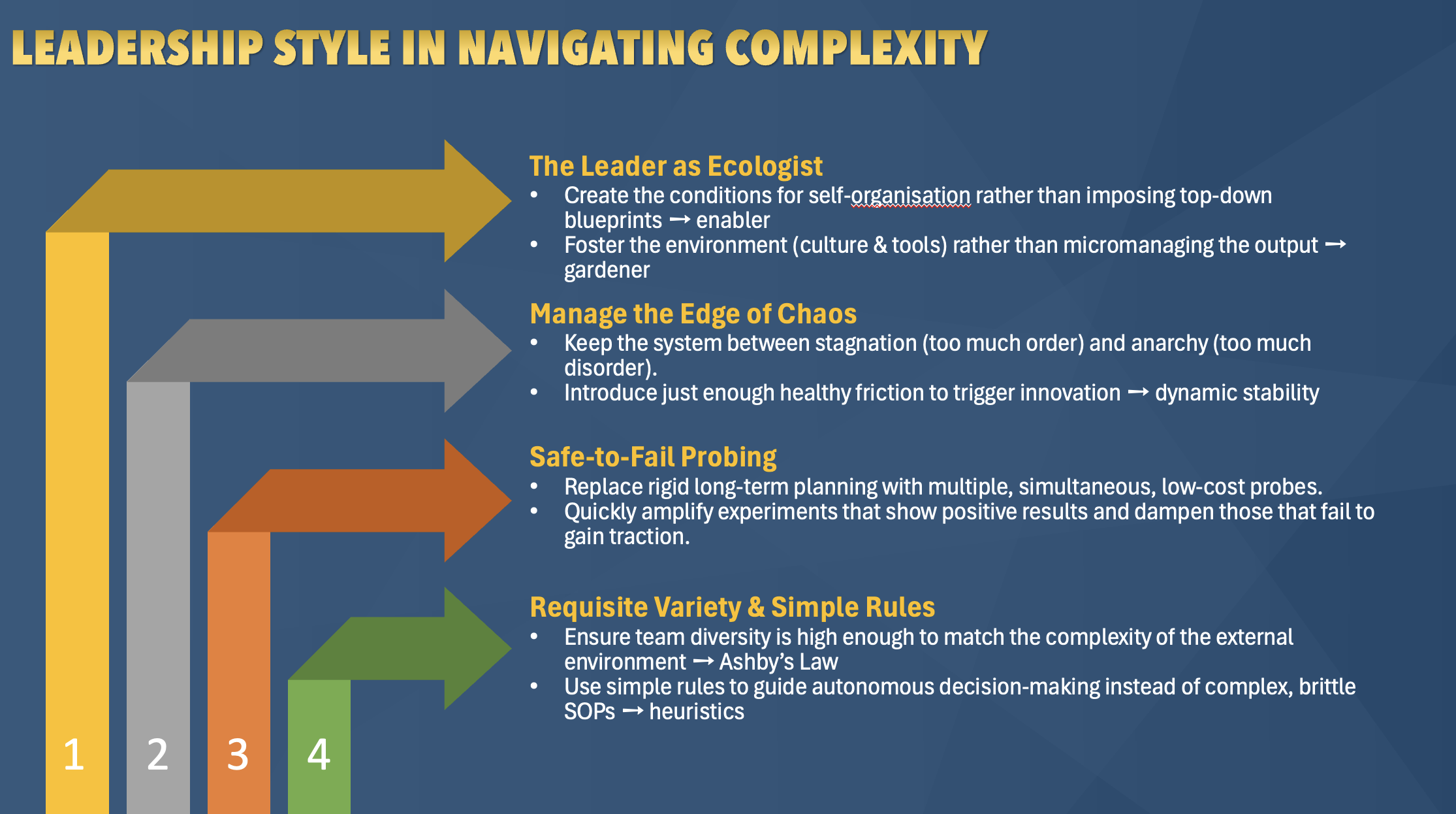
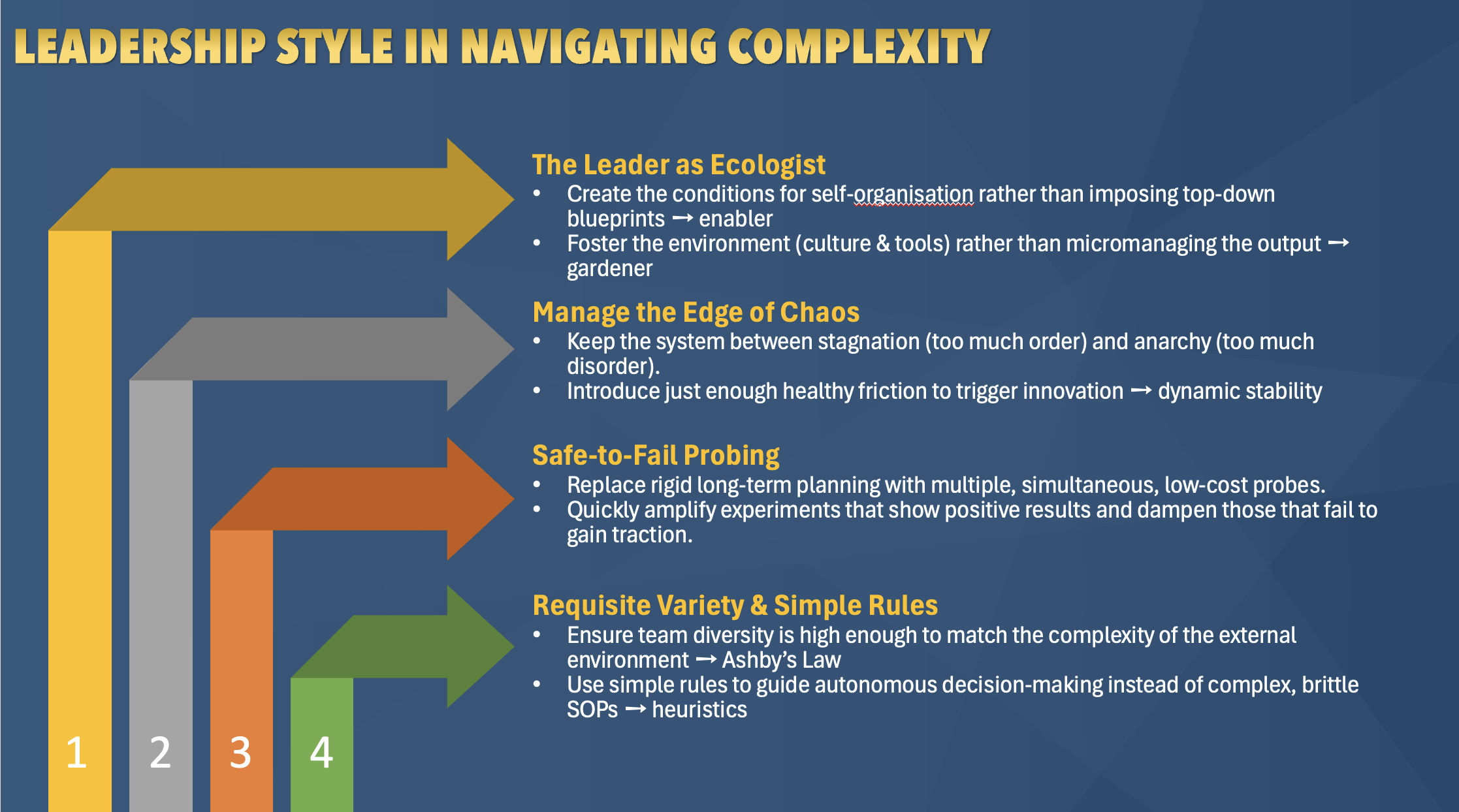
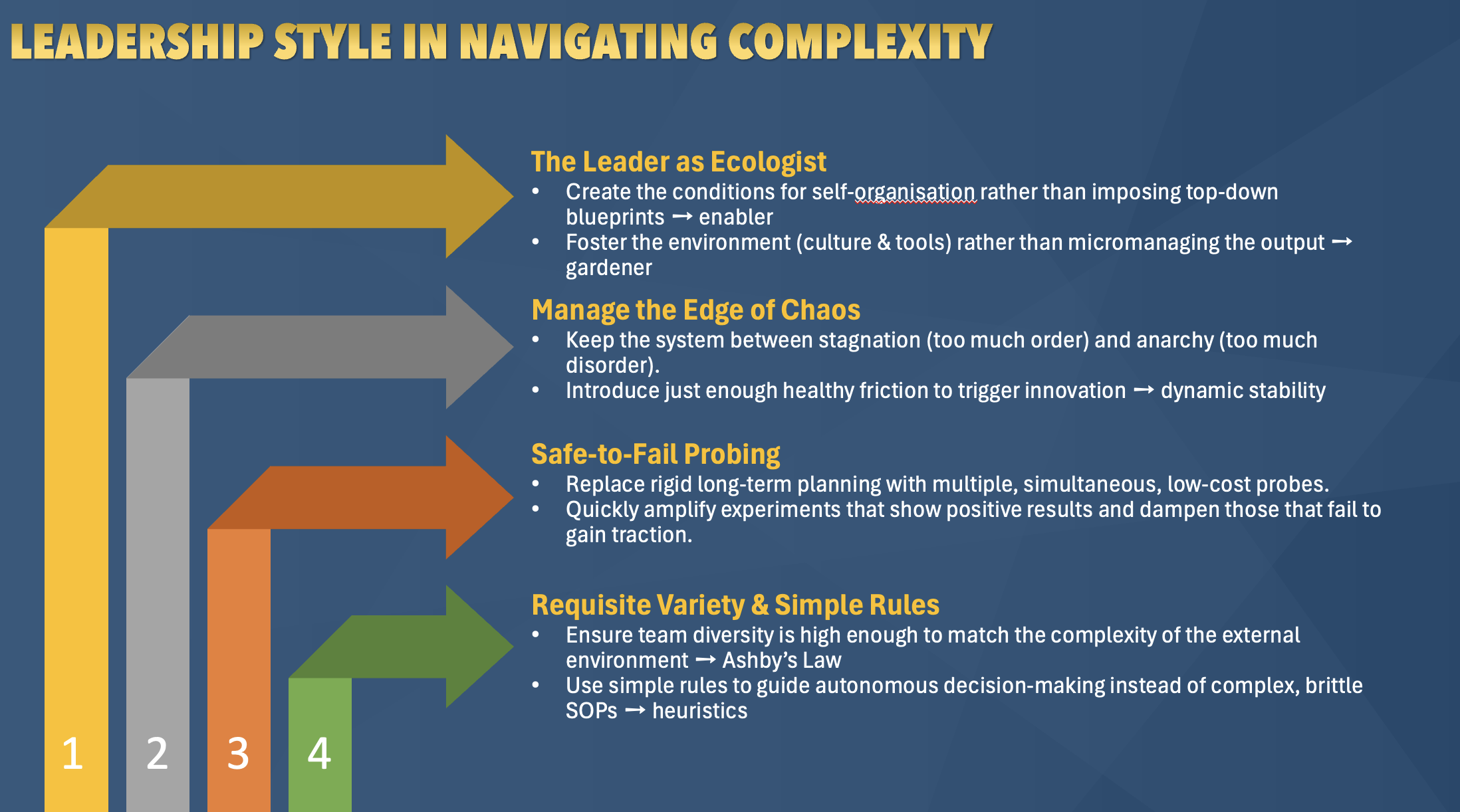
In an ecosystem model, the role of leadership is that of an ecologist. Leaders no longer micromanage outputs; instead, they are tasked with fostering a culture and environment that enables teams to self-organise. This approach utilises simple rules to guide autonomous decision-making, replacing rigid SOPs that are often too brittle to face ambiguity. Leaders must be courageous enough to engage in safe-to-fail probing: launching multiple small experiments simultaneously to detect strategic opportunities that traditional analytical models might overlook.

Returning to CIMA’s focus on Management Accounting (MA), MA plays a crucial role in governing strategic planning in this exponential era through the SPX framework from the IEEE. MA must be capable of performing Strategic Cost Management to monitor future horizons, utilising Real Options Analysis to value investments as strategic options, and implementing Agile Capital Budgeting. By moving away from rigid annual budgets towards Rolling Forecasts and Throughput Accounting, MA ensures that resource allocation is based on real-time feedback and the velocity of value conversion.

In closing, it was conveyed that disruption must be managed as a catalyst for achieving sustainability and a better quality of life. We must stop viewing business as a machine to be controlled mechanistically and start managing it as a living ecosystem with the capacity to renew itself continually. Furthermore, the finest innovations are those capable of creating new markets and providing a tangible impact on strengthening the economy of society.

Navigasi di Edge of Chaos

Dalam profesi keuangan global, CIMA (Chartered Institute of Management Accountants) berperan sebagai penyusun standar kompetensi akuntansi manajemen yang berorientasi pada strategi bisnis. Beraliansi dengan AICPA, CIMA memfasilitasi gelar profesional CGMA (Chartered Global Management Accountant) yang memastikan para praktisi memiliki bahasa bisnis universal dalam mengelola kinerja organisasi. Country manager CIMA di Indonesia adalah Mas Dwi Putra, alumnus Coventry University yang pertama kali mengenaliku sebagai anggota Order of the Phoenix gegara layar Aifon-ku menampilkan logo klasik Coventry University.

Atas undangan CIMA, tanggal 12 Februari 2026 ini di Gedung Cyber 2 aku mengisi sesi CIMA Strategic Leaders Breakfast Talk dengan judul “Leadership in the Age of Disruption — Strategic Leadership for Modern Finance Professionals”. Plan awal, aku jadi pembicara tunggal. Namun kemudian ditambahkan Bapak M Fahmi El Mubarak, CEO BUMN School of Excellent. Wow, a real honour for me untuk sepanggung beliau.

Sesuai briefing dengan CIMA, aku mendetailkan disrupsi dari perspektif kompleksitas. Bahasan diawali dengan dekonstruksi terhadap model ekonomi neoklasik, dan membuka wawasan atas ekonomi kompleksitas. Keseluruhan bisnis ditinjau sebagai Complex Adaptive System (CAS), yaitu sistem yang terdiri atas agen otonom yang saling berinteraksi dan beradaptasi tanpa kontrol terpusat yang kaku. Ekosistem dipandang sebagai interaksi dinamis yang menghasilkan nilai-nilai baru secara non-linier melalui proses emergence.

Dari perspektif ekonomi kompleksitas, disrupsi bukanlah gangguan, melainkan mesin evolusi yang menandai pergeseran rezim ekonomi secara kualitatif. Strategi kini berpindah dari sekadar optimisasi model lama menuju desain ulang arsitektur bisnis yang mengutamakan kecepatan belajar dan co-evolution dengan ekosistem. Keunggulan kompetitif tidak lagi ditentukan oleh skala atau efisiensi statis, melainkan oleh fleksibilitas arsitektural dalam merespons umpan balik internal dan eksternal secara konstan.

Disrupsi juga merupakan titik optimal terjadinya inovasi. Kita menyebutnya the Edge of Chaos, yaitu zona transisi antara keteraturan (order) dan ketidakteraturan (chaos). Pada zona ini, sistem memiliki keseimbangan yang tepat untuk memicu inovasi tanpa terjatuh ke dalam anarki. Keteraturan yang terlalu kaku hanya akan membawa organisasi pada stagnasi, sementara kekacauan total akan berujung pada kegagalan sistemik. Tugas leadership adalah menjaga organisasi tetap berada di ambang ini untuk memastikan keberlanjutan melalui eksperimentasi yang adaptif.

Dalam model ekosistem, peran leadership adalah sebagai ecologist. Pemimpin tidak lagi mendikte output secara mikro, melainkan bertugas memfasilitasi budaya dan ekosistem agar tim bisa mengorganisir diri secara mandiri. Pendekatan ini menggunakan aturan-aturan sederhana (simple rules) untuk memandu pengambilan keputusan otonom, menggantikan SOP yang seringkali terlalu rapuh menghadapi ambiguitas. Pemimpin harus berani melakukan safe-to-fail probing: meluncurkan berbagai eksperimen kecil secara simultan untuk mendeteksi peluang strategis yang mungkin terlewatkan oleh model analisis tradisional.

Kembali ke CIMA yang berfokus ke management accounting (MA). MA memiliki peran krusial dalam mengendalikan perencanaan strategis di era eksponensial ini melalui kerangka SPX dari IEEE. MA harus mampu melakukan Strategic Cost Management untuk memantau horizon masa depan, menggunakan Real Options Analysis untuk menilai investasi sebagai opsi strategis, serta menerapkan Agile Capital Budgeting. Dengan meninggalkan anggaran tahunan yang kaku dan beralih ke Rolling Forecasts serta Throughput Accounting, MA memastikan bahwa alokasi sumber daya didasarkan pada umpan balik real-time dan kecepatan konversi nilai.

Sebagai penutup, disampaikan bahwa disrupsi harus dikelola sebagai katalis untuk mencapai keberlanjutan dan kualitas hidup yang lebih baik. Kita harus berhenti memandang bisnis sebagai mesin yang harus dikontrol secara mekanistis, dan mulai mengelolanya sebagai ekosistem hidup yang memiliki kapasitas untuk terus memperbarui dirinya sendiri. Juga, inovasi terbaik adalah inovasi yang mampu menciptakan pasar baru dan memberikan dampak nyata bagi penguatan ekonomi masyarakat.

Navigating Business at the Edge of Chaos

This is a speech preparation for the CIMA & AICPA Strategic Leaders Breakfast Talk, to be held in mid-February 2026, under the theme ‘Leadership in the Age of Disruption — Strategic Leadership for Modern Finance Professionals’. I will deliver the presentation from the perspective of complexity science and complexity economics, before exploring the practical implementations for management accounting professionals.

In current economic landscape, business must be perceived as the development of an ecosystem that operates as a complex adaptive system (CAS). Within this framework, autonomous agents, both internal to the firm and across broader business networks, possess the capacity for independent decision-making and activity. From this complexity perspective, phenomena such as VUCA (Volatility, Uncertainty, Complexity, and Ambiguity) and disruption are no longer viewed as external threats to be mitigated or overcome. Instead, they are recognised as engines of evolution and qualitative opportunities to redesign business architecture. Strategy shifts from the mere optimisation of saturated, linear models toward the cultivation of dynamic ecosystems that generate new value through the process of emergence.

The optimal zone for such innovation is the Edge of Chaos, which is a critical transition state where a system balances order and stability with disorder and change. It is precisely in this zone, rather than in a state of total equilibrium, where optimal innovation occurs. For the modern enterprise, the Edge of Chaos is not a threat to be avoided, but a strategic space to be occupied and, if necessary, intentionally created. Competitive advantage in this regime is defined not by scale or static efficiency, but by architectural flexibility and the velocity of learning in response to constant internal and external feedback loops.

Leadership within this complex environment requires a fundamental shift in identity toward that of an ecologist. The leader’s primary duty is no longer the top-down control of outputs, but the creation of conditions and cultures that enable teams to self-organise. This involves managing the delicate tension at the Edge of Chaos, introducing enough healthy friction to trigger innovation without descending into systemic anarchy. Rigid & brittle SOPs are replaced by simple rules or heuristics that guide autonomous decision-making amidst ambiguity. Leaders must facilitate safe-to-fail probing, i.e. launching multiple, simultaneous, low-cost experiments to detect strategic signals and opportunities that traditional analytical models inevitably miss.

Strategic management in the exponential era demands ambidextrous design, balancing the exploitation of core operations with the continuous exploration of new ventures through modular structures. This necessitates the orchestration of resources far beyond traditional organisational boundaries, incorporating partners, start-ups, and regulators into platform-based strategies. Strategy is viewed as a process of co-evolution, where the organisation constantly reinvents itself to remain congruent with a shifting environment.

Finally, Management Accounting (MA) serves as the vital navigation instrument in this journey through the Strategic Planning for Exponential Era (SPX) framework. MA must evolve to support dynamic feasibility, utilising Real Options Analysis to value investments as strategic options—the right to expand, delay, or pivot—rather than rigid, one-way capital bets. This implementation includes Agile Capital Budgeting, where funds are allocated to strategic “buckets” rather than granular, unproven projects. By abandoning the stagnation of rigid annual budgets in favour of Rolling Forecasts and Throughput Accounting, MA ensures that resource allocation is driven by real-time feedback and the velocity of value conversion. Ultimately, the most profound business developments are market-creating innovations that not only ensure sustainability but actively uplift the economy and quality of life for society

Aku dan AI

Dalam buku I Am a Strange Loop, Douglas Hofstadter membangun postulat filosofis bahwa kesadaran bukanlah sesuatu yang bersifat spiritual. Tapi andai lahir dari struktur material, seperti apa terbentuknya? Hofstadter menggambarkan struktur rekursif yang ia sebut simpul ganjil (Strange Loop), yaitu jaringan pengolahan informasi abstraksi yang bersusunan hierarki dalam lapis-lapis, namun akhirnya secara paradoksal kembali ke titik awalnya. Hofstadter menggunakan metafora video feedback, yaitu sebuah kamera yang merekam layar yang menampilkan hasil rekaman kamera itu sendiri, untuk mengilustrasikan bagaimana tumpukan pemrosesan simbol di otak saling mengamati dan saling bercermin. Proses ini melibatkan pergerakan lintas level: dari sinyal neurobiologis mentah, naik ke simbol konsep melalui mekanisme chunking (kompresi jutaan detail mikro menjadi unit makna makro), hingga mencapai metakognisi. Di puncak kompleksitas inilah muncul kesadaran identitas, atau si aku, bukan sebagai pilot fisik, melainkan sebagai halusinasi stabil atau pola abstrak yang lahir dari interaksi simbol-simbol tersebut. Lebih jauh, Hofstadter menekankan kekuatan downward causality, di mana pola pikir abstrak ini memiliki otoritas kausal untuk mengendalikan materi fisik otak, mematahkan pandangan reduksionis bahwa hanya materi yang bisa menggerakkan materi.

Perpektif dari awal abad ke-21 ini mendapatkan tanggapan berupa dikotomi yang tajam. Di satu sisi, visi Hofstadter tentang diri sebagai konstruksi virtual mendapatkan validasi kuat dari neurosains modern, sejalan dengan teori The Ego Tunnel (Thomas Metzinger) dan Predictive Processing (Karl Friston) yang memandang otak sebagai mesin prediksi bayesian. Namun, di ranah Kecerdasan Buatan, model kerja Symbolic AI yang dibayangkan Hofstadter, yang beroperasi dengan logika transparan, telah tergeser oleh dominasi deep learning yang bersifat koneksionis. AI modern seperti LLM tidak bekerja dengan memahami proses fundamental atau memiliki strange loop filosofis. Mesin AI terkini adalah mesin kalkulasi statistik yang menghasilkan result akurat melalui serangkaian revisi berbasis umpan balik (feedback) masif. Mesin ini tidak merepresentasikan proses berpikir layaknya manusia, melainkan mensimulasikan hasil pemikiran tersebut untuk mencapai ketepatan pragmatis.

Aku malah melihat perbedaan arsitektur ini menarik. Bisa jadi simbiosis kognitif yang menarik. Proses berpikir manusia, terutama para expert seperti kita, seringkali bersifat non-linear, chaotic, dan melompat-lompat melalui intuisi pengenalan pola yang kompleks. Seringkali, manusia mampu mengambil keputusan yang sangat optimal dalam waktu singkat, bahkan ketika variabel data yang tersedia seolah tidak optimal atau bahkan berantakan. Ini pastinya kemampuan inference tingkat tinggi yang sulit dijelaskan secara verbal karena sifatnya yang tacit (tersembunyi). Di sini kita justru dapat memanfaatkan kembali peran AI (LLM), bukan sebagai pengambil keputusan, melainkan sebagai alat yang menjelaskan keputusan kita. Kita memanfaatkan kemampuan kalkulasi AI untuk merasionalisasi dan menarasikan mengapa sebuah keputusan kita ambil dengan pola pikir yang cerdas namun chaotic dan non-linear itu. Wkwk. Ini tentunya kebalikan dari konsep explainable AI (XAI). Mesinlah justru membantu menjelaskan manusia, memungkinkan validitas narasi yang terstruktur untuk mengejar kecepatan intuisi yang abstrak. Ini juga dapat dimanfaatkan pada knowledgeme management untuk konversi dari pengetahuan tacit menjadi pengetahuan eksplisit.

Kita hidup di era di mana sirkuit chaos manusia, yang penuh intuisi serta lompatan logika dan arah membutuhkan sirkuit order dari mesin yang formal, terstruktur, dan rapi untuk validasi dalam komunikasi, negosiasi, bahkan administrasi. Kita, para penyisir ombak kompleksitas, dapat menganggap simbiosis ini sebagai perangkat evolusi yang menarik. Kekuatan simbolik kita tetap menjadi inti dalam mengarahkan tujuan kepemimpinan kita, dan AI memastikan narasi, komunikasi, detail langkah. Kolaborasi lintas spesies yang aneh, tapi mungkin bisa efektif.

Београд

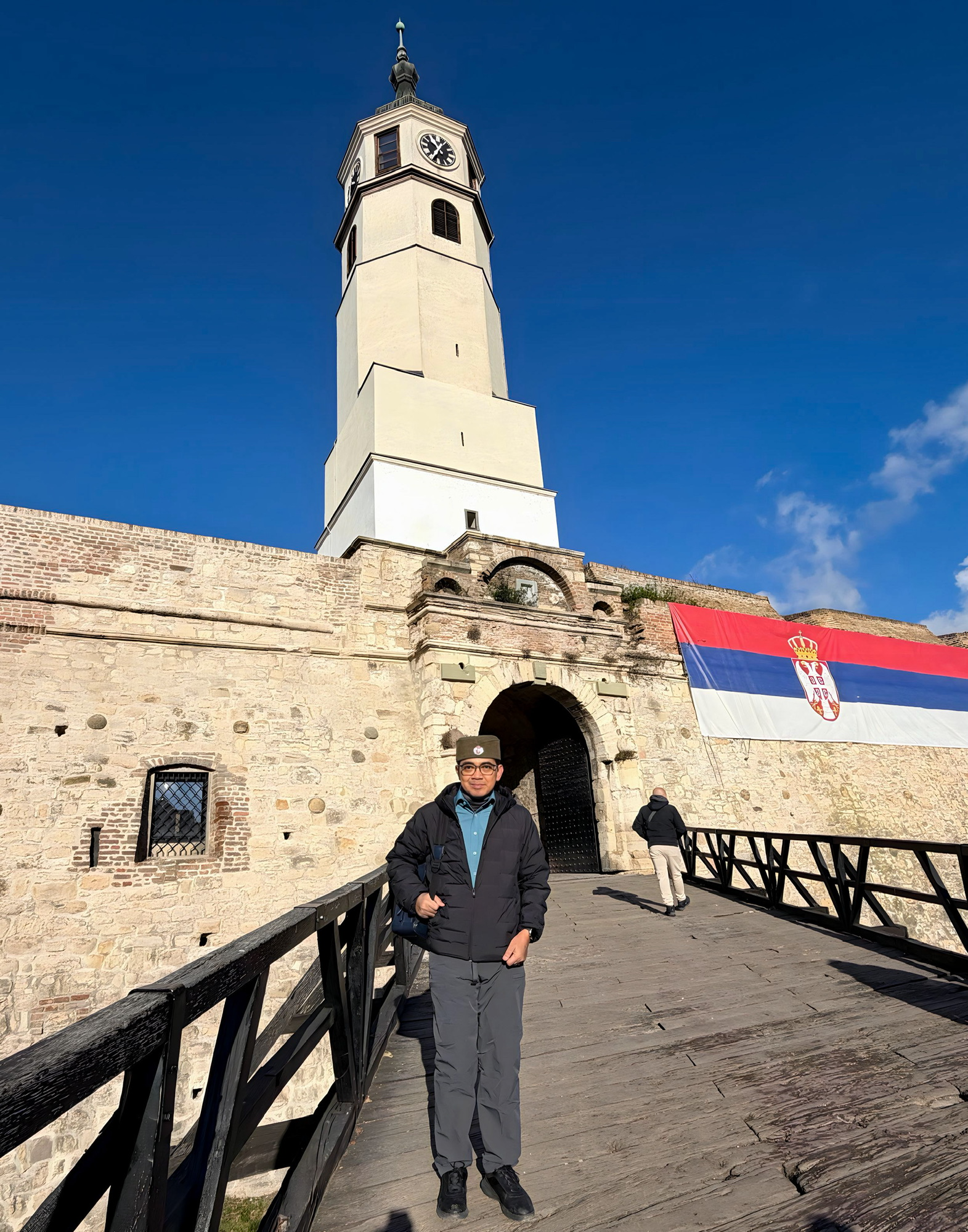
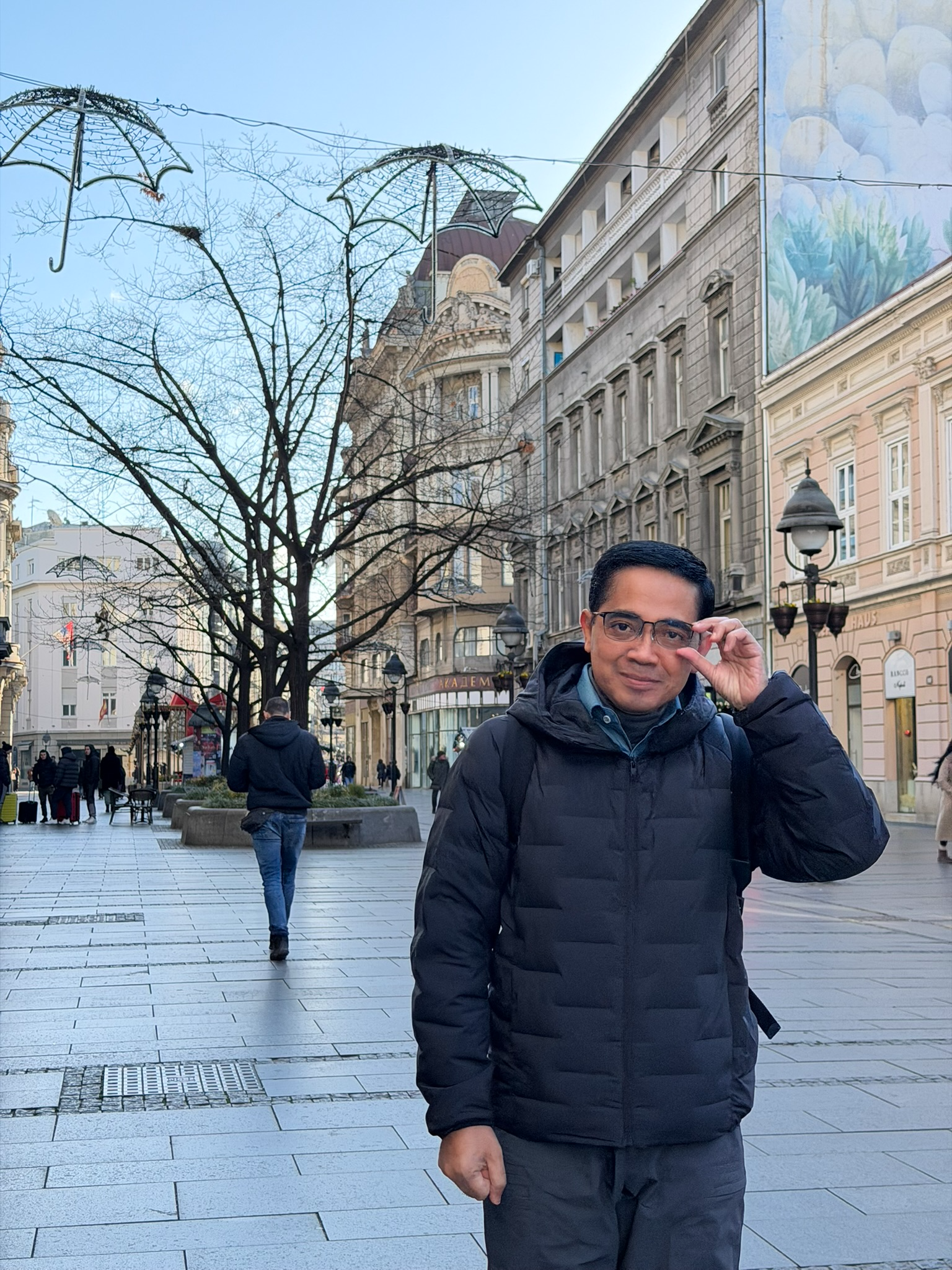
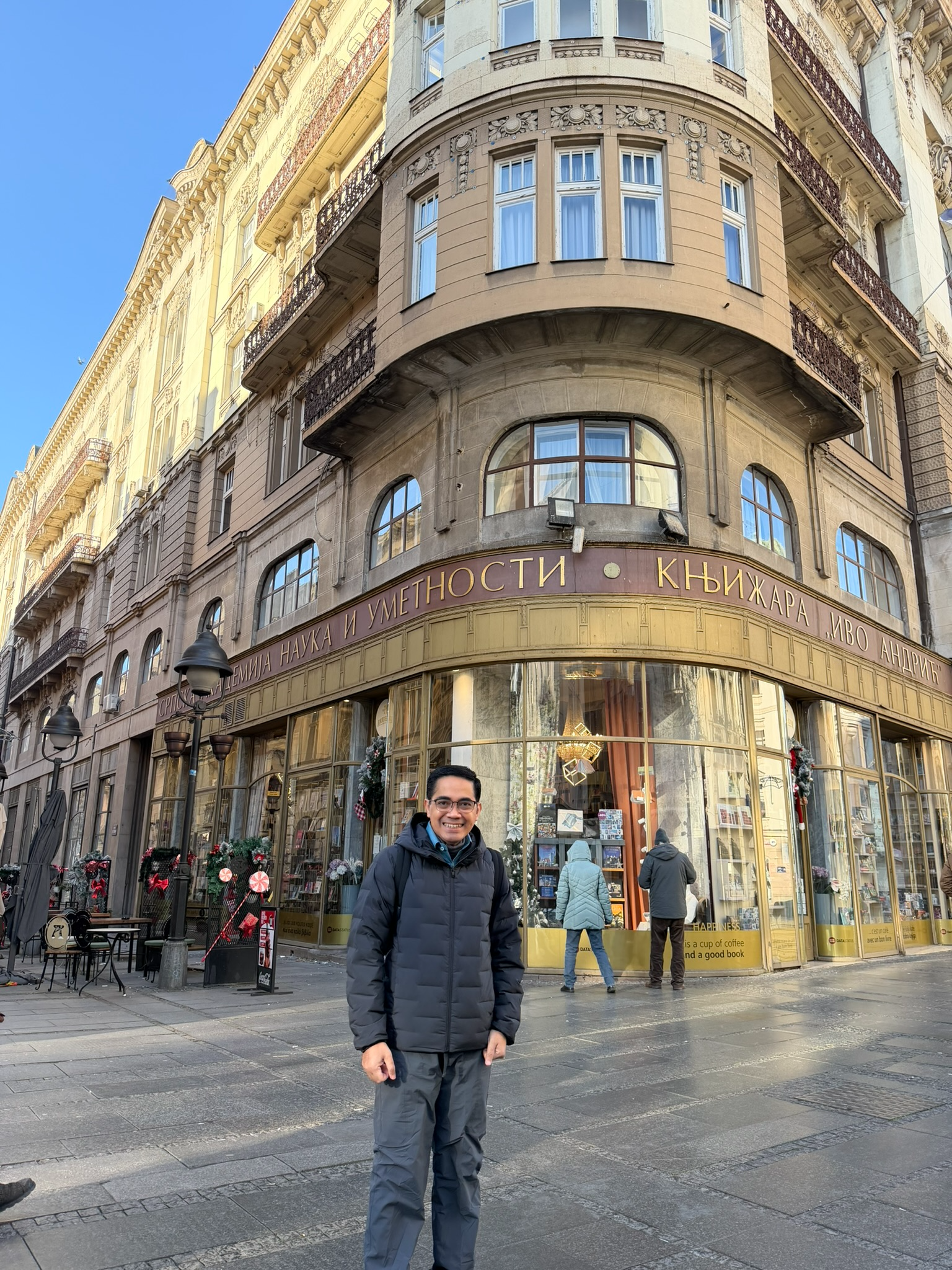
Hari pertama tahun 2026 ini aku buka di Beograd.

Di bandara Nikola Tesla, baru berapa puluh langkah keluar dari Air Serbia, tiga orang berseragam gelap dengan identitas kepolisian sangat tegap menghalangi jalan. Petugas di tengah meminta passport, lalu bertanya «Why coming to Serbia?» sambil membalik setiap halaman di password dan memeriksanya menerawang cahaya untuk memastikan keaslian setiap halaman. Ini sebelum masuk ke antrian imigrasi. Di loket imigrasi, petugas dengan seragam biru muda dengan identitas kepolisian dan muka kaku yang sama menanyakan hal yang sama «Why visiting Serbia?» sambil menatap tajam. Kutatap tajam balik seperti warga dari dua negara bersahabat yang saling teliti. Setelah membolak balik setiap halaman passport (tanpa diterawang ke cahaya), petugas ini menanyakan satu hal lagi, «Visa?» dan aku jawab tegas «No visa.» Ia mengangguk dan memberi cap «Српски Београд» dan mempersilakan keluar.

Di luar bandara, suhu serendah -1ºC. Bis merah A1 sudah menunggu. Driver berteriak menyuruh penumpang menaruh sendiri koper di bagasi belakang, baru membayar cash 400 dinar per penumpang. Pintu dibanting, dan minibus yang padat sesak mengantar ke pusat kota Beograd. Aku turun di Stasiun Novi Beograd, dan melanjutkan ke hotelku di kawasan pedestrian Knez Mihailova. Di hotel ini, resepsionis bernama Marija menyambut sangat ramah, hangat, dan memberikan tips bagaimana bertransportasi di Beograd dan Serbia pada umumnya. Ruangannya juga hangat nyaman (tidak panas). Perfect. Kontras sekali keramahan di tengah kota Beograd ini dengan imigrasi dan transportasinya.

Serbia lahir dari sejarah yang tidak pernah linear. Bukan bangsa yang tumbuh dalam satu arah peradaban, melainkan dibentuk di persimpangan Bizantium, Utsmani, dan Eropa Tengah. Prakarsanya dalam membentuk Yugoslavia sebagai upaya penyatuan bangsa-bangsa Slav selatan di abad lalu telah memperbesar paradoks itu. Penyatuan bangsa serumpun yang berbeda agama (di Eropa masa lalu, agama adalah identitas politik), aksara (=komunikasi dan budaya), dan sejarah (=budaya) itu terbukti gagal, memecah Yugoslavia, namun tidak meruntuhkan Serbia. Serbia kembali pada komitmennya menjadi pusat budaya yang mandiri di Eropa Tenggara, tanpa terobsesi menjadi bagian dari Eropa yang sangat berorientasi Barat. Integrasi Eropa diupayakan, namun bersifat pragmatis, tanpa menggantungkan harga diri pada validasi Eropa. Sikap ini lahir dari panjangnya pengalaman hidup di bawah pendudukan Utsmany, pendudukan Axis pada PD I & II, komunisme nasional dan penyatuan Yugoslavia, sanksi internasional akibat kekejaman di Bosnia, dan keterasingan ekonomi.

Kepribadian itu jelas terbaca di Beograd. Kota ini mungkin tidak secantik Praha, Bratislava, Budapest, atau berbagai kota di Eropa Tengah. Kota ini brutal dan kontras. Benteng Romawi berdampingan dengan jejak Utsmany, bangunan Habsburg, blok-blok sosialis beton, dan improvisasi urban pasca-Yugoslavia yang semuanya disusun bertumpuk tanpa disembunyikan. Huruf-huruf sirilik berdampingan dengan huruf-huruf latin dalam bahasa Slav selatan, dan keduanya memiliki keunikan: huruf sirilik yang berbeda dengan Russia, dan huruf latin dengan tambahan diakritik yang unik. Luka sejarah tidak dihapus di sini. Brutalisme bukan menjadi kegagalan estetika, tapi justru menunjukkan kejujuran fungsi dan kekuasaan, dilengkapi dengan vitalitas sosial yang tidak pretensius.

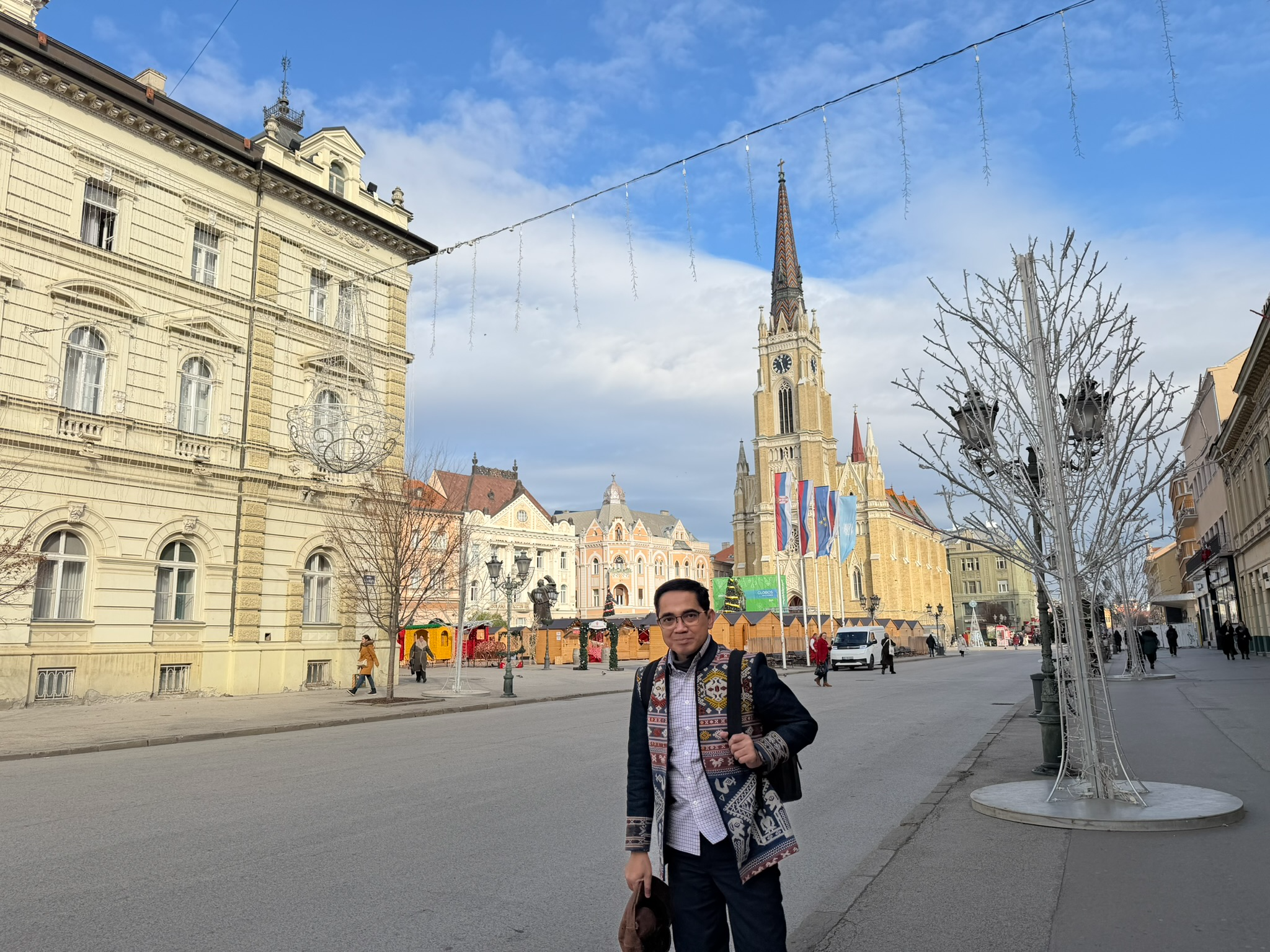
Baik di Beograd dan Novi Sad (kota budaya yang aku kunjungi berikutnya), kita menemui paduan manusia yang sangat ramah dan sangat kaku. Brutal membanting pintu mobil, tapi ramah memberikan informasi apa pun. Sopir taxi di Petrovaradin tanpa ditanya memberi tahu alur kembali dari Novi Sad ke Petrovaradin dengan bis agar lebih murah. Toko buku sangat banyak di pusat kota Beograd dan Novi Sad. Ciri-ciri negeri dengan banyak orang cerdas. Tentu sebagian besar buku dalam bahasa Serbia, bagian Shtokavia dari bahasa Slav Selatan, dan banyak dijual dalam edisi sirilik maupun latin. Uniknya, toko buku pertama yang aku masuki memiliki kasir yang berasal dari Banjaluka, Bosnia.

Selain museum, perpustakaan, taman, dan benteng, pusat-pusat kota juga merupakan pusat kunjungan yang menunjukkan budaya unik Serbia. Negeri ini tetap penting di Eropa Tenggara. Ia memilih menjadi simpul, dan bukan panggung. Keunikan Serbia terletak pada kemampuan hidup dengan kontradiksi: ortodoks tetapi sosial, nasional tetapi tidak romantik, persimpangan timur dan barat tanpa inferioritas, serta dua aksara yang hadir setara tanpa krisis identitas. Warisan Utsmany membentuk ritme sosial dan kecerdikan bertahan, warisan Eropa memberi nilai rasionalitas, dan pengalaman Yugoslavia mengajarkan skeptisisme terhadap proyek besar. Hasilnya adalah negara dan kota yang mungkin tidak akan masuk rank dalam keindahan, tetapi tetap menunjukkan energi yang nyata, kekuatan inspirasi, dan kepribadiannya utuh. Serbia hanya mencoba berpoles sendikit, sambil memilih hadir apa adanya.

Hari terakhir di Beograd, aku kembali ke bandara Nikola Tesla. Tanda penunjuk membawaku langsung ke gerbang imigrasi (sebelum sempat checkin dan baggage drop-in). Kali ini petugasnya seorang perempuan muda dengan wajah agak melankolis. Ia menyambut dengan senyum lucu dan sangat bersahabat. «I am tired,» katanya. «Because of the New Year’s party?» «No, I was working during New Year’s eve,» katanya sambil melihat isi passportku, lalu memberikan cap. «Well, happy New Year and more success for you!» kataku. Ia membalas, «You too.» Bahkan imigrasipun kontras antara pintu masuk dan pintu keluar. Sukses selalu untuk negeri Serbia yang selalu kontroversial.

IEEE Fest & TEUB Workshop

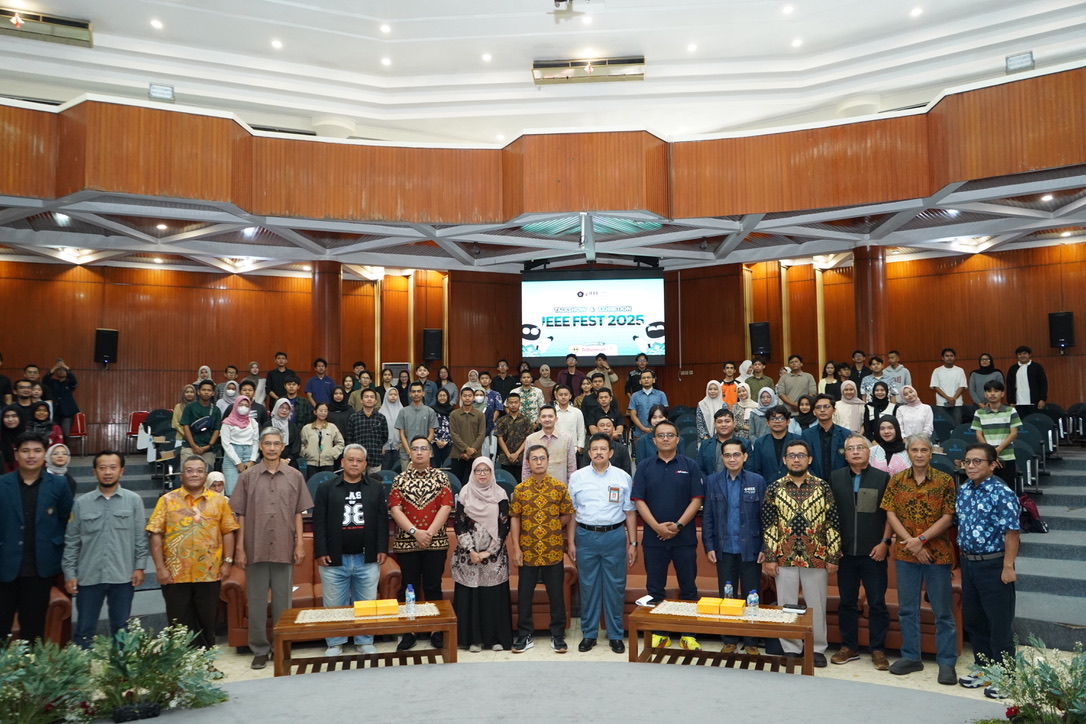
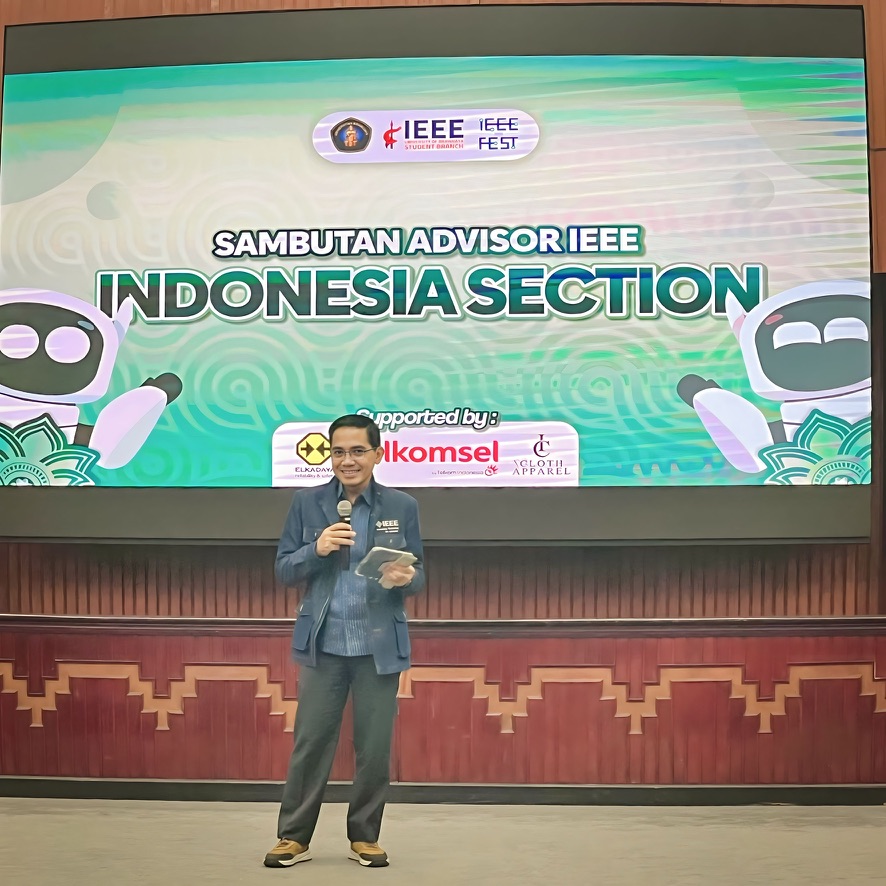
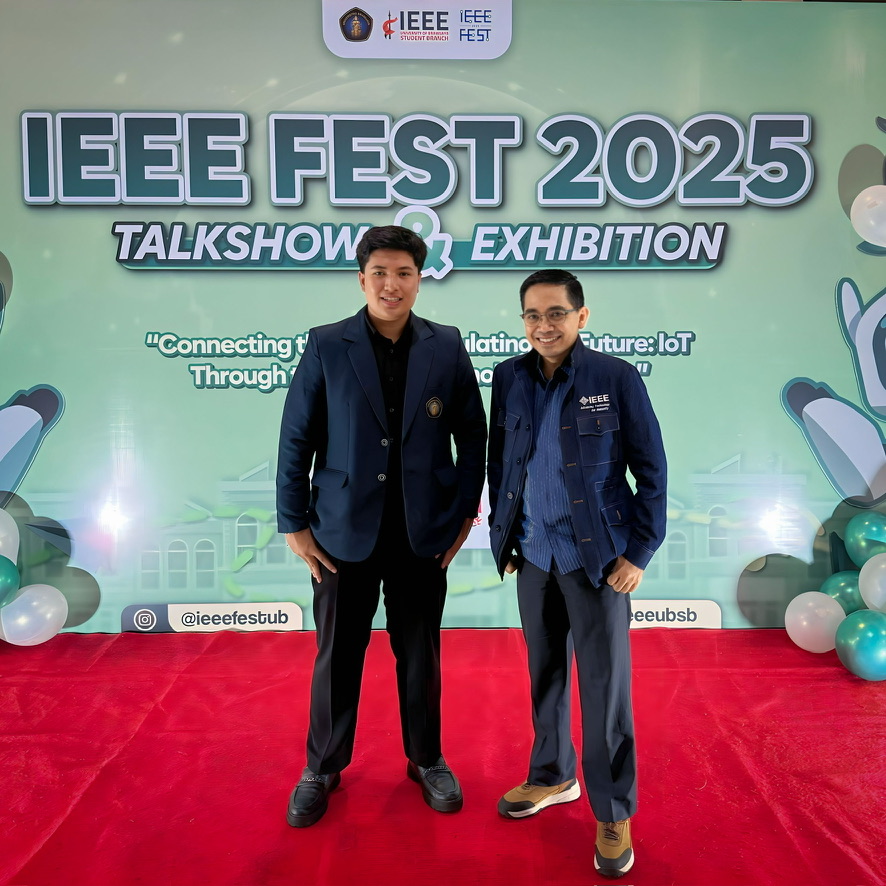
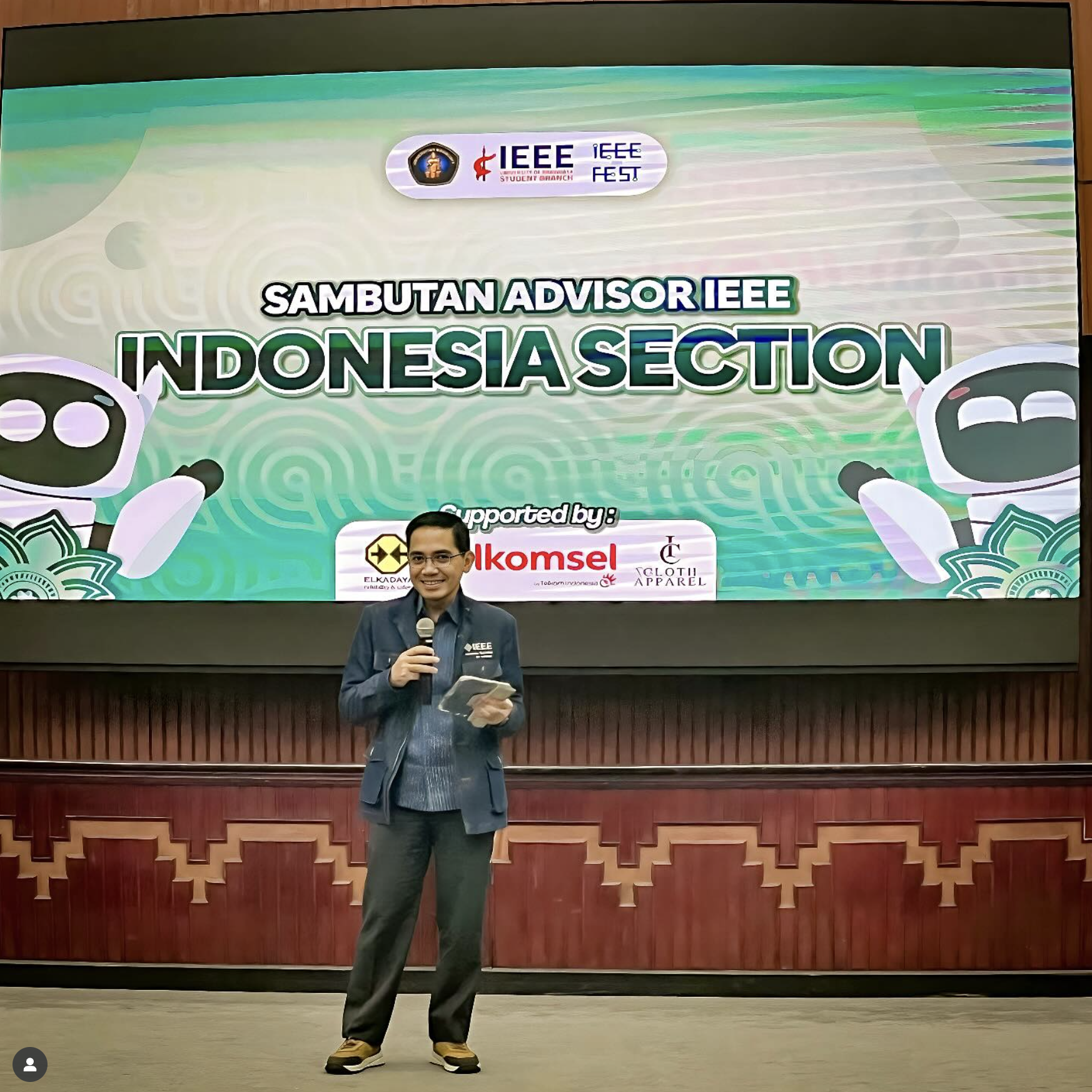
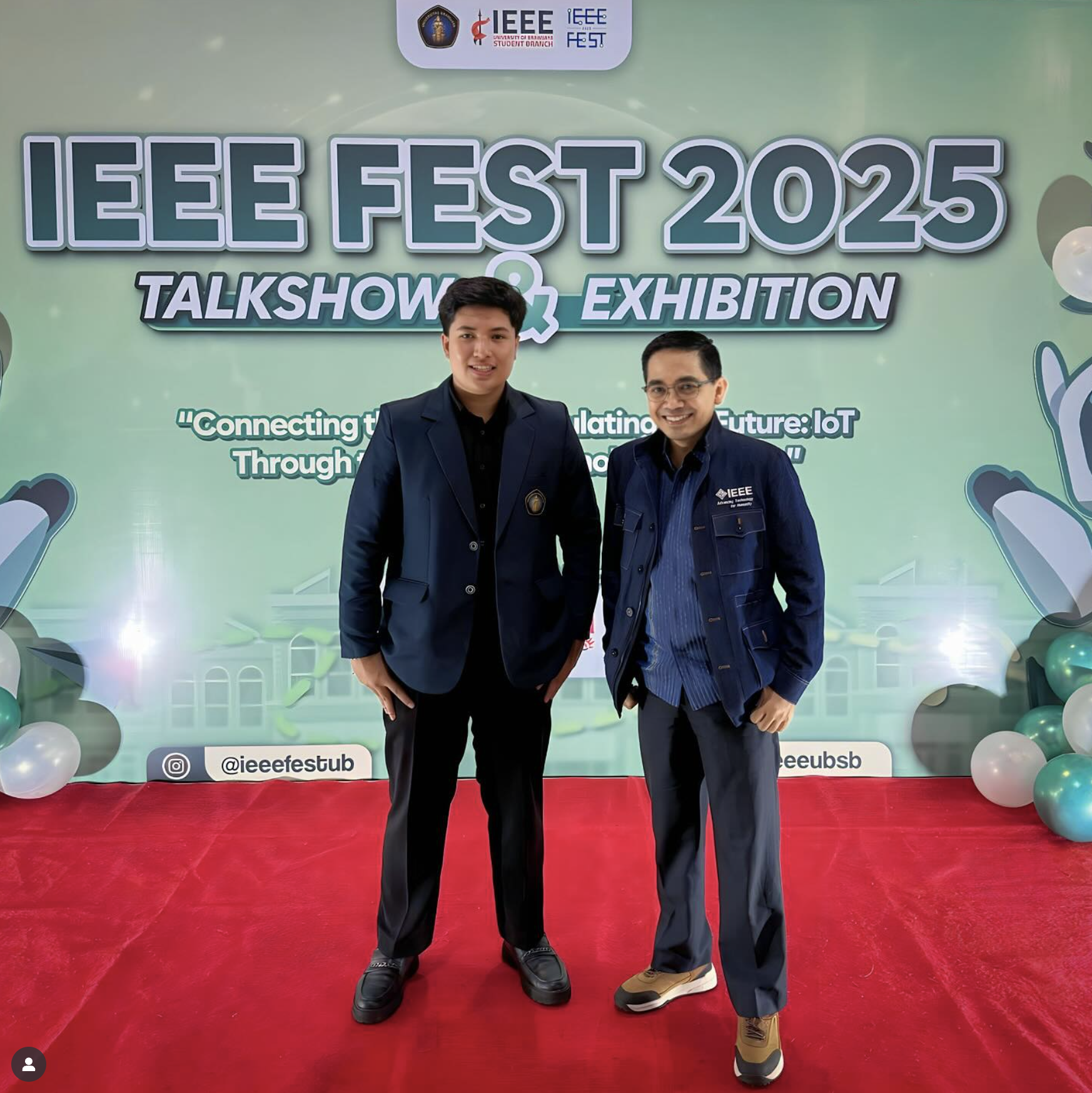
I was invited to IEEE Fest 2025 as a representative of the IEEE Indonesia Section Advisory Board. The event was hosted by the IEEE Brawijaya University Student Branch in Malang on 18 October 2025, led by the Chair, Muhammad Asyir Zarkasih. The program was commenced by the Vice-Rector for Student Affairs and Entrepreneurship, Dr Setiawan Noerdajasakti, together with the university’s faculty and departmental leaders. It was particularly noteworthy to see IEEE SBUB expanding beyond its traditional STEM roots into areas such as management and law.

In my short welcoming remarks, I encouraged the strengthening of enthusiasm, commitment, and innovation capability through collaboration, making use of available channels while initiating the door for broader engagement across IEEE’s various organisational units and programs. In a landscape as complex as today’s, challenges are indeed easier to navigate together; but more than that, complex collaboration often reveals new opportunities, both in innovation and in business.

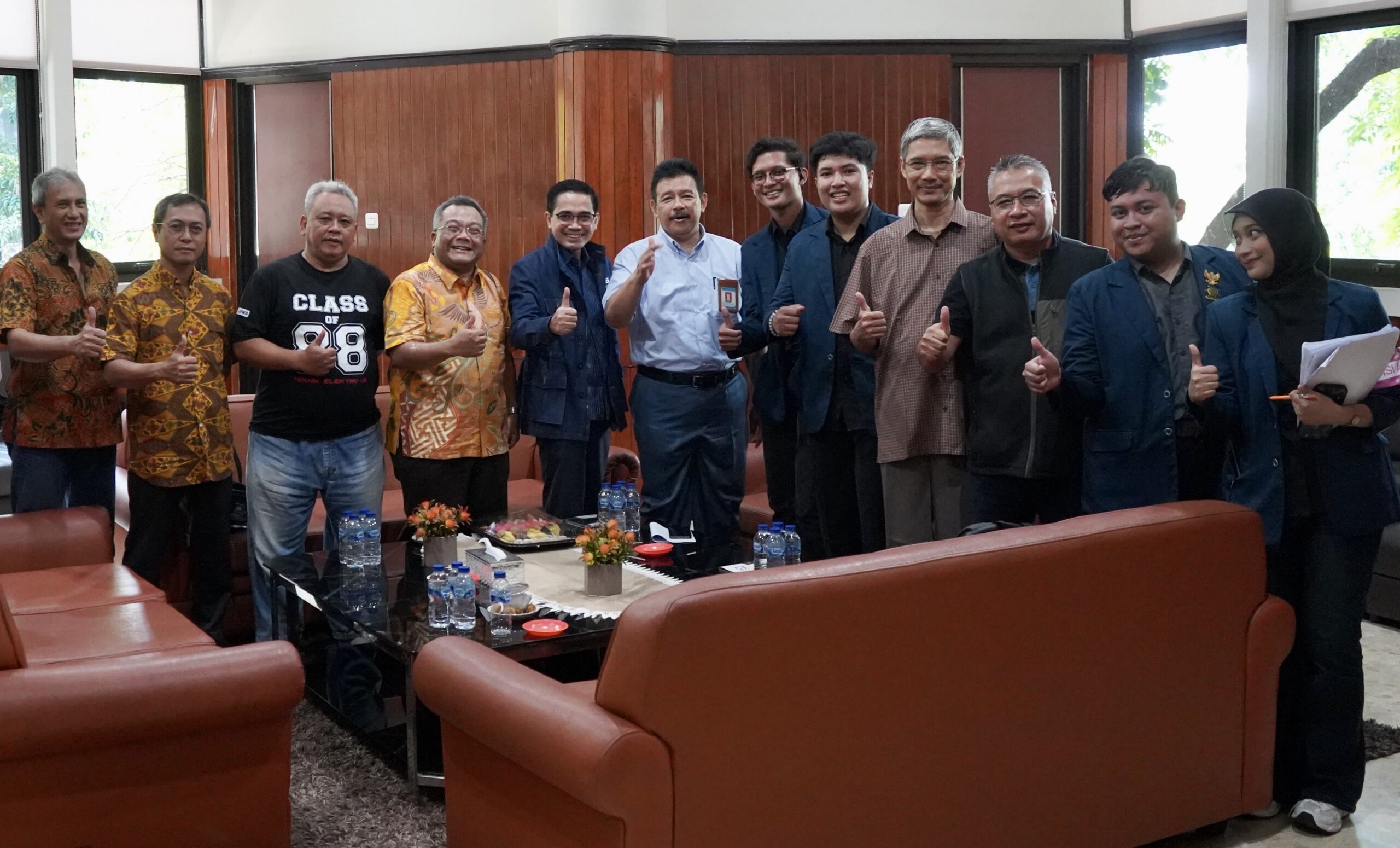
Prior to the event, in the holding room, we had a discussion with the Vice-Rector on reinforcing an innovation-driven entrepreneurial ecosystem that leverages Telkom Group’s digital platforms and connectivity, alongside the strong collaborative resources of IEEE, including IEEE Indonesia Section. Follow-up actions are now being prepared at both university and faculty levels.

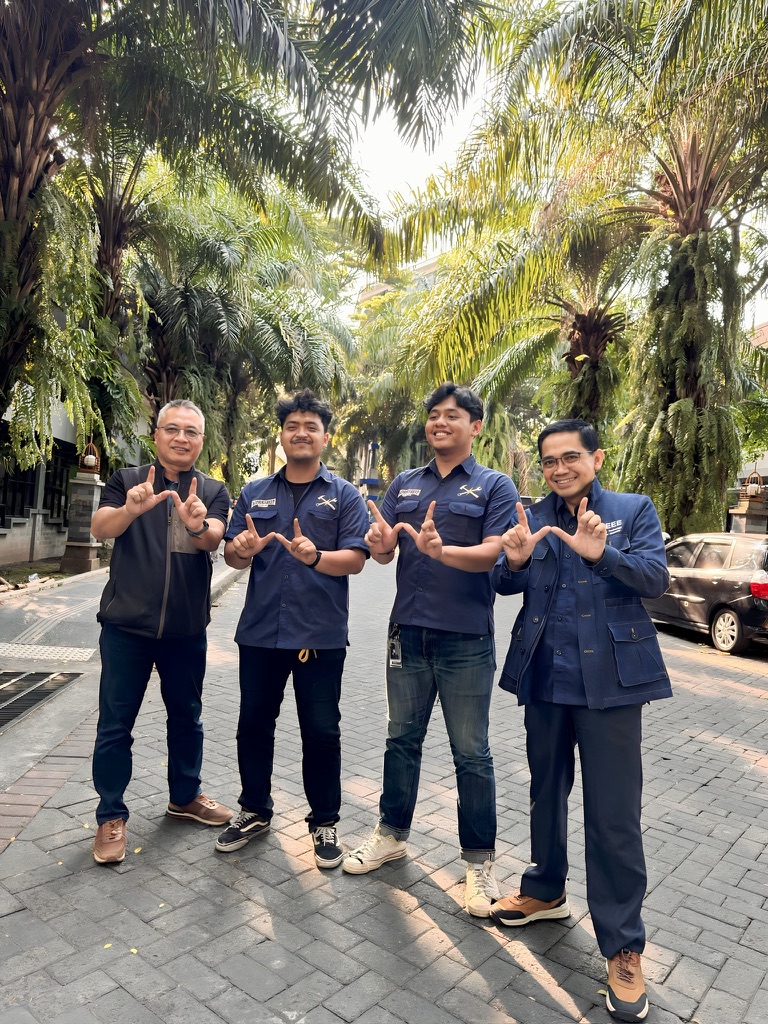
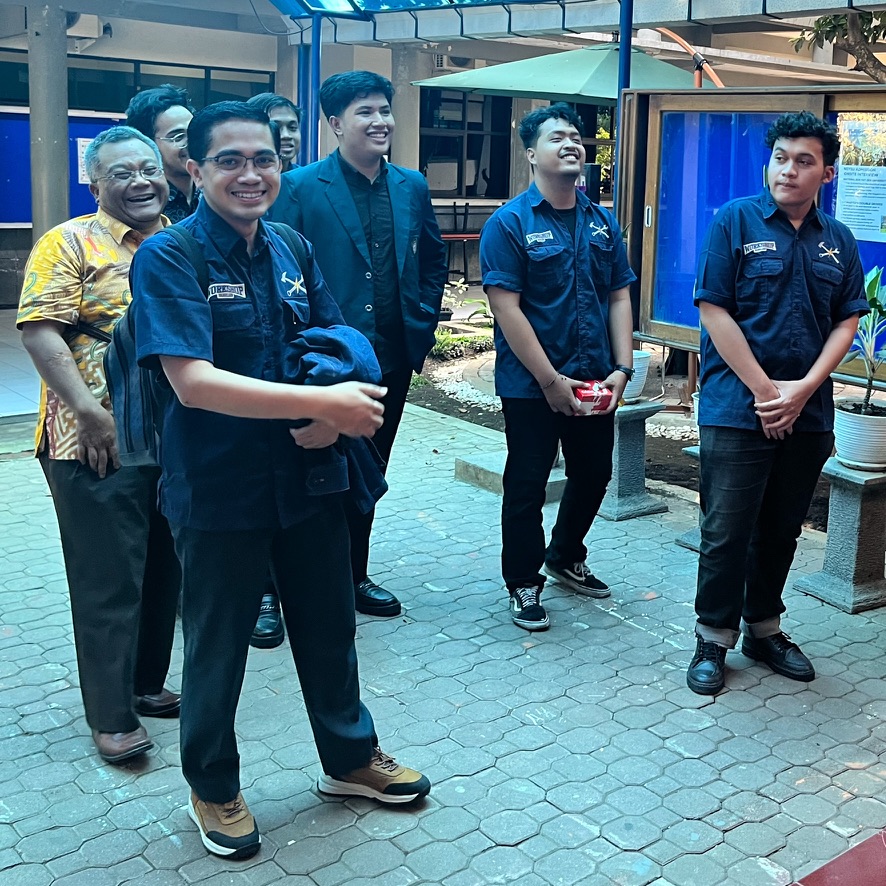
I specifically requested that the founding generation of Workshop TEUB, i.e. several alumni from the E88 cohort, to be present as well. Workshop TEUB was established by a trio: Sigit Shalako Abdurajak, Widiyanto, and yours truly; together with the early activists who were deeply involved in innovation and training initiatives. Several of them were able to attend the event: Saiful Hidayat, Aries Boedi Setiawan, Moch Iszar, and others who unfortunately could not join.

We originally founded the Workshop to address significant limitations in academic content as well as the capability and capacity gaps within our alma mater at the time. To our surprise and pride, the next generations have carried the Workshop far beyond what we imagined. Now operating as an autonomous unit under HME, it has grown into a hub of innovation excellence. The current Head of the Workshop is Akmal Mulki Majid.

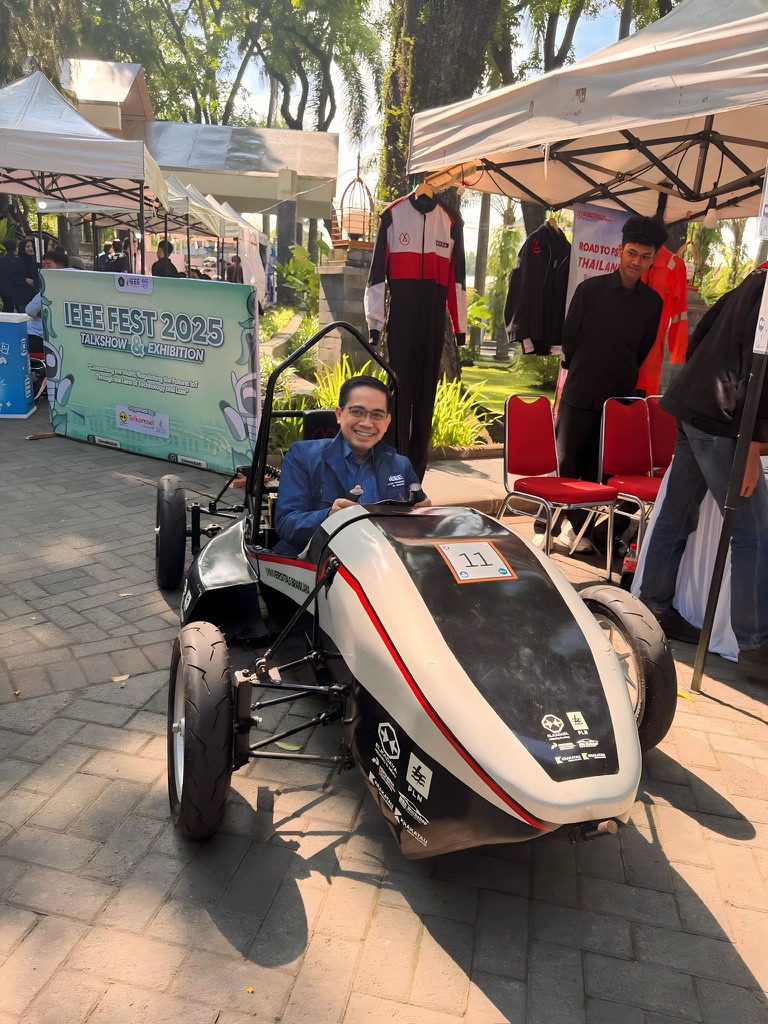
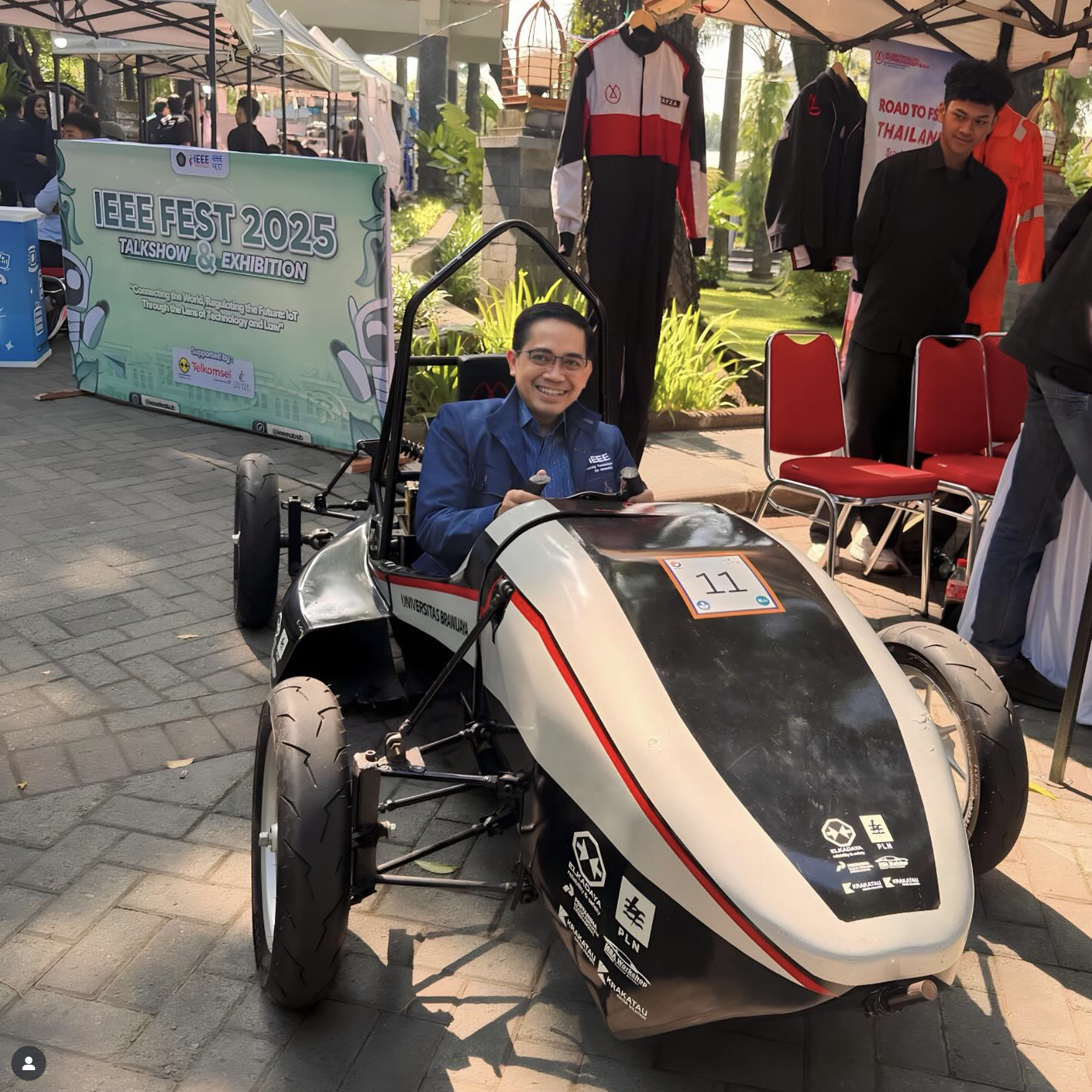
IEEE Fest 2025 also featured a student innovation exhibition, presented through a series of presentations and booths from units under HME and the Workshop, along with various other innovation teams across the university. Students showcased their leading work, including IoT implementations, robotics platforms, and their early integrations with intelligent systems. One highlight was Elektro Formula Brawijaya, an EV innovation bridging technological capability with real-world demands. These exhibitions showed that UB students are not merely following technological trends. They are confidently pushing past them, designing precise, concrete solutions ready for industrial validation.

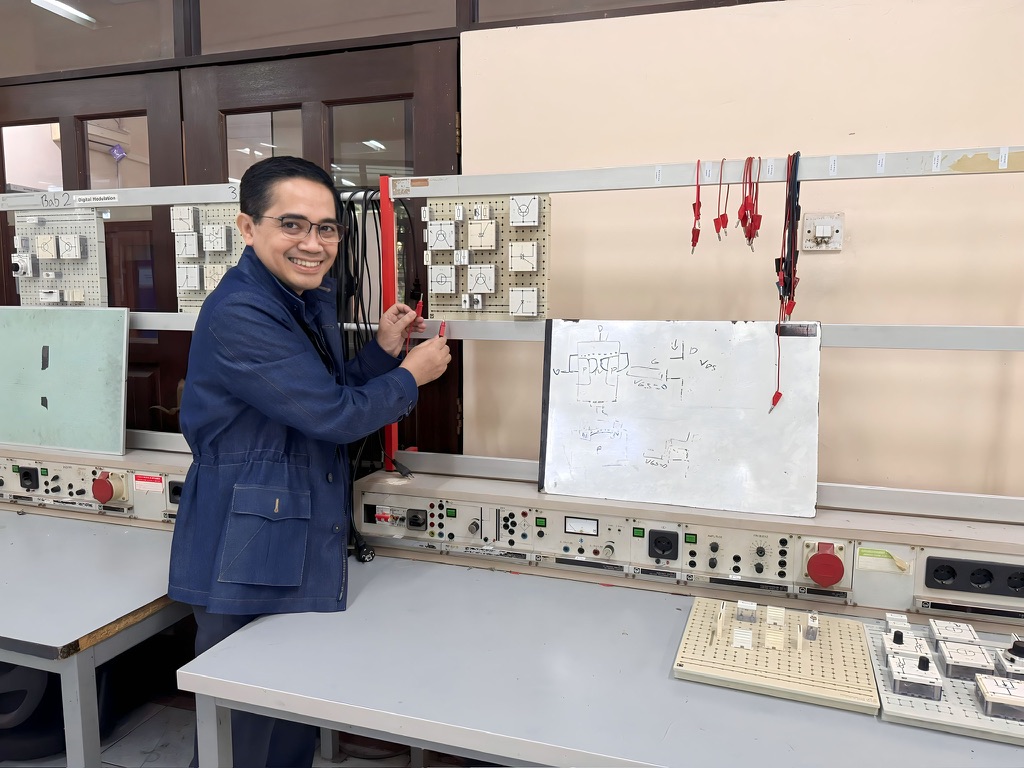
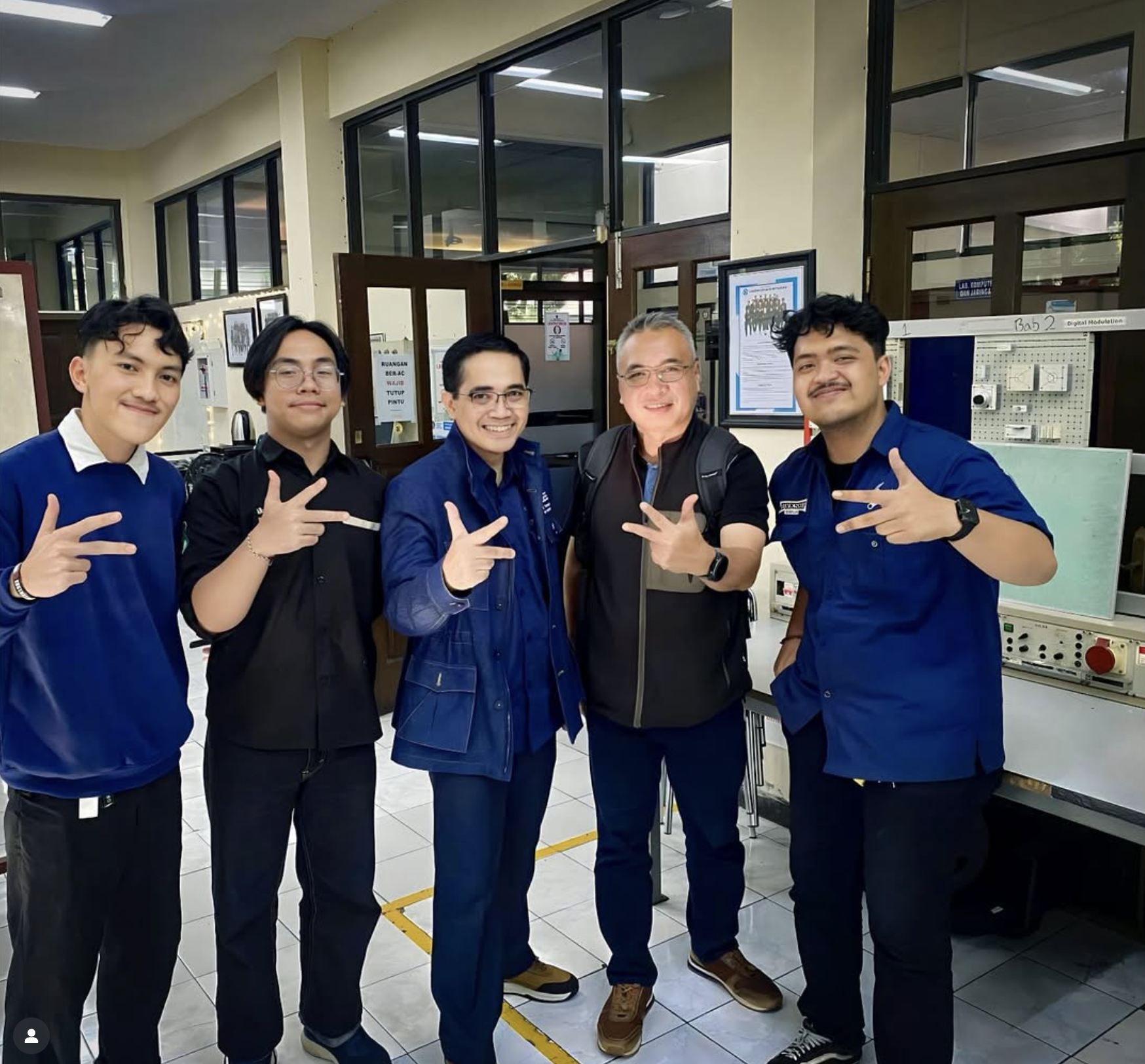
Alongside the exhibition, we conducted a tour of the Workshop and the Electrical Engineering laboratories, accompanied among others by the HME Chair, M Iqbal Maulana. This included, of course, the Electronics Lab, where Sigit Shalako and I once served as lab assistants. The lab has since moved location and now operates with far more advanced, high-precision experimental modules.

The event itself lasted only a day, but the collaboration certainly will not stop there. Technical consultations, sociopreneurship initiatives, and new strategic partnership pathways will continue to grow, strengthening the innovation ecosystem and supporting the sustainable development of national talents.

IEEE Fest & Workshop TEUB

Aku diundang sebagai representatif IEEE Indonesia Section Advisory Board pada IEEE Fest 2025 yang digelar IEEE Brawijaya University Student Branch di Malang, 18 Oktober 2025. Ketuanya Muhammad Asyir Zarkasih, sebagai Chair of IEEE SBUB. Kegiatan ini dibuka Warek UB fidang Kemahasiswaan dan Kewirausahaan, Dr Setiawan Noerdajasakti, serta para pimpinan fakultas dan jurusan. Ini menarik, karena IEEE SBUB benar-benar berekspansi dari jurusan-jurusan yang bersifat STEM, ke bidang seperti manajemen dan hukum.

Welcoming speech pendek dari aku lebih mendorong ditingkatkannya antusiasme, komitman, dan kapabilitas inovasi melalui kolaborasi dengan jalur yang sudah tersedia dan dikembangkan lebih luas lagi melalui berbagai OU dan program di IEEE. Di tengah situasi kompleks, bukan saja tantanagn lebih mungkin diselesaikan bersama; namun seringkali kita memperoleh banyak peluang baru dari sisi inovasi dan bisnis melalui kolaborasi kompleks ini.

Berbincang sebelumnya di holding room dengan Warek, kami membahas penguatan ekosistem kewirausahaan berbasis inovasi yang memanfaatkan platform digital dan konektivitas Telkom Group, serta kolaborasi inovatif yang sangat kuat dari IEEE termasuk IEEE Indonesia Section. Tindak lanjutnya kini disiapkan di tingkat universitas maupun fakultas.

Khusus tahun ini, aku minta dapat dihadirkan generasi pendiri Workshop TEUB juga, yaitu beberapa alumni E88. Workshop TEUB didirikan trio Sigit Shalako Abdurajak, Widiyanto, dan aku sendiri; serta para aktivitas angkatan awal yang aktif pada bidang inovasi dan pelatihan, termasuk yang hadir di kegiatan ini: Saiful Hidayat, Aries Boedi Setiawan, Moch Iszar, dan rekan-rekan lain yang belum bisa hadir. Workshop ini kami dirikan untuk menghadapi banyak keterbatasan konten akademis serta kapabilisa dan kapasitas almamater kami tahun awal itu; dan kami sendiri malah takjub bahwa para penerus kami terus mengembangkan Workshop ini (sekarang sebagai unit otonom bawah HME) mencapai keunggulan inovasi seperti saat ini. Kepala Workshop saat ini adalah Akmal Mulki Majid.

IEEE Fest 2025 juga menampilkan pameran inovasi mahasiswa dalam bentuk presentasi dan booth dari berbagai unit di bawah HME dan Workshop, serta unit-unit inovasi kampus lainnya. Para mahasiswa memamerkan karya unggulan, termasuk implementasi IoT, platform robotika, hingga integrasi dengan sistem cerdas. Salah satunya adalah Elektro Formula Brawijaya, yaitu inovasi EV yang menjembatani kapabilitas teknologi dan kebutuhan dunia nyata. Pameran ini memperlihatkan bagaimana mahasiswa UB tak sekadar mengikuti perkembangan teknologi, tetapi juga berani melintasi batasnya: merancang solusi konkret, presisi, dan siap diuji dalam konteks industri.

Paralel kegiatan pameran, kami melakukan kunjungan ke Workshop dan laboratorium di Teknik Elektro. Dikawal a.l. oleh Ketua HME, M Iqbal Maulana. Termasuk tentunya ke Lab Elektronika, tempat aku jadi lab assistant bersama Sigit Shalako. Labnya sudah pindah tempat, lebih maju, dengan modul eksperimen presisi tinggi.

Acaranya satu hari, tapi kolaborasi tentu tidak berhenti. Konsultasi teknis, program sociopreneurship, dan rintisan kemitraan strategis akan makin dikembangkan berjalan untuk memperkuat ekosistem inovasi dan mendukung pengembangan talenta nasional secara berkelanjutan.