IEEE Fest & Workshop TEUB

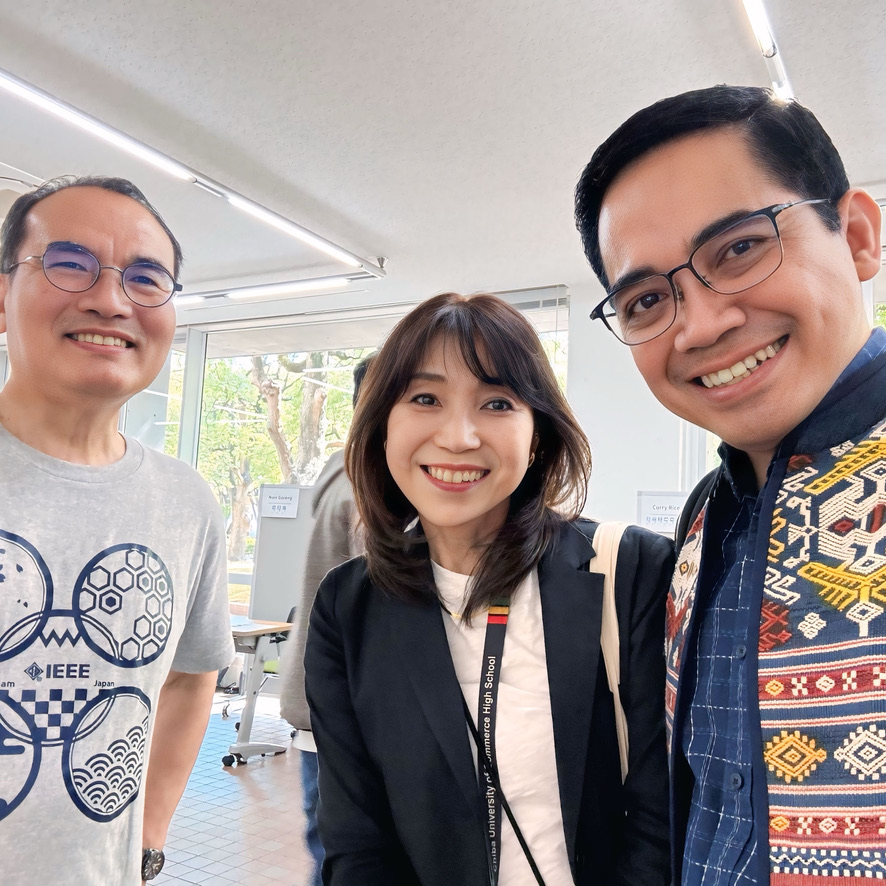
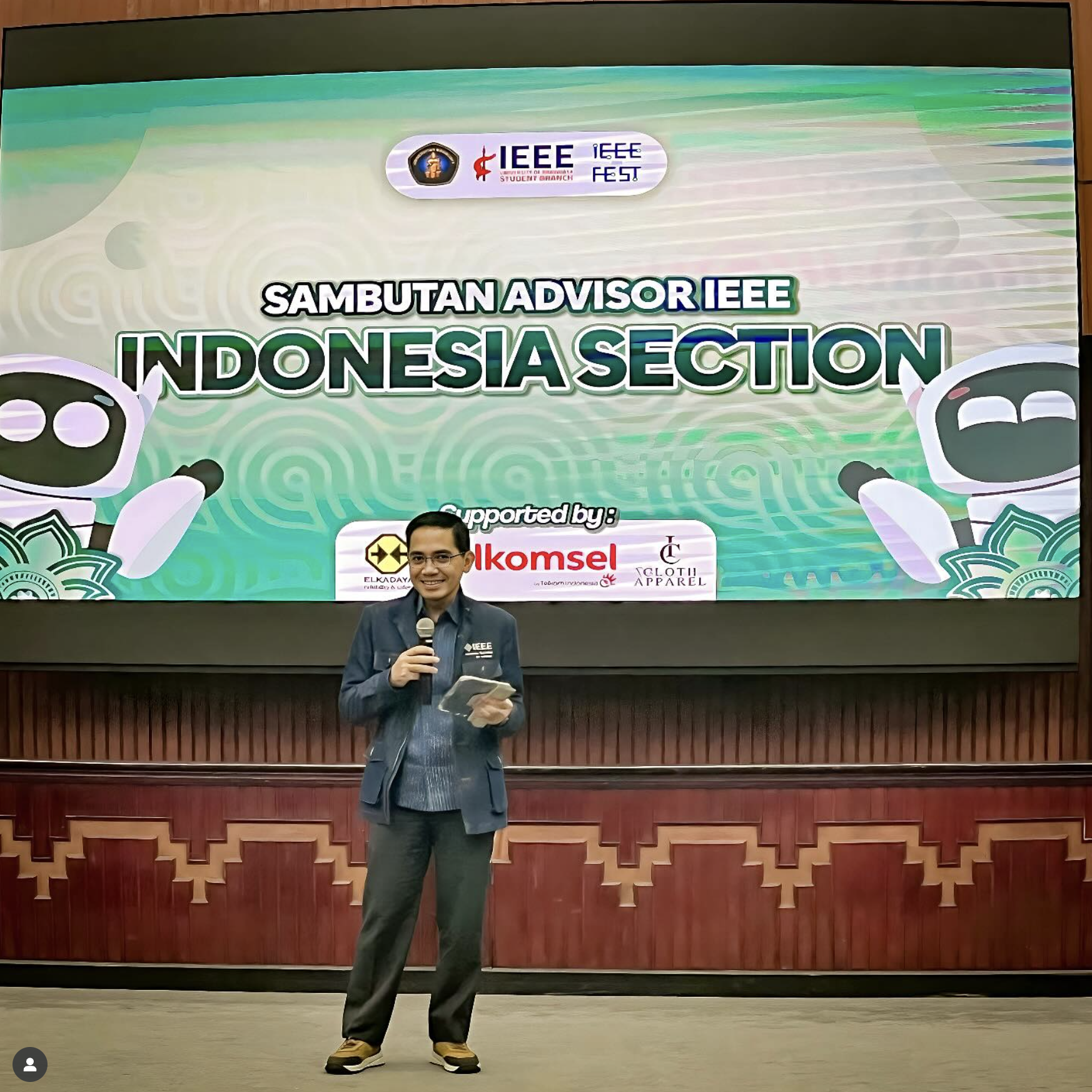
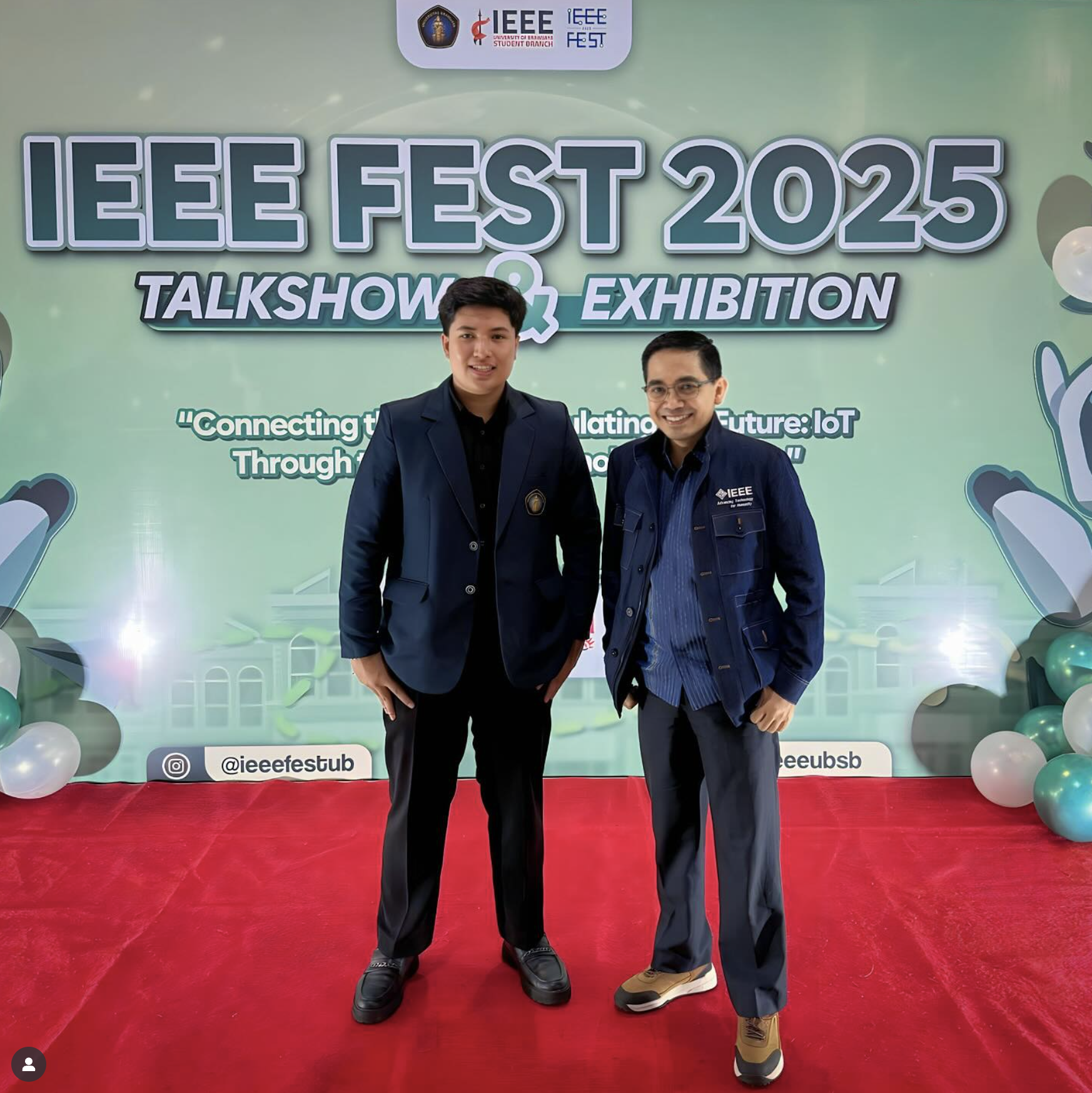
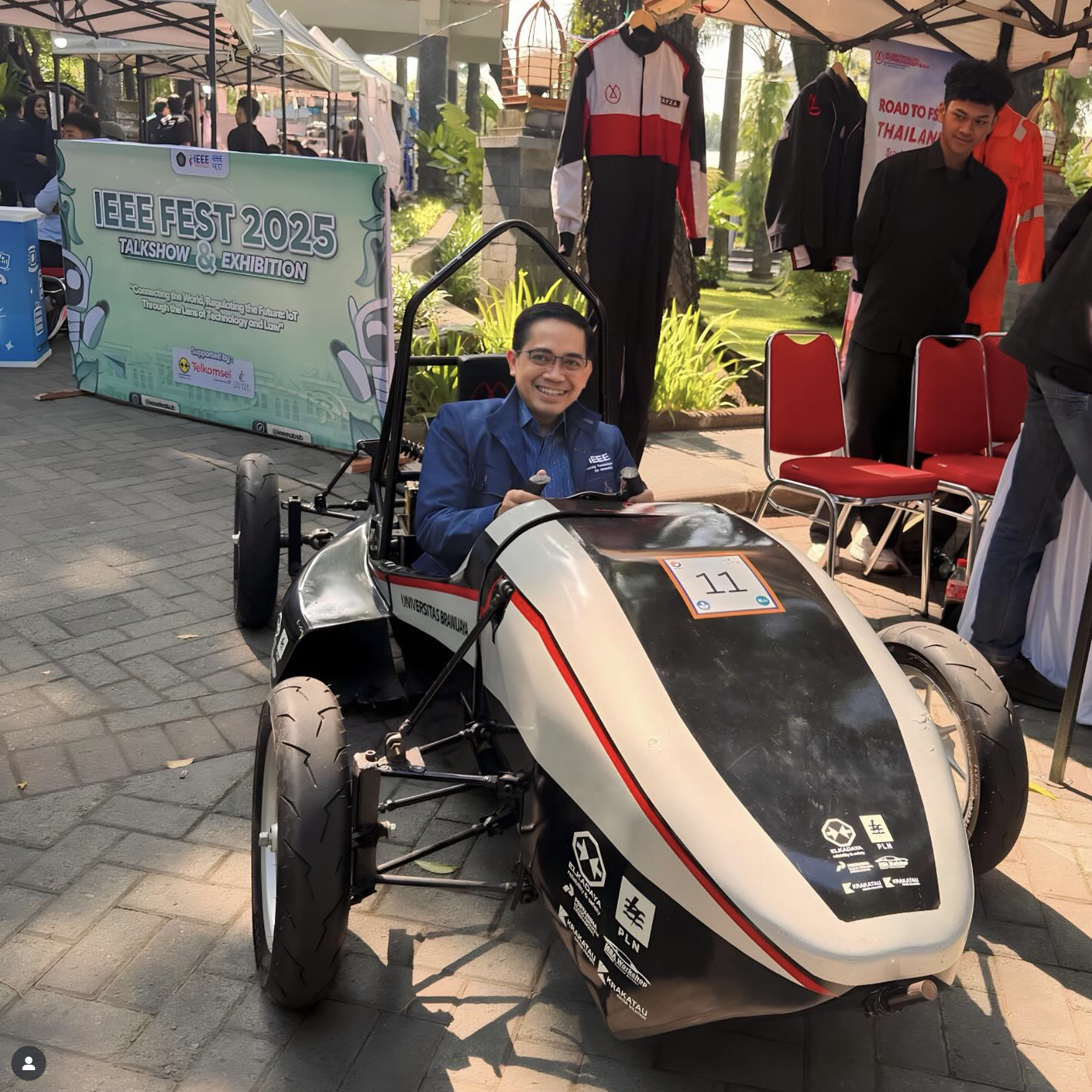
Aku diundang sebagai representatif IEEE Indonesia Section Advisory Board pada IEEE Fest 2025 yang digelar IEEE Brawijaya University Student Branch di Malang, 18 Oktober 2025. Ketuanya Muhammad Asyir Zarkasih, sebagai Chair of IEEE SBUB. Kegiatan ini dibuka Warek UB fidang Kemahasiswaan dan Kewirausahaan, Dr Setiawan Noerdajasakti, serta para pimpinan fakultas dan jurusan. Ini menarik, karena IEEE SBUB benar-benar berekspansi dari jurusan-jurusan yang bersifat STEM, ke bidang seperti manajemen dan hukum.

Welcoming speech pendek dari aku lebih mendorong ditingkatkannya antusiasme, komitman, dan kapabilitas inovasi melalui kolaborasi dengan jalur yang sudah tersedia dan dikembangkan lebih luas lagi melalui berbagai OU dan program di IEEE. Di tengah situasi kompleks, bukan saja tantanagn lebih mungkin diselesaikan bersama; namun seringkali kita memperoleh banyak peluang baru dari sisi inovasi dan bisnis melalui kolaborasi kompleks ini.
Berbincang sebelumnya di holding room dengan Warek, kami membahas penguatan ekosistem kewirausahaan berbasis inovasi yang memanfaatkan platform digital dan konektivitas Telkom Group, serta kolaborasi inovatif yang sangat kuat dari IEEE termasuk IEEE Indonesia Section. Tindak lanjutnya kini disiapkan di tingkat universitas maupun fakultas.
Khusus tahun ini, aku minta dapat dihadirkan generasi pendiri Workshop TEUB juga, yaitu beberapa alumni E88. Workshop TEUB didirikan trio Sigit Shalako Abdurajak, Widiyanto, dan aku sendiri; serta para aktivitas angkatan awal yang aktif pada bidang inovasi dan pelatihan, termasuk yang hadir di kegiatan ini: Saiful Hidayat, Aries Boedi Setiawan, Moch Iszar, dan rekan-rekan lain yang belum bisa hadir. Workshop ini kami dirikan untuk menghadapi banyak keterbatasan konten akademis serta kapabilisa dan kapasitas almamater kami tahun awal itu; dan kami sendiri malah takjub bahwa para penerus kami terus mengembangkan Workshop ini (sekarang sebagai unit otonom bawah HME) mencapai keunggulan inovasi seperti saat ini. Kepala Workshop saat ini adalah Akmal Mulki Majid.

IEEE Fest 2025 juga menampilkan pameran inovasi mahasiswa dalam bentuk presentasi dan booth dari berbagai unit di bawah HME dan Workshop, serta unit-unit inovasi kampus lainnya. Para mahasiswa memamerkan karya unggulan, termasuk implementasi IoT, platform robotika, hingga integrasi dengan sistem cerdas. Salah satunya adalah Elektro Formula Brawijaya, yaitu inovasi EV yang menjembatani kapabilitas teknologi dan kebutuhan dunia nyata. Pameran ini memperlihatkan bagaimana mahasiswa UB tak sekadar mengikuti perkembangan teknologi, tetapi juga berani melintasi batasnya: merancang solusi konkret, presisi, dan siap diuji dalam konteks industri.
Paralel kegiatan pameran, kami melakukan kunjungan ke Workshop dan laboratorium di Teknik Elektro. Dikawal a.l. oleh Ketua HME, M Iqbal Maulana. Termasuk tentunya ke Lab Elektronika, tempat aku jadi lab assistant bersama Sigit Shalako. Labnya sudah pindah tempat, lebih maju, dengan modul eksperimen presisi tinggi.
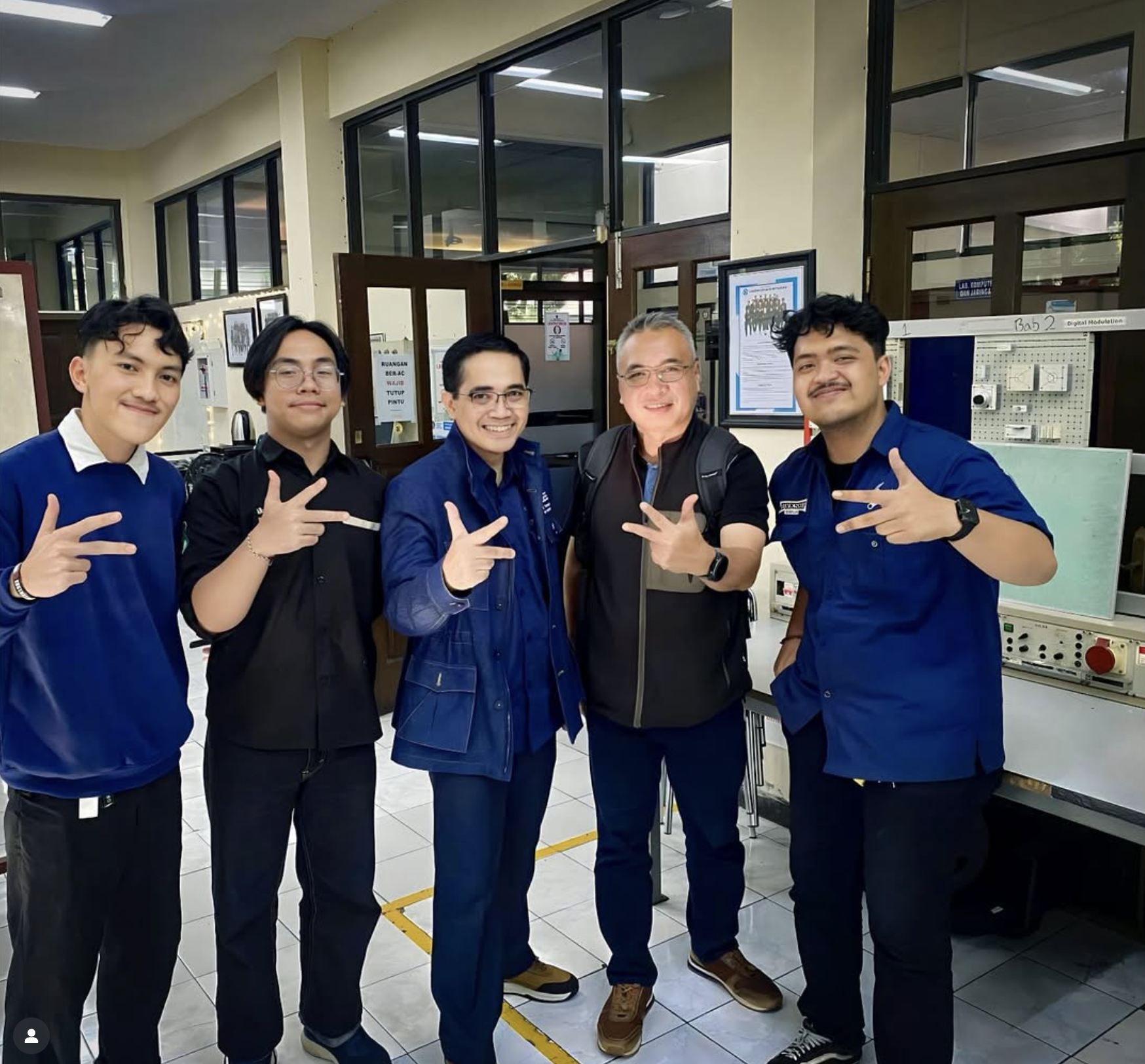
Acaranya satu hari, tapi kolaborasi tentu tidak berhenti. Konsultasi teknis, program sociopreneurship, dan rintisan kemitraan strategis akan makin dikembangkan berjalan untuk memperkuat ekosistem inovasi dan mendukung pengembangan talenta nasional secara berkelanjutan.

IEEE R10 HTC 2025

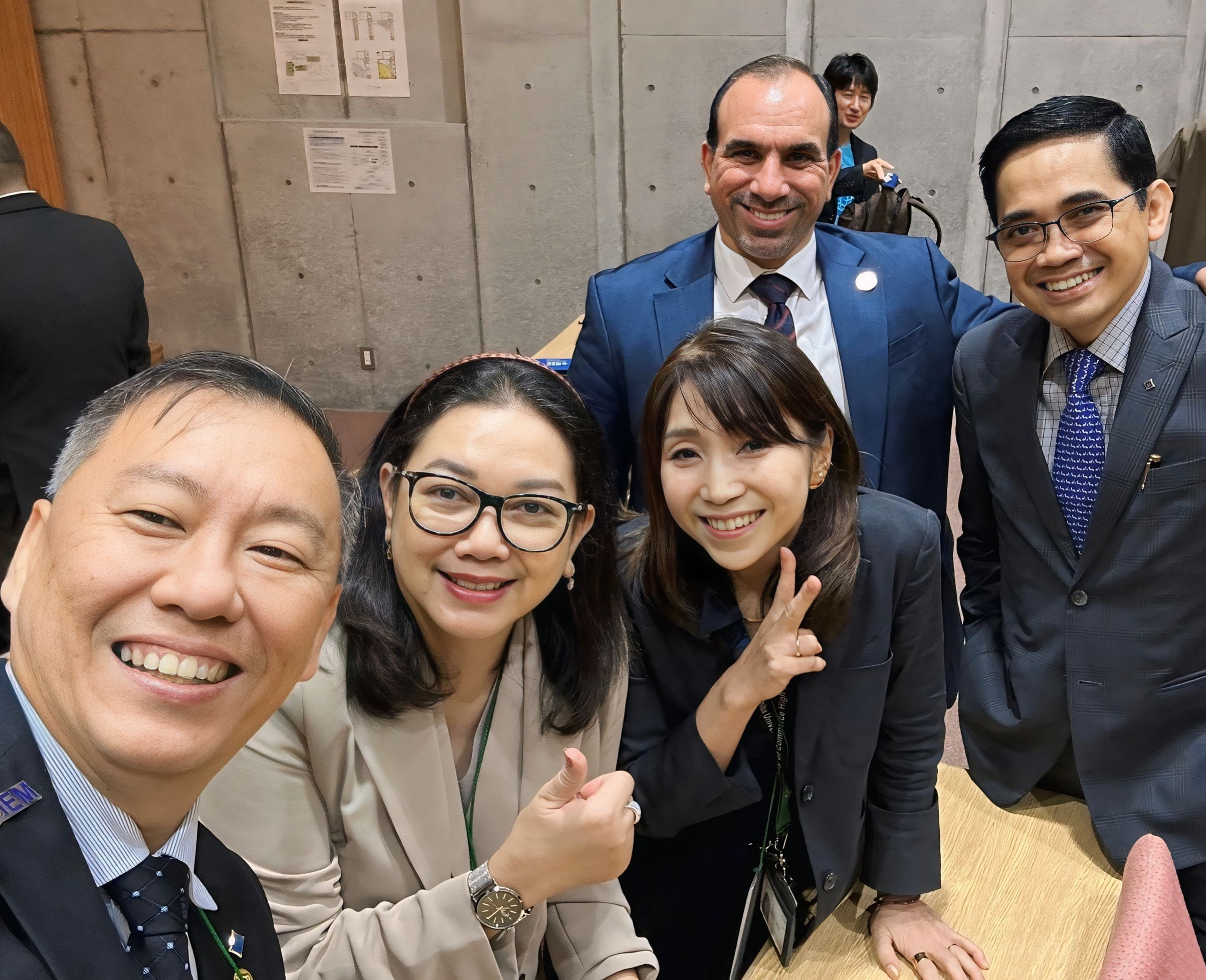
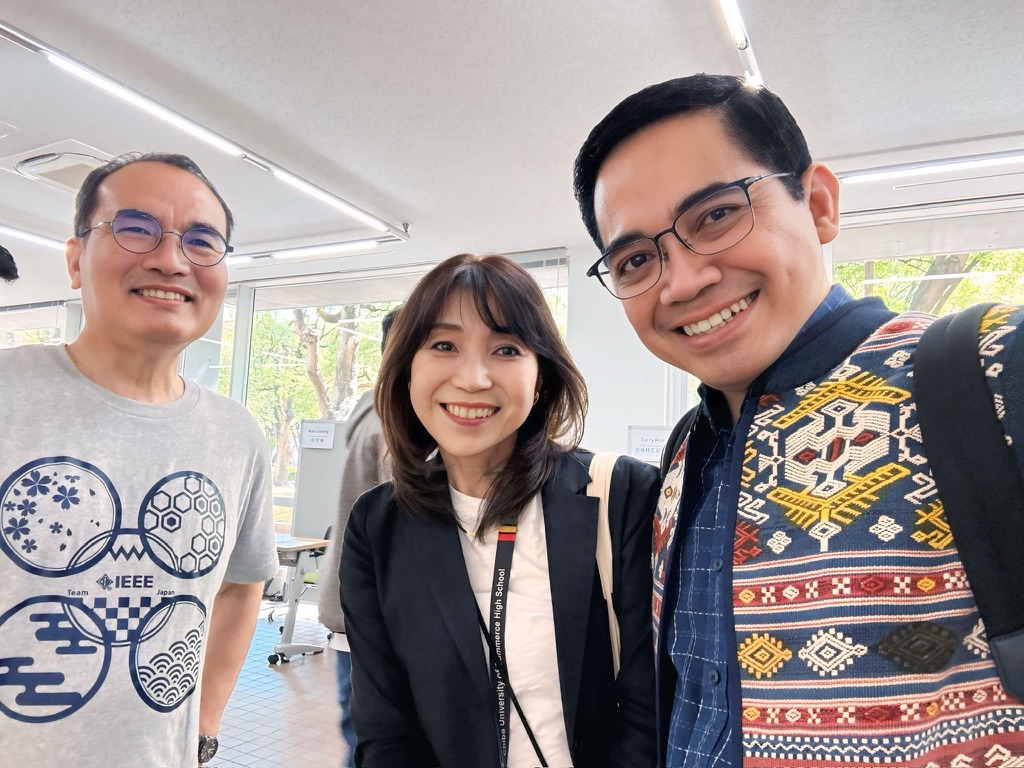
Minggu lalu, IEEE Region 10 menyelenggarakan Humanitarian Technology Conference (HTC) 2025 di Chiba University of Commerce, Jepang, 28 September hingga 1 Oktober, yang mempertemukan para visioner global dengan mengusung tema “Beyond SDGs, A New Humanitarian Era with Intelligent Partners.” Konferensi ini menyoroti sinergi antara intelektualitas manusia dan sistem cerdas yang berkembang dalam meningkatkan dampak kemanusiaan melalui teknologi.

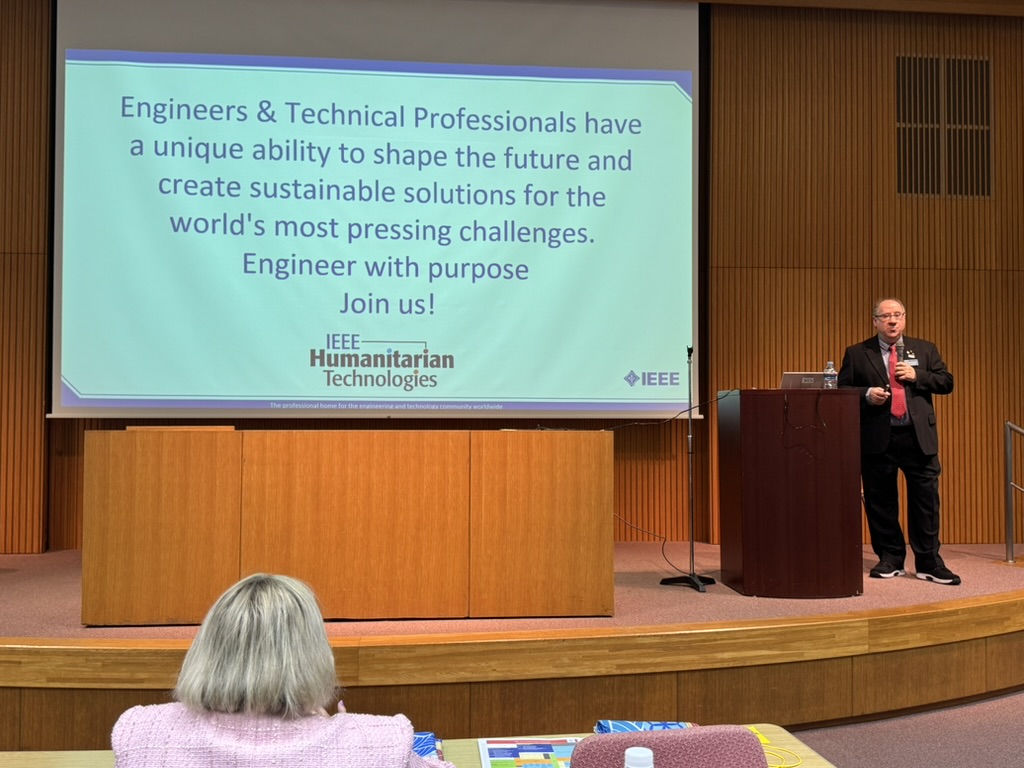
Saat Pembukaan, Presiden IEEE Humanitarian Technologies Board (HTB) Grayson Randall menyampaikan speech yang menekankan peran istimewa profesi insinyur dalam meningkatkan kualitas hidup manusia. Pesannya menegaskan bahwa insinyur bukan sekadar pemecah masalah, melainkan arsitek harapan yang mampu menjembatani inovasi dengan tanggung jawab sosial. Ia juga memaparkan berbagai peluang baru dalam program-program HT untuk mendorong proyek yang inklusif dan berdampak luas di kawasan Asia-Pasifik. Pada hari kedua, IEEE President-Elect Mary Ellen Randall menyampaikan keynote speech yang visioner tentang roadmap IEEE dalam memajukan profesi rekayasa selaras dengan tujuan pembangunan manusia global. Ia menjelaskan bagaimana arah strategis IEEE, termasuk etika digital dan inovasi berkelanjutan, berfokus pada satu misi utama, peningkatan kualitas hidup manusia melalui kolaborasi yang cerdas.

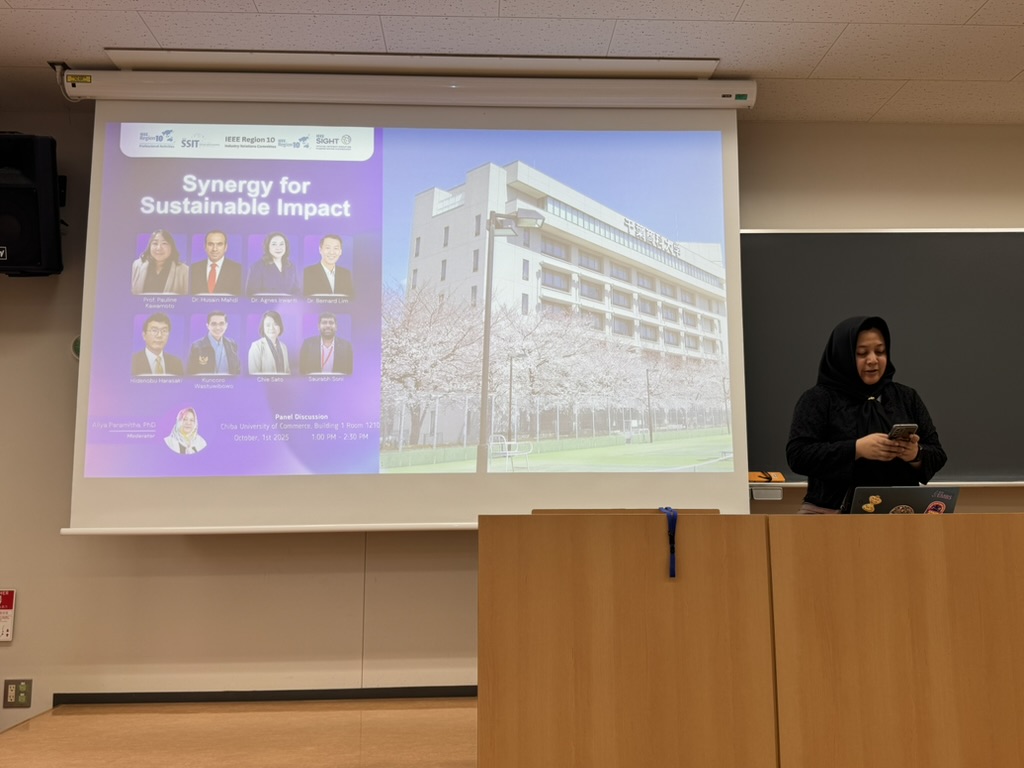
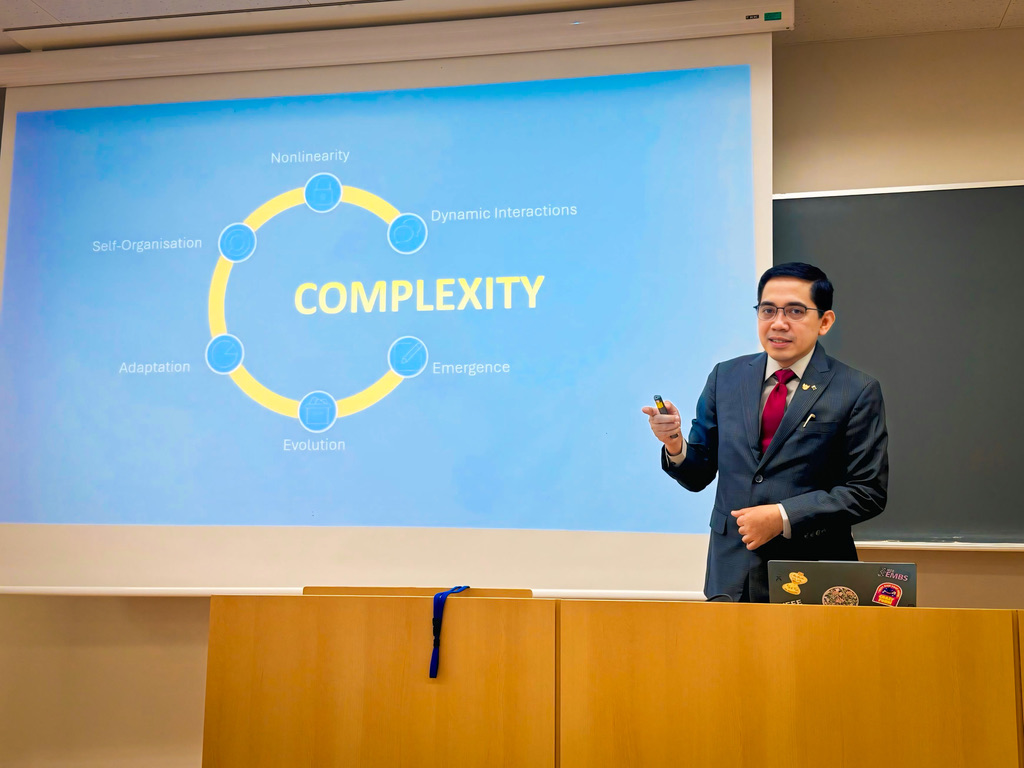
Hari ke-3 (1 Oktober), aku berpresentasi dalam Program Khusus 15 dengan judul “Synergy for Sustainable Impact.” Sesi ini dimoderatori oleh Allya Paramitha, dengan para panelis Hidenobu Harasaki, Husain Mahdi, Agnes Irwanti, Bernard Lim, Chie Sato, Saurabh Soni, dan aku sendiri. Diskusi membahas mekanisme kolaboratif antara teknologi, kebijakan, dan inovasi sosial untuk mempercepat hasil kemanusiaan yang berkelanjutan. Aku nyaris selalu memulai presentasi tentang sinergi, ekosistem, dan kolaborasi industri dengan menempatkannya dalam framework teori kompleksitas, yang menunjukkan bagaimana sinergi dapat menghasilkan nilai emergence secara non-linear dalam ekosistem kompleksitas. Fenomena emergensi inilah yang menjadi kunci transformasi menuju pencapaian SDG, khususnya dalam memperkuat inklusivitas, ketahanan, dan keadilan.

Aku mengacu pada visi nasional Indonesia, dengan menjelaskan pengembangan ekosistem komersialisasi UMKM sebagai model penerapan teknologi kemanusiaan. Melalui program-program yang meliputi juga pembiayaan mikro, platform digital, dan pemberdayaan koperasi, kita menunjukkan bagaimana teknologi dapat mengangkat pasar yang sebelumnya belum tergarap menjadi sistem yang produktif dan berkelanjutan. Aku juga memaparkan case dimana IEEE Indonesia SIGHT in Sociopreneurship and Sustainability melaksanakan program pengembangan kapasitas bagi Student Branch IEEE Indonesia, yang masing-masing merancang solusi lokal seperti sistem air tenaga surya, pemantauan berbasis IoT, dan inkubasi sosiopreneurship, sebagaimana sedang dijalankan oleh Universitas Gadjah Mada dan Universitas Udayana. Proyek-proyek ini menunjukkan bagaimana keterlibatan berbasis rekayasa dapat berkembang menjadi sociopreneurship yang digerakkan oleh komunitas, dengan menjamin keberlanjutan melalui kepemilikan, replikasi, dan dampak yang terukur.

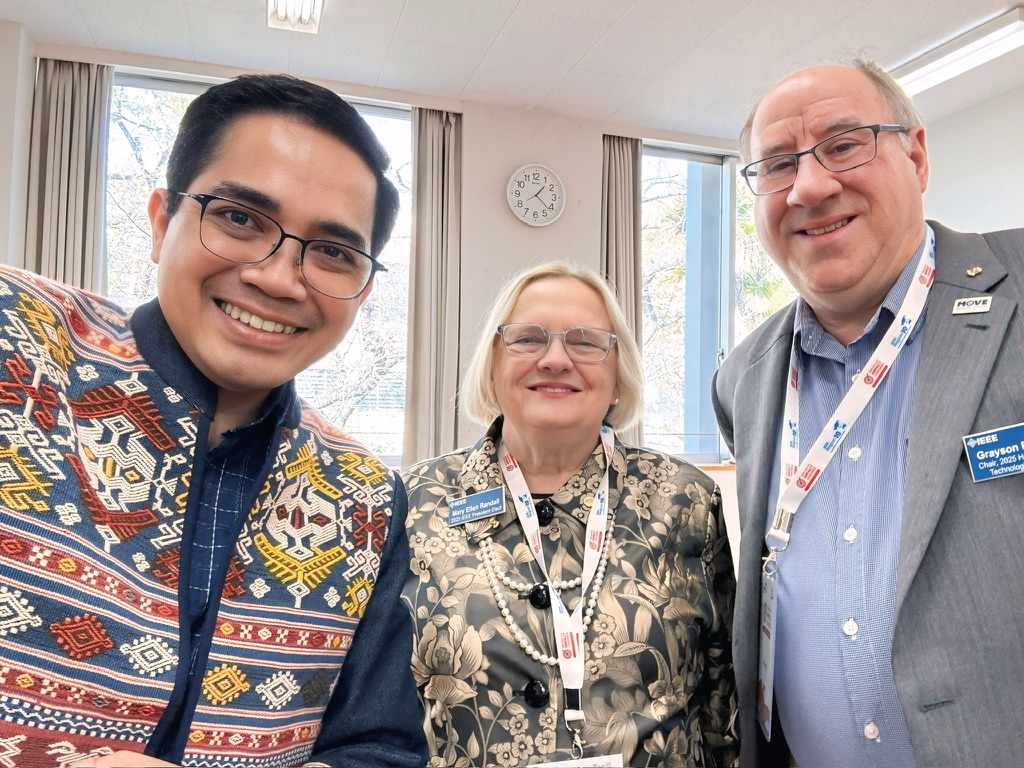
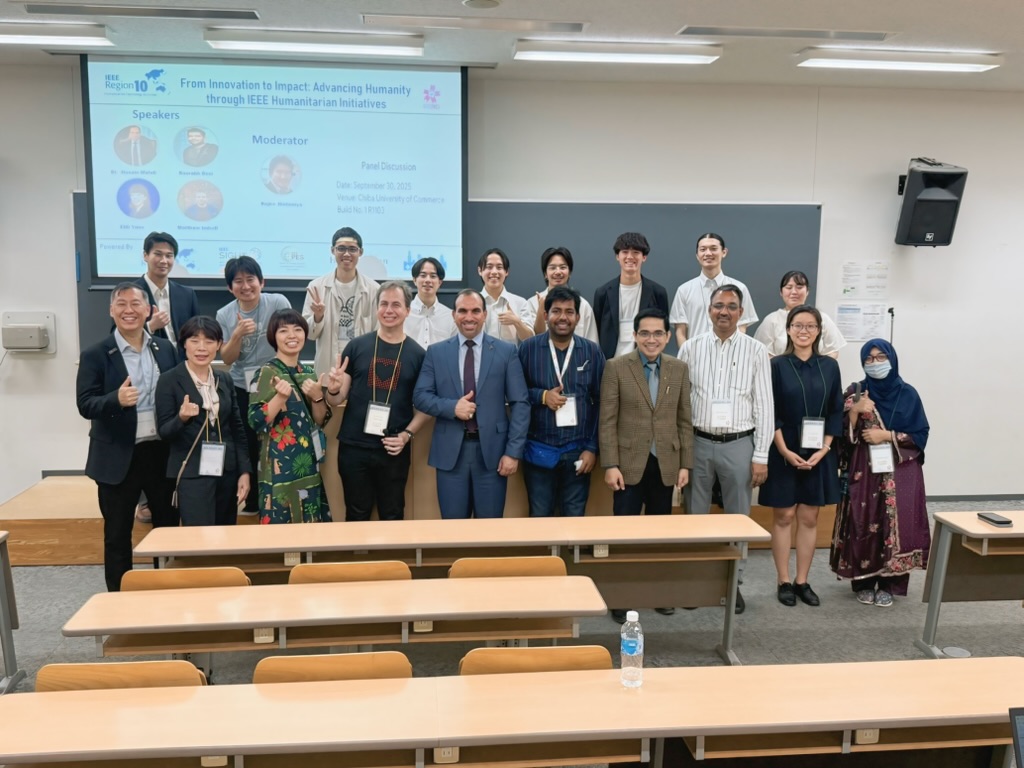
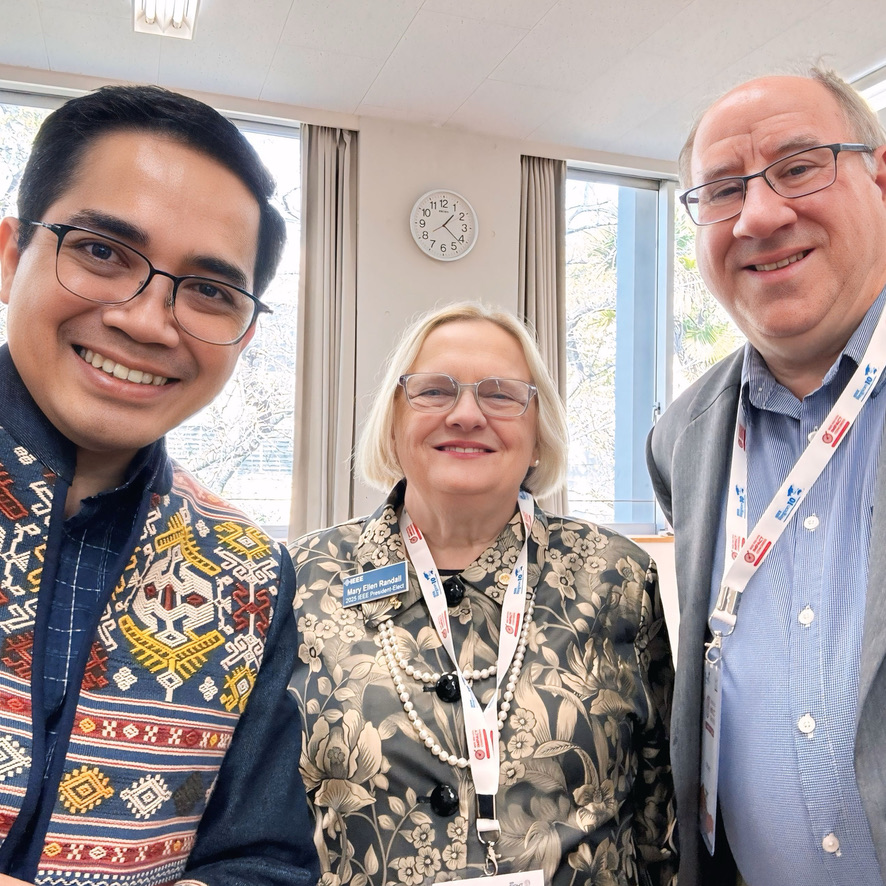
Pada Hari ke-0 (28 September), aku juga menceritakan versi ringkas program-program ini ke IEEE President-Elect Mary Ellen Randall dan HTB President Grayson Randall. Diskusi ini menjadi landasan bagi pengembangan lebih lanjut program kemanusiaan IEEE di Indonesia dan kawasan Asia-Pasifik, dengan fokus pada ekosistem digital, sosiopreneurship, dan model inovasi berkelanjutan. Program ini juga aku sampaikan dalam Program Khusus 13 (30 September), “From Innovation to Impact: Advancing IEEE Humanitarian Initiatives”, dalam HTA Forum untuk membahas penyelarasan strategis antara kerangka kemanusiaan IEEE dan pengembangan ekosistem regional.

IEEE R10 HTC 2025 ini bukan hanya diskusi antara gagasan, tetapi lebih sebagai aktivitas dinamis dari sinergi, serta perpaduan antara intelektualitas, empati, dan teknologi. Konferensi ini menegaskan bahwa keinsinyuran bukan sekadar tentang mesin atau sistem, melainkan selalu tentang kemanusiaan. IEEE R10 HTC 2025 menjadi tonggak lain dalam perjalanan kolektif untuk membangun dunia yang lebih adil, tangguh, dan berkelanjutan, digerakkan oleh wawasan manusia dan inovasi cerdas.

IEEE HTC 2025

The IEEE Region 10 Humanitarian Technology Conference (HTC) 2025 was carried out at Chiba University of Commerce, Japan, from 28 September to 1 October, bringing together global visionaries under the theme “Beyond SDGs, A New Humanitarian Era with Intelligent Partners.” The conference highlighted the synergy between human intellect and emerging intelligent systems in advancing humanitarian impact through technology.

During the Opening Ceremony, Grayson Randall, President of the IEEE Humanitarian Technologies Board (HTB), delivered an address emphasising the special position of the engineering profession in improving and enhancing the quality of life. His message underscored that engineers are not merely problem-solvers but architects of hope, capable of bridging innovation with social responsibility. He further presented new opportunities within HT programmes to stimulate inclusive and impactful projects across the Asia-Pacific region. On the second day, IEEE President-Elect Mary Ellen Randall presented a visionary keynote speech outlining IEEE’s roadmap for advancing the engineering profession in alignment with global human development goals. She articulated how IEEE’s strategic directions, from digital ethics to sustainable innovation, converge towards one essential mission, the enhancement of human life quality through intelligent collaboration.

On Day 3 (1 October), I delivered my presentation in Special Program 15, titled “Synergy for Sustainable Impact.” The session, moderated by Allya Paramitha, brought together distinguished panellists Hidenobu Harasaki, Husain Mahdi, Agnes Irwanti, Bernard Lim, Chie Sato, Saurabh Soni, and your truly. The discussion explored collaborative mechanisms between technology, policy, and social innovation to accelerate humanitarian outcomes through sustainable synergy. I often begin my presentations on synergy, ecosystems, and industry collaboration by framing them within the principles of complexity theory, illustrating how synergies can generate emergent, non-linear value in complex socio-technical ecosystems. These emergences are the key to the transformations central to achieving the UN Sustainable Development Goals (SDGs), particularly in fostering inclusivity, resilience, and equity.

Drawing from Indonesia’s national vision, I illustrated how the MSME commerce ecosystem has become a model of humanitarian technology application in real-world contexts. Through programmes focusing on microfinance, digital platforms, and cooperative empowerment, the framework demonstrated how technology can elevate non-consumption markets into productive and sustainable systems. I also shared case studies in which IEEE Indonesia SIGHT in Sociopreneurship and Sustainability provides capability building for IEEE Indonesia Student Branches, each designing local solutions including solar-powered water systems, IoT monitoring, and sociopreneurship incubation, as currently being undertaken by Gadjah Mada University and Udayana University. These projects exemplify how engineering-led engagements can evolve into community-driven sociopreneurship, ensuring sustainability through ownership, replication, and measurable impact.

On Day 0 (28 September), I provided a briefing on these programmes to IEEE President-Elect Mary Ellen Randall and HTB President Grayson Randall. These exchanges laid the groundwork for advancing IEEE humanitarian initiatives in Indonesia and the Asia-Pacific region, focusing on digital ecosystems, sociopreneurship, and sustainable innovation models. I also discussed these programmes during Special Program 13 (30 September), “From Innovation to Impact: Advancing IEEE Humanitarian Initiatives”, where I joined the HTA Forum to discuss strategic alignment between IEEE humanitarian frameworks and regional ecosystem development.

The IEEE R10 HTC 2025 stood out not only as a conference of ideas but as a living demonstration of synergy, the fusion of intellect, empathy, and technology. The conference reaffirmed a timeless truth, engineering is not merely about machines or systems, but about humanity itself. The IEEE R10 HTC 2025 thus marked another milestone in the collective journey to build a more equitable, resilient, and sustainable world, powered by both human insight and intelligent innovation.

Synergy Value as Emergence

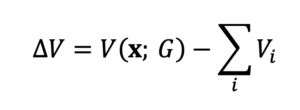
When considering mergers, acquisitions, alliances, or even intra-group synergies, it is useful to shift our perspective away from additive arithmetic and towards the philosophy of emergence. In complex systems, including business ecosystems as complex adaptive systems, value does not reside solely within the parts; rather, it arises through the patterned interactions between them. This emergent phenomenon is precisely what in corporate finance is labelled synergy value. In formal terms, we may describe the total incremental value of a collaboration as

where V(x; G) denotes the value of the whole system, generated by the vector of resources and activities x under a specific governance structure G, and ∑V represents the value of each entity in isolation. The very fact that ΔV may be greater than zero testifies to emergence: complementarities in action, dependencies properly orchestrated, and adaptive patterns unfolding across the system.

The Levers of Emergent Synergy

Four principal levers determine whether emergent value materialises or evaporates. The first is complementarity, or what economists term supermodularity. This describes the situation in which activities reinforce each other such that the marginal return of undertaking one activity is enhanced by the undertaking of another; formally, the cross-partial derivatives are positive (𝛿²V/𝛿xi 𝛿xj > 0). It is here that the popular slogan “one plus one equals more than two” has rigorous grounding.

The second lever is the interdependence structure. Every collaboration has a topology of dependencies, where some assets act as complements, others as substitutes, and some nodes become bottlenecks through which the value of the entire system is channelled. In business ecosystems, mapping this structure is indispensable, for it often dictates whether modularity and flexible linkages suffice, or whether full absorption is required.

The third lever is defined by the adaptive rules of the system. A collaboration is not static; it is a complex adaptive system in which local decisions, feedback loops, and routines create new global patterns. Where local experimentation is permitted, and where feedback loops are properly designed, valuable behaviours diffuse through the organisation or alliance. Where rigidity prevails, the system is condemned to stasis, and synergy remains a theoretical promise rather than an emergent reality.

Finally, there is the matter of orchestration capacity. This refers to the dynamic capabilities of leadership—sensing opportunities, seizing them through resource allocation, and reconfiguring the system as environments change. Ashby’s principle of requisite variety reminds us that the variety of governance and decision-making tools must match the variety and volatility of the environment. Without adequate orchestration, even strong complementarities and favourable topologies may collapse under the weight of integration costs.

Applications Across Collaboration Types

In mergers and acquisitions, the choice of integration model should mirror the degree of interdependence. The celebrated Haspeslagh–Jemison framework reminds us that absorption is not always optimal; linkage or preservation may unlock more emergent value when autonomy is vital. The risk of the so-called synergy mirage lies precisely in misjudging complementarities and ignoring the time it takes for emergent patterns to stabilise. Thus, every acquisition is less a completed transaction than a hypothesis about the future, whose proof lies in the integration process.

In alliances and joint ventures, synergy takes the form of options on emergence. Here, limited commitments allow parties to test complementarities without over-committing capital. The collaborative form is well-suited to contexts of uncertainty, where exploration of emergent patterns is required. Ecosystem logic also applies: co-opetition and the management of network externalities often define the extent of emergent value.

For intra-group business synergy, emergence must be cultivated across corporate units. Here, Herbert Simon’s notion of near-decomposability becomes instructive: groups should design modular interfaces so that subsidiaries adapt locally yet align globally. To maintain cooperation, emergent rents must be shared fairly; cooperative game theory suggests the Shapley value as one method of allocating incremental value in proportion to each unit’s marginal contribution. Without such fairness, group members are tempted to defect, undermining the collaborative potential of the system.

Measuring and Governing Emergence

Because synergy is emergent, it resists simple enumeration. Yet it is not beyond the reach of disciplined measurement. One may begin with a complementarity map, estimating where cross-partials are most positive, and therefore where joint action may yield the greatest return. Alongside, an ecosystem dependency graph may be drawn, in the spirit of Ron Adner’s ecosystem mapping, to reveal missing complements and bottlenecks whose removal could unlock value.

Where uncertainty is high, the logic of real options should prevail. Pilot projects, staged investments, or minority stakes serve as options to explore emergent potential without risking catastrophic downside. Parallel to this, a system of synergy accounting may be implemented, in which incremental value is decomposed using Shapley allocations, thereby aligning incentives with marginal contributions to the whole.

The Philosophical Bottom Line

Synergy lives not in assets but in interactions. Corporate actions—whether a merger, an alliance, or an intra-group initiative—are best understood as interventions in a complex system. When complementarities are strong, interdependencies are designed with care, adaptive rules permit experimentation, and orchestration capacity is sufficient, emergent synergy is more than a hopeful metaphor; it becomes an observable reality. Conversely, where these levers are mismanaged, the promised “1 + 1 > 2” dissolves into disappointment, integration costs, and value destruction.

Thus, the philosophy of emergence, long a staple of complexity science, is not an academic curiosity but a practical guide to business collaboration. It teaches us that the true measure of a deal or alliance lies not in the parts themselves, but in the patterns of interaction that the collaboration enables.

MSME Financing

Now about the MSME ecosystem.

The Govt has repeatedly mentioned that we have 65 million MSMEs in Indonesia, and that the MSME are the very backbone of the national economy: they contribute ±61% of GDP and provide ±120 million jobs, nearly the entire labour force. Yet for all their importance, they are treated with something close to neglect by national financial system. While state banks happily court the large corporates and property developers, the millions of small firms that keep the country running receive less than 20% of their credit. And when the MSME secure a loan, they pay dearly for it, at interest rates of 12%–18% per year, even when BI’s rate rests at 5%. A curious kind of financial apartheid: the majority does the heavy lifting, the minority enjoys the cheap capital.

The Minister of Finance, to add insult to injury, has been swifter at taxing MSME than at financing them. Efforts to broaden the tax base focus on micro firms while the big players continue to enjoy exemptions, incentives, and creative loopholes. Programs intended to strengthen domestic small industry, remain piecemeal, minimally supported, and shifted instead to use the MSME data for taxing. The rhetoric is that MSMEs are the backbone of the economy; the practice is that they are milked like docile cows for easy revenue, without being fed the credit that might fatten them into global competitors.

There is surely the KUR program the Govt always mentions, which offers subsidised credit to small businesses. In H1/2025, around Rp 133T was disbursed to some 2.3 million borrowers. That number is impressive on its own, yet it reaches only 3% or 4% of the total MSME population. And the balance is skewed beyond recognition: nearly 1.9 million of those borrowers were micro firms, a modest 159 thousand were small firms, and a mere 16 thousand were so-called ultra-micro. Medium-sized enterprises are excluded entirely, with the optimistic expectation that they will graduate to commercial loans — a graduation ceremony that only rarely takes place.

KUR is not nothing, but neither is it enough. What Indonesia needs is a breakthrough: a national credit guarantee scheme that shares risks between the state and the banks and, in doing so, brings down lending rates while opening the doors of finance to millions who are currently shut out. The idea is simple. If a portion of loans in a defined portfolio go bad, the state-backed guarantor pays part of the loss. With that safety net in place, banks can lend at lower rates and to a wider circle of borrowers.

This is not some wild experiment. South Korea’s KODIT has long guaranteed up to 85% of SME loans; Japan’s municipal credit guarantee corporations have done the same for decades, usually at 80% coverage. The US Small Business Administration runs its own guarantees on 75% to 85% of small business loans. Europe operates portfolio schemes through InvestEU. The lesson is consistent: when governments shoulder part of the risk, banks lend more, charge less, and the fiscal costs remain entirely manageable.

What would this look like in Indonesia? Imagine a scheme supporting 1.5 million loans per year, with an average size of Rp 150 million, creating an annual portfolio of roughly Rp 225T. The guarantor would cover 40% of first losses, capped at 10% of the portfolio to prevent excess. Banks would pay a fee of 1.8% p.a., softened by a small state subsidy of 0.4%. In practice, this would mean loans to small businesses priced at about 3.5% lower than they are today. The expected fiscal cost to the state would be about Rp 2.3T per year, with a guarantor capital buffer of roughly Rp 8T. For the price of a single prestige infrastructure project, the government could transform access to finance for millions of enterprises.

The institutions are already there. Jamkrindo and Askrindo could act as front-line guarantors just like KUR. PII could serve as a backstop. Multilateral lenders such as the World Bank, ADB, or IsDB could add further insurance, while state and private banks would originate the loans. Oversight and enforcement would fall to the Ministry of Finance, Bank Indonesia, and the Financial Services Authority (OJK), with the Ministry of MSME ensuring that outreach truly extends beyond Java and into women-owned and first-time borrowers.

The expected results could be far from trivial. With 1.5 million new loans guaranteed each year, more small firms would cross into the formal economy. Average borrowing rates would fall from the current 12% to 15% into the single digits. Employment would grow by perhaps one million jobs a year, as enterprises invest and expand. GDP growth would tick upward by at least 0.5%. And because borrowers under the scheme must be formally registered, the tax base would widen, meaning the program could ultimately pay for itself.

Indonesia cannot hope to reach sustained 6%–7% growth while its entrepreneurs are trapped in a high-cost credit desert. This lending guarantee program would provide them with the rain they need. Alongside, the state should push forward with digital credit scoring, drawing on tax, e-commerce, and utility data; it should open the way for SME bonds and securitisation; and it should modernise collateral laws so that machinery, vehicles, and inventory can be pledged as security, not only land and buildings.

Without accelarating these programs, Indonesia risks remaining a dual economy: one world of corporates enjoying cheap capital and tax incentives, and another of millions of MSMEs left to carry the country on their backs while paying through the nose for the privilege.

A Failed Country, A Failed Government

A failed government is not defined by temporary setbacks, nor even by economic hardship. It is defined by a collapse of legitimacy, when the people no longer see leaders as protectors, but as predators. When power is used not to govern, but to plunder. When truth is buried beneath propaganda, and dissent is silenced by force rather than answered by reason.

A failed country is not a land without wealth, but a land where justice is absent. Where security is traded for fear, opportunity for favoritism, and institutions rot from within. It is when corruption becomes the operating system, and the constitution nothing more than a decorative relic.

Here’s the darkened Garuda, stripped of its golden radiance. The bull, once a symbol of democracy, now stares hollow-eyed as public will is sold to the highest bidder. The banyan tree, meant to represent unity, now casts shadows of division and fragmentation. The rice and cotton, symbols of prosperity, lie barren under monopolies and systemic greed. The chain, once the strength of solidarity, rusts into a shackle of oppression. And the star, once a guiding light, dims into the emptiness of hypocrisy.

The government has failed. The system has failed. But a nation dies only if its people surrender. The Garuda in darkness does not signal the end. It signals a choice: accept the failure, or ignite renewal. In that choice lies the fate of the republic.

Sicily

I believe many people use AI like ChatGPT to ask questions about themselves or to see how they’re perceived by the world or the internet. However, I found it unsettling.

I was looking into some travel options, and one of the places I checked was Sicily. ChatGPT gave me some recommendations, ending with something like…

That’s interesting. I was curious, so I asked:

And its answer hit me hard and deep:

Speechless, I just leave it here with no comment.

Claude Shannon

Pada 30 April 2026 ini kita akan memperingati 110 tahun kelahiran Claude Shannon, tokoh yang dinobatkan sebagai Bapak Informatika. Claude Shannon merancang sebagian besar dari fondasi teknologi digital. Perannya ada di berbagai lapis teknologi digital, dari aspek teknis pada relay, aspek matematis, hingga filosofis, yang secara fundamental mengubah cara manusia memahami materi, energi, dan informasi.

Elektronika Digital

Tesis magister Shannon pada tahun 1937 merupakan titik nol elektronika digital. Dengan susunan saklar dan relay elektrik, Shannon menyusun logika OR dan AND dan rangkaiannya, dan membuktikan bahwa Aljabar Boole dapat diterapkan menggunakan rangkaian elektrik. Ini konsep sederhana saat ini. Namun di masa itu, hal ini membuka mata manusia bahwa persoalan matematika dapat diterapkan melalui rangkaian elektronika. Secara teknis, ini membuka jalan lahirnya seluruh teknologi digital yang kita kenal saat ini. Secara filosofis, penemuan ini meruntuhkan dinding antara benda mati dan aktivitas berpikir. Logika dapat diwujudkan dalam perangkat keras, maka mesin bukan cuma sekadar alat bantu fisik, melainkan perpanjangan dari pemikiran manusia. Hal ini merupakan titik awal sejarah komputer modern.

Matematika Informasi

Dalam karya monumentalnya tahun 1948, “A Mathematical Theory of Communication”, Shannon memperkenalkan konsep Bit sebagai satuan universal untuk mengukur informasi. Melalui rumus entropi informasi, H = – 𝛴pᵢ log₂ pᵢ, ia menyoroti aspek informasi bukan sebagai makna, melainkan berdasarkan derajat pengurangan ketidakpastian yang dihasilkannya. Pemisahan antara makna (meaning) dan data membuka perspektif baru. Dengan membuang aspek semantik dan berfokus pada probabilitas statistik, Shannon memungkinkan segala bentuk realitas, baik itu suara, gambar, maupun teks, diabstraksikan menjadi unit biner yang seragam. Dunia tidak lagi dipandang hanya sebagai susunan atom, melainkan sebagai aliran data yang memungkinkan konvergensi seluruh media manusia ke dalam satu bahasa digital universal.

Arsitektur Efisiensi dan Keamanan

Melalui Source Coding Theorem, Shannon menetapkan bahwa ada batas fundamental di alam semesta mengenai seberapa jauh sebuah pesan dapat dimampatkan sebelum ia kehilangan identitas informasinya. Penemuan teknis ini mengajarkan bahwa efisiensi maksimal dalam komunikasi dicapai dengan mengeliminasi redundansi atau pengulangan yang tidak perlu. Dalam ranah kriptografi, ia mengubah seni kerahasiaan menjadi sains matematis melalui prinsip Confusion dan Diffusion, serta membuktikan bahwa keamanan absolut hanya bisa dicapai jika kunci memiliki derajat acakan atau entropi yang setara dengan pesan itu sendiri. Secara filosofis, ini menunjukkan bahwa musuh utama dari kejelasan adalah pemborosan redundansi, sementara benteng pertahanan informasi yang paling kokoh adalah ketidakteraturan murni yang tidak dapat diprediksi oleh pihak luar.

Komunikasi Data Melampaui Batas Fisik

Salah satu pencapaian teknis paling berpengaruh bagi dunia telekomunikasi modern adalah perumusan Kapasitas Kanal yang dikenal sebagai Shannon Limit, yaitu C = B log₂ (1 + S/N). Rumus ini menentukan batas maksimal kecepatan data yang dapat dikirimkan melalui medium fisik yang memiliki gangguan atau noise. Shannon secara revolusioner membuktikan bahwa gangguan alamiah bukanlah penghalang mutlak bagi komunikasi yang sempurna; asalkan kita menggunakan teknik pengkodean yang cukup cerdas, kita dapat mengirimkan pesan dengan tingkat kesalahan nol di tengah kebisingan sekalipun. Hal ini terus terbukti: komunikasi di era modern bukan lagi masalah kekuatan energi atau volume sinyal, melainkan masalah ketangkasan logika dan kecerdasan algoritma dalam menaklukkan hambatan fisik alam semesta demi mencapai konektivitas global.

Informasi sebagai Pendorong Keteraturan

Dengan meminjam istilah entropi dari disiplin termodinamika, Shannon memberikan dimensi baru pada cara kita memandang evolusi dan perubahan sistem. Jika hukum kedua termodinamika menyatakan bahwa alam semesta secara alami menuju kekacauan dan keheningan, maka informasi bertindak sebagai negentropi, yaitu kekuatan yang menciptakan struktur, pola, dan organisasi. Secara filosofis, informasi dipahami sebagai pendorong perubahan yang fundamental; ia adalah agen yang melawan degradasi dan keacakan murni. Dalam pandangan ini, organisasi manusia, sistem biologis, bahkan peradaban itu sendiri, dapat dipahami sebagai upaya pengolahan informasi yang berkelanjutan untuk mempertahankan keteraturan di tengah lautan entropi, menjadikan setiap bit data sebagai instrumen untuk menjaga stabilitas hidup.

Embrio Kecerdasan Artifisial

Eksperimen Shannon dengan tikus mekanik bernama Theseus pada tahun 1950 merupakan bentuk awal dari yang kini disebut sebagai Machine Learning. Theseus menggunakan jaringan relay telepon untuk menjelajahi labirin melalui proses trial and error. Ia belajar dari setiap benturan dinding, menyimpannya dalam memori sirkuit, dan memastikan tidak mengulangi kesalahan yang sama pada percobaan berikutnya. Melalui Theseus, Shannon menunjukkan bahwa pembelajaran hanyalah proses pengolahan informasi untuk memperbarui peta probabilitas internal sebuah sistem. Ini adalah akar dari Reinforcement Learning modern, yang membuktikan bahwa kecerdasan tidak memerlukan ruh atau kesadaran biologis, melainkan cukup dengan kemampuan mesin untuk mengubah umpan balik (feedback) menjadi struktur data yang bermakna. Wawasan ini mengubah paradigma kita: mesin tidak lagi harus diprogram secara kaku untuk setiap langkah, melainkan dapat didesain untuk “belajar cara belajar” guna menaklukkan ketidakpastian di tengah labirin realitas.

Edge of Chaos: Informasi dan Teori Kompleksitas

Kontribusi Shannon mencapai puncaknya pada pemahaman tentang sistem adaptif kompleks melalui konsep maksimalisasi entropi informasi. Sebuah sistem yang terlalu teratur dan redundan akan bersifat kaku, sementara sistem yang sepenuhnya acak hanya akan menghasilkan derau yang tidak berguna. Informasi yang paling padat dan bermakna justru ditemukan pada titik transisi yang dikenal sebagai Edge of Chaos, di mana keteraturan dan kekacauan bertemu dalam kesetimbangan dinamis. Secara filosofis, hal ini memberikan wawasan bahwa kreativitas, inovasi, dan adaptasi hanya mungkin terjadi pada densitas informasi tertinggi di batas ketidakteraturan. Teori Shannon memberikan alat ukur untuk memahami mengapa sistem yang terlalu kaku akan runtuh dan mengapa sistem yang terlalu cair akan gagal, memosisikan kecerdasan sebagai kemampuan sistem untuk menavigasi batas tipis tersebut demi mencapai evolusi.

Claude Shannon membuktikan bahwa bermodalkan saklar lampu dan matematika presisi, kita dapat menyulap benda mati menjadi pemikir dan mengubah derau semesta menjadi simfoni data. Ia mengajarkan kita bahwa hidup paling bermakna justru terjadi saat kita berdansa di Edge of Chaos, sebuah titik manis antara keteraturan yang kaku dan kekacauan yang berisik. Tanpa sentuhan jeniusnya, ponsel canggih kita mungkin hanyalah lempengan kaca mahal yang bingung membedakan antara pesan penting dan suara kresek-kresek radio. Di balik megahnya peradaban digital saat ini, kita memahami ada bit-bit yang sedang berjuang melawan entropi demi menjaga kita tetap terhubung.

Ten Feline Principles

Feline Philosophy: Cats and the Meaning of Life, by John Gray, has accompanied my Catterday. Published in 2020 by Penguin Books, the book is a wry and elegant meditation that contrasts the restless pursuit of meaning in human life with the serene indifference of cats. Rather than anthropomorphising animals, Gray invites readers to view humanity through a feline lens — one that reveals the absurdity of our moral pretensions, the futility of our anxieties, and the possibility of a more graceful existence, precisely by abandoning the need to justify it.

Its last chapter offers a feline-inspired rethinking of how one might live with greater clarity and less delusion: Ten Feline Principles for Living Well.

  1. Never try to persuade human beings to be reasonable — Trying to persuade human beings to be rational is like trying to teach cats to be vegans. Human beings use reason to bolster whatever they want to believe, seldom to find out if what they believe is true.
  2. It is foolish to complain that you do not have enough time — If you think you do not have enough time, you do not know how to pass your time. Do what serves a purpose of yours and what you enjoy doing for its own sake. Live like this, and you will have plenty of time.
  3. Do not look for meaning in your suffering — If you are unhappy, you may seek comfort in your misery, but you risk making it the meaning of your life. Do not become attached to your suffering, and avoid those who do.
  4. It is better to be indifferent to others than to feel you have to love them — Few ideals have been more harmful than that of universal love. Better cultivate indifference, which may turn into kindness.
  5. Forget about pursuing happiness, and you may find it — You will not find happiness by chasing after it, since you do not know what will make you happy. Instead, do what you find most interesting and you will be happy knowing nothing of happiness.
  6. Life is not a story — If you think of your life as a story, you will be tempted to write it to the end. But you do not know how it will end, or what will happen before it does. It would be better to throw the script away. The unwritten life is more worth living than any story you can invent.
  7. Do not fear the dark, for much that is precious is found in the night — You have been taught to think before you act, and this may be good advice. Acting on how you feel at the moment may be no more than obeying worn-out philosophies you have accepted without thinking. But some moments may follow an inkling that glimmers in the shadows. You need to know where it may lead you.
  8. Sleep for the joy of sleeping — Sleeping so that you can work harder when you wake up is a miserable way to live. Sleep for pleasure, not profit.
  9. Beware anyone who offers to make you happy — Those who offer to make you happy do so in order that they themselves may be less unhappy. Your suffering is necessary to them, since without it they would have less reason for living. Mistrust people who say they live for others.
  10. If you cannot learn to live a little more like a cat, return without regret to the human world of diversion

The US Trade Imbalance

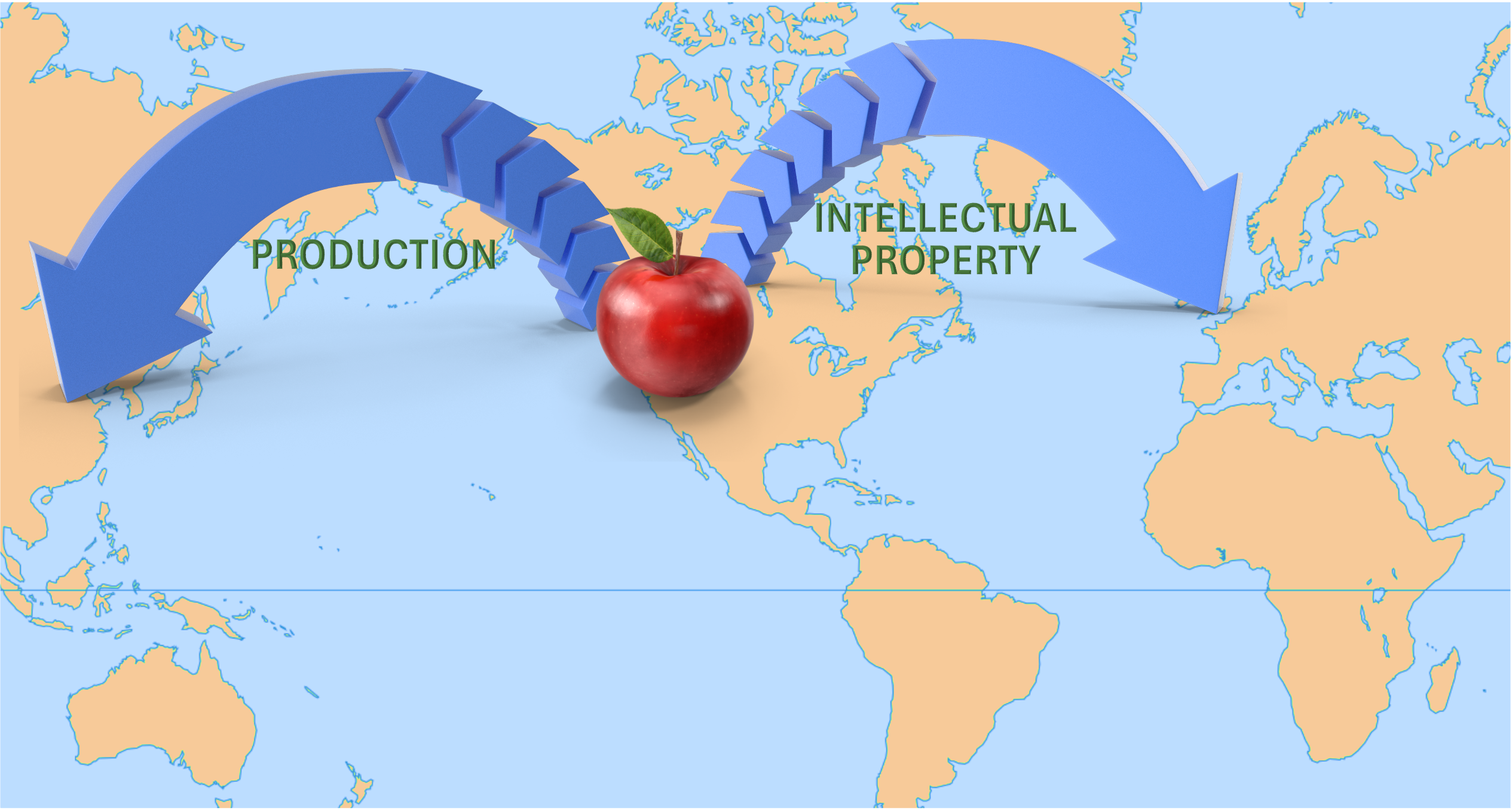
The United States has long been concerned about its persistent trade imbalance, frequently attributing responsibility to its business-partner countries for the gap between imports and exports. However, it should be recognised that most of the imbalance originates internally, driven by American corporations’ strategic pursuit of short-term profits, often through aggressive offshore profit-shifting practices. American businesses with the highest capitalisation, such as Apple, Google, and Microsoft, significantly contribute to this imbalance by establishing subsidiaries in low-tax jurisdictions like Ireland or Bermuda, legally diverting profits and depriving the US Treasury of critical tax revenues.

Apple has routinely utilised offshore structures, holding over $200 billion overseas at one point, strategically positioning intellectual property (IP) subsidiaries in countries with more favourable tax policies. Similarly, Google’s “Double Irish with a Dutch Sandwich” facilitated the shifting of billions in global advertising revenue, resulting in minimal domestic taxation. These practices are typically legal yet ethically contentious, with annual corporate profit-shifting estimated between $300 and $350 billion, leading to approximately $100–$150 billion in lost US tax revenue each year, according to estimates from the Congressional Budget Office and economist Gabriel Zucman.

In addition to technology firms, professional service companies such as McKinsey, other consultancy firms, and numerous US law firms frequently establish regional offices overseas, ensuring substantial earnings remain offshore. Although these practices are mostly legal, they highlight the significant internal roots of the trade imbalance, reflecting structural issues in corporate governance and tax policy rather than external economic aggression.

To meaningfully address these challenges, the US should initiate comprehensive internal reforms, beginning with corporate governance. A decisive shift from shareholder capitalism—prioritising quarterly profits—to stakeholder capitalism, where companies equally value long-term investments in employees, communities, and sustainability, is essential. The 2019 Business Roundtable statement was a symbolic step in this direction, but substantial action has been limited. True reform necessitates redefining executive compensation to incentivise sustainable, long-term growth rather than stock price manipulation through buybacks.

On the policy front, the US government should strengthen anti-profit-shifting measures by enhancing transparency through mandatory country-by-country financial reporting and enforcing stringent economic substance requirements. Implementing the OECD-backed global minimum tax (15%) could curb excessive offshore tax arbitrage by ensuring multinationals pay fair taxes irrespective of where they report profits. Additionally, penalising superficial offshore structures while incentivising genuine domestic investments could significantly mitigate revenue losses.

Ethically, American corporate culture should evolve to reject aggressive tax avoidance as standard practice. Promoting ethical standards and responsible business conduct, supported by public advocacy, investor pressure through Environmental, Social, and Governance (ESG) criteria, and transparent financial disclosures, could substantially reshape corporate behaviour. Institutional investors, pension funds, and even individual consumers can wield considerable influence by rewarding ethical corporate actions and penalising short-termist, exploitative strategies.

Ultimately, resolving the US trade imbalance is not solely about external tariffs or punitive measures against other nations but requires confronting internal structural issues directly. By embracing rigorous regulatory reforms, incentivising ethical corporate governance, and committing to strategic long-term economic planning, America can effectively rebalance trade, recover significant lost revenues, and foster sustainable economic prosperity for future generations.